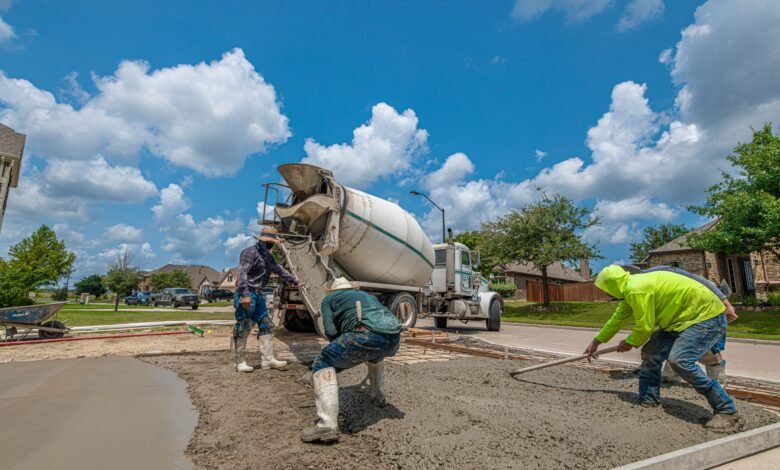
You probably don’t think much about your driveway until it starts cracking, holding water, or looking older than the rest of your home. Then it becomes hard to ignore. A driveway takes daily stress from vehicles, weather, and shifting soil, so the material and installation choices matter more than most people expect. If you’re weighing a new build or replacement, it helps to know what separates a surface that lasts 25 years from one that starts failing in five.
Base preparation is where most driveway failures quietly begin
If you want to understand whether a driveway will last, ask about the subbase before you ask about color or finish. The slab depends on a stable foundation, usually compacted gravel or crushed stone, to distribute loads and improve drainage. Without that, concrete may bridge soft spots for a while, then crack once the ground shifts.
Soil type matters too. Expansive clay behaves differently from sandy soil, and regions with heavy rainfall or freeze-thaw activity need more attention to drainage design. Good installers evaluate grade, moisture, and compaction, not just square footage. When homeowners compare bids, this is often where the pricing gap comes from. Experienced concrete driveway contractors usually price for proper prep work, while bargain bids may quietly reduce excavation depth, base material, or compaction passes.
Your driveway is a structural surface, not just a slab
A driveway looks simple from the street, but performance depends on what’s happening below the surface. Concrete has to handle compressive loads, freeze-thaw cycles in colder regions, runoff, and subgrade movement. If the base is weak or poorly compacted, the slab can settle unevenly and produce trip hazards, edge cracking, or puddling.
You should think about a driveway the way a contractor does: as a system. That includes excavation depth, aggregate base, rebar or fiber reinforcement, joint spacing, slope, and curing time. A smooth finish alone tells you almost nothing. Plenty of bad driveways look excellent on day one. The expensive problems usually begin months later, after traffic and weather expose shortcuts that weren’t obvious during installation.
The first big decision is concrete versus asphalt versus pavers
Each material solves a different problem. Concrete usually wins on lifespan, stiffness, and a cleaner architectural look. Asphalt costs less up front and performs well in colder climates, but it needs more frequent sealing and can soften under high heat. Pavers are visually flexible and easier to repair section by section, though installation costs are often higher and weed growth between joints can become annoying.
If you care about long-term maintenance, concrete tends to sit in the practical middle ground. It’s not maintenance-free, but it generally asks less from you over time than asphalt. It also supports heavier loads better, which matters if your household has trucks, trailers, or frequent delivery traffic. The catch is installation quality. A poorly poured concrete driveway can underperform a well-installed asphalt one.
Thickness, reinforcement, and joints aren’t minor details
For many residential driveways, four inches of concrete is considered standard, but that number doesn’t fit every situation. Heavier vehicles, RV parking, or aprons near the street can justify thicker sections. Reinforcement also matters, whether that means welded wire mesh, rebar, or fiber additives. These don’t make concrete crack-proof. They help control crack width and improve slab behavior once cracking starts, which concrete naturally does over time.
Control joints are another point many homeowners underestimate. Concrete shrinks as it cures, and joints create planned weak points where the slab can crack more neatly. Poorly spaced joints often lead to random cracking across visible areas. You should also pay attention to expansion joints where the driveway meets sidewalks, garages, or other rigid structures. That small spacing detail reduces stress transfer and helps prevent edge damage.
Drainage design affects appearance, safety, and repair costs
A driveway should move water away from your home, not collect it in low spots or send it toward the garage. Even a slight slope makes a major difference. Standing water stains the surface, increases slip risk, and can shorten the life of the slab. In colder climates, trapped water turns into a freeze-thaw problem fast.
Drainage design also connects to municipal realities. Some neighborhoods have strict grading expectations, curb cut rules, or stormwater requirements that shape what you can install. If your driveway meets a public sidewalk, transitions have to feel smooth and safe for pedestrians, strollers, and bikes. You’re not only building for your own tires. You’re shaping a visible entry point that interacts with the street, the yard, and in some cases the local drainage pattern.
Finishes and aesthetics should support function, not fight it
A broom finish remains popular for a reason. It adds traction, looks clean, and works well in wet conditions. Exposed aggregate, stamped concrete, and colored finishes can look striking, but they need to be chosen with your climate, maintenance tolerance, and home style in mind. A finish that looks amazing in a showroom sample may read as busy or high-maintenance once it spans a full driveway.
You should also ask how the surface will age. Some sealers yellow over time. Some decorative finishes show tire marks more easily. Light-colored concrete reflects heat better, which can be useful in sunny regions, but it may highlight stains from leaves, rust, or oil. Good design is rarely about the flashiest option. It’s about picking a finish you’ll still like after three winters, two oil changes, and a week of rain.
Installation timing and curing habits can make or break the result
Weather affects concrete more than many homeowners realize. Extreme heat can speed up evaporation and weaken the surface if curing isn’t managed carefully. Rain during placement can compromise the finish. Cold-weather pours introduce a different set of risks, including delayed strength gain and surface damage if protection is inadequate.
Then there’s the part homeowners control: patience. Fresh concrete needs time before you drive on it, place heavy items on it, or pressure wash it. That waiting period can feel excessive when the slab already looks finished, but appearance and structural readiness are not the same thing. A rushed first week can reduce the quality of the result for years. If you’re coordinating landscaping, fencing, or moving trucks, schedule around curing instead of forcing the driveway to absorb the deadline.