Sod Installation: Creating a Beautiful, Healthy, and Long-Lasting Lawn

Introduction
A healthy, green lawn can transform the appearance of any outdoor space, creating a welcoming environment while improving the overall beauty and functionality of a property. Whether homeowners want to enhance their front yard, renovate an existing garden, or create a comfortable outdoor area for family activities, natural grass remains one of the most popular landscaping choices. However, growing a lawn from seed can take considerable time and requires patience, consistent watering, and careful maintenance. Sod offers a convenient alternative by providing established grass that can be installed directly over properly prepared soil. Professional sod installation allows property owners to enjoy an attractive lawn much sooner while creating a foundation for healthy grass growth and long-term landscape improvement.
Sod consists of mature grass, its roots, and a thin layer of soil held together by a biodegradable or reusable backing. It is grown commercially under controlled conditions before being harvested and transported to the installation site. Once placed over prepared ground and properly maintained, the grass gradually develops deeper roots and becomes established in its new environment. This makes sod an effective solution for properties that need immediate landscape improvement without waiting for grass seed to germinate and develop.
Although installing sod may appear straightforward, achieving successful results requires proper soil preparation, suitable grass selection, accurate placement, and consistent watering. Factors such as sunlight exposure, drainage, soil composition, and intended lawn use can influence the performance of the finished landscape. Understanding these considerations helps property owners make informed decisions and maintain a healthy lawn for years to come.
Understanding Sod and How It Works
Sod is natural grass that has been grown, maintained, and harvested by professional turf producers. It generally arrives in rolls or rectangular sections containing established grass plants and a layer of soil that protects the roots during transportation and installation.
Unlike traditional grass seeding, which requires seeds to germinate and gradually develop into a complete lawn, sod provides an already established grass surface. This allows property owners to improve the appearance of their outdoor spaces much faster.
Once sod is installed, its roots begin adapting to the underlying soil. During this establishment period, moisture and suitable environmental conditions are particularly important. Consistent watering helps prevent the grass from drying out while encouraging root development.
The quality of the sod itself also influences the final result. Healthy grass should have a consistent appearance, strong roots, and minimal visible weeds or disease. Freshly harvested material should be installed promptly to reduce the risk of overheating, moisture loss, and deterioration.
Understanding how sod develops after installation helps homeowners recognize why proper preparation and ongoing care are necessary. Although the lawn may look finished immediately, the underlying roots still need time to establish a strong connection with the soil.
Benefits of Installing Sod Instead of Growing Grass From Seed
One of the biggest advantages of sod is the immediate visual improvement it provides. Traditional seeding can leave a property looking unfinished for weeks or months while grass germinates and develops. Sod creates a green surface almost immediately, making it especially useful for property owners who want faster landscaping results.
Another advantage is the ability to establish relatively uniform grass coverage. Professionally grown sod is generally cultivated to provide consistent grass quality, helping create a more even appearance when the sections are installed correctly.
Sod can also reduce certain early lawn problems associated with exposed soil. Newly seeded areas may be more vulnerable to erosion, surface runoff, and weed growth before the grass becomes established. Sod provides immediate ground coverage that can help stabilize the soil.
The installation process also offers greater predictability when compared with growing a lawn from seed. Seed germination can be affected by temperature, moisture, soil conditions, and other environmental factors. Sod arrives with established grass, although its long-term success still depends on proper installation and maintenance.
For homeowners who value convenience, faster results, and a more established appearance, sod can be an attractive landscaping investment.
Choosing the Right Type of Sod for Your Lawn
Selecting suitable grass is one of the most important decisions when planning a new lawn. Different grass varieties have different characteristics, including sunlight requirements, drought tolerance, maintenance needs, texture, and resistance to foot traffic.
Warm-season grasses are generally suited to environments with long, warm growing periods. Some varieties perform well in sunny lawns and may tolerate heat and periods of limited rainfall once properly established.
Cool-season grasses are generally adapted to cooler growing conditions and may remain active during periods when warm-season varieties become less vigorous. They can be appropriate for properties that experience cooler seasonal temperatures.
The amount of sunlight available is another important consideration. Some grass varieties require several hours of direct sunlight each day, while others are better suited to partially shaded environments.
Property owners should also consider how the lawn will be used. A backyard intended for children and outdoor activities may require a durable grass variety that can tolerate regular foot traffic. Decorative lawns may prioritize appearance, color, and texture.
Water availability and maintenance expectations should also influence the decision. Some varieties require more frequent watering, mowing, and fertilization than others.
A professional landscaping contractor can evaluate the property’s environmental conditions and recommend suitable sod according to the lawn’s intended use.
Preparing the Soil Before Sod Installation
Proper soil preparation is essential for successful sod establishment. Even high-quality grass may struggle if installed over compacted, poorly drained, or nutrient-deficient ground. Preparing the soil creates favorable conditions for root development and helps the finished lawn remain healthy.
The preparation process generally begins with removing existing grass, weeds, rocks, construction debris, and other unwanted materials. Clearing the surface allows the new sod to make direct contact with the prepared soil.
The ground may then require loosening or tilling to reduce compaction. Compacted soil can restrict root development and limit the movement of water and nutrients. Improving the soil structure helps roots penetrate more easily.Soil testing can provide useful information about pH levels and nutrient availability. Based on the results, appropriate soil amendments may be recommended to improve growing conditions.
Adding suitable topsoil or organic matter can help improve the structure and fertility of certain soils. However, the type and quantity of amendments should depend on the existing ground conditions.The surface should also be graded carefully to create a relatively smooth lawn while directing water away from buildings and other structures. Low areas may collect water, while excessively uneven ground can make mowing and maintenance difficult.
Thorough preparation provides a stable foundation for the new grass and reduces the likelihood of avoidable problems after installation.
The Professional Sod Installation Process
Professional installation generally follows a structured process designed to create consistent coverage and encourage healthy root establishment. The exact steps may vary according to the property’s size, soil condition, grass variety, and landscape design.
The first stage involves inspecting the installation area and determining whether additional preparation is required. Contractors evaluate the existing ground, drainage conditions, sunlight exposure, and potential obstacles.
After the site has been cleared and prepared, the soil is leveled and lightly firmed to create a suitable surface. Appropriate starter fertilizer may be applied when recommended by soil conditions and the selected grass variety.
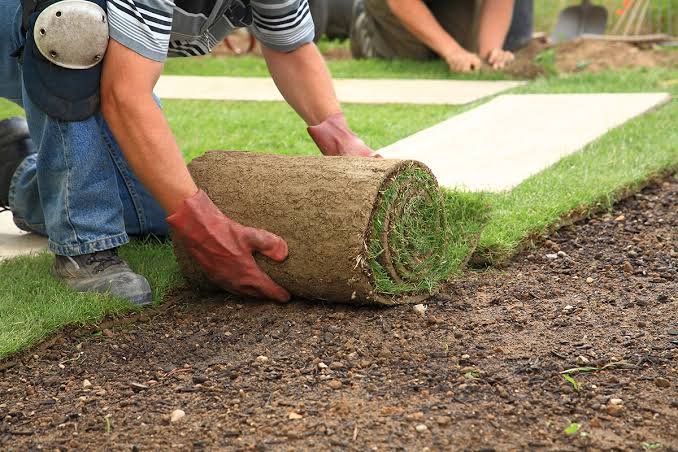
Fresh sod is then delivered and placed across the prepared ground. Installation typically begins along a straight edge, such as a driveway, pathway, or property boundary, to create an organized starting point.Each section should be positioned closely against the neighboring piece to minimize visible gaps. Adjacent rows are commonly arranged in a staggered pattern, similar to brickwork, to create a more stable and uniform appearance.
The sod should be fitted carefully around trees, garden beds, walkways, and other landscape features. Excess material may be trimmed to achieve a neat finish.
Once installation is complete, the lawn is watered thoroughly according to the grass variety, soil conditions, and environmental requirements. Proper contact between the sod and underlying soil is important for successful root development.A professional installation process helps create a smooth, attractive lawn that has the conditions necessary to establish successfully.
The Importance of Proper Watering After Installation
Watering is one of the most important aspects of maintaining newly installed sod. During the early establishment period, the grass depends on sufficient moisture because its roots have not yet developed fully into the underlying soil.
Immediately after installation, the sod should receive thorough watering so that the grass and supporting soil layer become adequately moist. The objective is to prevent the roots from drying out while encouraging them to grow into the prepared ground.
During the first several days, watering may need to occur more frequently, especially during hot, dry, or windy weather. However, the exact schedule should depend on soil drainage, grass type, temperature, and rainfall.After the initial establishment period, watering frequency can generally be reduced while allowing the roots to develop more deeply. Overwatering should be avoided because excessively wet soil can contribute to poor root development, fungal problems, and other lawn health concerns.
Property owners should regularly check moisture levels rather than relying exclusively on a fixed watering schedule. Newly installed sod should not be allowed to become completely dry, but the soil should also not remain waterlogged.A suitable irrigation routine is essential for helping the grass become established and maintaining a healthy lawn.
How Long Does It Take for a New Sod to Establish?
The establishment period depends on the grass variety, soil condition, temperature, watering routine, and overall quality of installation. Although sod provides immediate visual coverage, the roots need additional time to connect with the underlying soil.
During the early stages, roots begin growing beyond the original soil layer and into the prepared ground. This process gradually improves the lawn’s ability to absorb moisture and nutrients from its surroundings.
Some grass varieties establish more quickly than others, while unfavorable weather or compacted soil may slow development. Excessive foot traffic during this period can also interfere with root establishment.One way to evaluate progress is to gently check whether the sod sections have begun resisting movement when lifted carefully at an edge. Property owners should avoid repeatedly disturbing the grass because this may damage developing roots.
Mowing should begin only when the grass has established sufficiently and reached an appropriate height for its variety. The first mowing should remove only a limited amount of the grass blade.Following the contractor’s watering and maintenance instructions helps the lawn develop a stronger root system and improves its long-term performance.
Preparing Your Yard for a New Sod Lawn
Preparing a property before installation can make the landscaping project more efficient and reduce unnecessary delays. Homeowners should identify the areas where new grass is required and consider how the lawn will connect with existing garden features.
The first step is determining the total installation area. Accurate measurements help establish how much sod, soil, fertilizer, and other materials may be needed.Existing irrigation systems should be inspected before construction begins. Sprinkler heads, underground pipes, and drainage components may need adjustments to accommodate the finished lawn.
Trees, shrubs, flower beds, pathways, and outdoor structures should also be considered during planning. These features influence the shape of the installation area and may require careful trimming around their edges.Property owners should identify drainage problems before installing sod. Areas that collect standing water may need grading improvements or drainage modifications.
Access to the property is another important consideration. Contractors need suitable space to unload materials and move equipment without damaging existing landscaping.Preparing these details in advance helps the installation process proceed smoothly and supports a more organized finished landscape.
Common Mistakes to Avoid During Sod Installation
Although sod installation can produce impressive results, certain mistakes may prevent the lawn from establishing properly. One common problem is inadequate soil preparation. Installing grass over compacted ground, debris, or uneven surfaces can interfere with root development and create an inconsistent lawn.Another mistake is leaving gaps between sod sections. Open spaces may dry out more quickly and create visible lines across the finished surface. Sections should fit closely together without excessive overlapping.
Allowing freshly delivered sod to remain rolled up for too long can also create problems. Grass may overheat and deteriorate when stored improperly, particularly in warm conditions. Installation should therefore be organized to minimize delays.Incorrect watering is another major concern. Insufficient moisture can cause the grass to dry out, while excessive watering may contribute to poor drainage and disease development.
Walking or placing heavy equipment on newly installed sod can interfere with the establishment process. The lawn should receive sufficient time to develop roots before regular use begins.Choosing grass varieties without considering sunlight, soil, and intended use can also lead to disappointing results.Avoiding these mistakes and following professional recommendations can improve the likelihood of developing a healthy, attractive lawn.
Sod Installation for Residential Properties
Residential landscaping is one of the most common applications for sod. Homeowners often use it to improve front yards, backyards, garden areas, and outdoor spaces where an established lawn is desired.A well-maintained front lawn can improve curb appeal and create a welcoming appearance. Fresh grass provides a clean landscape surface that complements exterior walls, pathways, driveways, and garden features.
Backyards can benefit from sod because established grass creates a comfortable surface for relaxation and outdoor activities. Families may use these areas for gardening, recreational activities, and spending time outdoors.Sod can also help renovate lawns that have become patchy, damaged, or uneven. Instead of attempting to restore severely deteriorated grass through repeated seeding, homeowners may choose to replace the affected area with fresh turf.
When planning a residential project, it is important to consider pets, children, shade, irrigation, and expected foot traffic. Selecting suitable grass according to these requirements helps create a lawn that supports everyday household needs.Professional installation can also help ensure that the lawn integrates smoothly with existing landscape features and property boundaries.
Commercial Sod Installation for Professional Landscapes
Commercial properties often depend on attractive outdoor environments to create positive impressions for customers, visitors, employees, and business partners. Well-maintained lawns can improve the overall presentation of office buildings, retail spaces, hospitality properties, and other commercial facilities.
Sod provides an efficient way to establish green areas without waiting for grass seed to develop. This can be particularly useful for newly constructed buildings, renovated landscapes, and properties preparing for public use.Commercial landscaping projects may involve larger installation areas and more complicated site requirements than residential lawns. Contractors must consider drainage, irrigation coverage, pedestrian access, maintenance equipment, and the intended use of outdoor spaces.
The grass variety should be selected according to the property’s environmental conditions and maintenance resources. High-traffic areas may require durable turf, while decorative spaces may prioritize visual appearance.
Scheduling is another important consideration. Businesses may need installation completed within specific timeframes to minimize disruption to employees and visitors.A professionally installed commercial lawn can enhance property presentation while providing a practical outdoor surface that complements the building’s overall design.
Maintaining Your Lawn After Sod Installation
Proper maintenance is essential for keeping newly installed sod healthy and attractive. Once the grass has begun establishing roots, the focus gradually shifts from initial establishment to regular lawn care.Mowing should be performed when the grass has reached an appropriate height and can resist the mower without being pulled from the soil. The cutting height should follow the requirements of the selected grass variety.
Fertilization can help maintain healthy growth, but it should be based on the lawn’s nutrient requirements. Applying excessive fertilizer may damage grass or contribute to unnecessary nutrient runoff.Weed management is another important part of lawn maintenance. Although quality sod can provide relatively uniform coverage, weeds may still develop through gaps, surrounding landscape areas, or seeds carried by wind.
Regular inspection helps identify discoloration, thinning, insect activity, and signs of disease before problems become extensive.
Aeration may also be beneficial when soil becomes compacted, particularly in areas that experience regular foot traffic. However, the timing should be appropriate for the grass variety and establishment stage.Consistent maintenance helps preserve the appearance of the lawn while supporting stronger roots and healthier grass growth.
Understanding Soil Quality and Drainage Requirements
Soil quality plays a major role in the long-term performance of any lawn. Even premium sod may struggle when installed over unsuitable soil because grass roots depend on appropriate moisture, oxygen, and nutrient availability.
Different soil types have different characteristics. Sandy soil generally drains quickly but may struggle to retain sufficient moisture and nutrients. Clay-heavy soil can retain more water but may become compacted and restrict drainage.Loamy soil often provides a useful balance of drainage, moisture retention, and nutrient availability. However, the best approach depends on the property’s existing conditions and the requirements of the selected grass.
Soil testing can help identify pH imbalances and nutrient deficiencies. Based on the results, contractors may recommend appropriate amendments to improve growing conditions.Drainage should also be evaluated before installation. Water should move away from building foundations and should not collect excessively in low areas.Proper soil management supports healthy root development and helps reduce problems associated with waterlogging, drought stress, and poor grass growth.
Factors That Influence the Cost of Sod Installation
The overall cost of installing sod depends on several factors, including lawn size, grass variety, site preparation requirements, labor, transportation, and additional landscaping work.The total area is one of the primary pricing considerations. Larger lawns generally require more sod and additional installation time.
Grass variety can also influence the budget because different types of turf may have different growing, harvesting, and transportation costs.Site preparation is another important factor. Properties with existing grass, weeds, rocks, compacted soil, or uneven ground may require additional clearing, grading, or soil improvement.
Irrigation requirements can also affect the overall investment. Existing sprinkler systems may need adjustments, while properties without irrigation may require new equipment.
Additional services such as soil testing, fertilizer application, edging, drainage improvements, and removal of old landscaping may contribute to the final quotation.Homeowners should request a detailed estimate that explains material costs, preparation work, installation labor, and any additional charges. Comparing contractors according to the complete scope of work can help identify the most suitable option.
Rather than choosing a provider based exclusively on price, property owners should consider sod quality, installation experience, and aftercare recommendations.
Choosing a Reliable Sod Installation Contractor
Selecting an experienced landscaping contractor can make a significant difference in the quality and longevity of a new lawn. Professional installers understand the importance of soil preparation, grass selection, installation timing, and proper watering.
A dependable contractor should begin with a site assessment and discuss the homeowner’s expectations. This includes evaluating sunlight, drainage, soil condition, lawn dimensions, and the intended use of the outdoor space.The contractor should also explain the available sod varieties and recommend options suited to the property’s growing conditions.
Customers should ask about the quality and freshness of the sod being supplied. Healthy turf should have a consistent appearance and a well-developed root layer.Written quotations should clearly explain site preparation, material specifications, installation labor, cleanup, and any additional services.
Previous projects and customer reviews can provide useful information about the contractor’s workmanship and reliability.Communication is equally important. A professional company should provide clear preparation instructions and explain how to care for the lawn after installation.
Choosing a qualified provider helps reduce avoidable problems and increases the likelihood of achieving a uniform, healthy lawn.
Seasonal Considerations for Successful Sod Installation
The timing of sod installation can influence how quickly grass establishes and how much maintenance is required during the early stages.Different grass varieties have different growing seasons. Warm-season grasses generally establish more actively during warmer conditions, while cool-season grasses are better suited to cooler growing periods.
Installing sod during suitable weather can reduce stress and support root development. Extreme heat may increase moisture loss, while very cold conditions can slow growth.Rainfall patterns should also be considered. Although natural rainfall can reduce irrigation requirements, excessive rain may create waterlogged soil and interfere with installation.
Contractors should evaluate the local climate, soil temperature, and grass variety before recommending an installation schedule.With appropriate timing and preparation, homeowners can improve the chances of successful establishment and reduce unnecessary maintenance challenges.
Long-Term Value of Investing in a Quality Lawn
A well-installed lawn can provide lasting benefits that extend beyond its immediate appearance. Natural grass creates an attractive outdoor surface, supports landscape organization, and offers a comfortable area for everyday activities.Healthy turf can also help reduce soil erosion by providing ground coverage and developing a network of roots that holds soil together.
Grass may contribute to the overall outdoor environment by capturing some airborne particles, supporting soil health, and helping moderate surface temperatures through natural cooling and moisture release.
A professionally maintained lawn can also enhance the presentation of residential and commercial properties. Attractive landscaping often creates a more welcoming environment and supports a positive impression of the property.Although sod requires an initial investment and ongoing maintenance, appropriate grass selection and proper installation can provide long-term value.
Property owners should consider water availability, maintenance costs, and expected lawn use when choosing a turf system. Investing in quality materials and professional workmanship helps establish a lawn that remains attractive and functional over time.
Conclusion
A healthy lawn can significantly improve the appearance, comfort, and functionality of any outdoor space. Sod provides a convenient way to establish an attractive grass surface without waiting for seeds to germinate and develop. Its immediate visual benefits make it an excellent option for residential gardens, commercial landscapes, and properties undergoing outdoor renovations.
Successful sod installation depends on several important factors, including suitable grass selection, thorough soil preparation, accurate placement, effective drainage, and consistent watering. Property owners should consider the amount of sunlight, soil composition, intended lawn use, and local growing conditions before selecting a particular turf variety.
Hiring an experienced landscaping contractor can help ensure that each stage of the project is completed correctly. Professional guidance is especially valuable when dealing with uneven ground, drainage concerns, large installation areas, or complicated landscaping layouts.
After installation, regular watering, appropriate mowing, fertilization, and seasonal maintenance help the grass develop strong roots and maintain a healthy appearance. Avoiding common installation mistakes and following recommended care practices can also reduce the likelihood of future lawn problems.Ultimately, investing in quality sod and professional installation can transform an ordinary outdoor area into a beautiful and welcoming landscape. With careful planning and consistent maintenance, property owners can enjoy a lush, attractive lawn that adds lasting value to their surroundings.