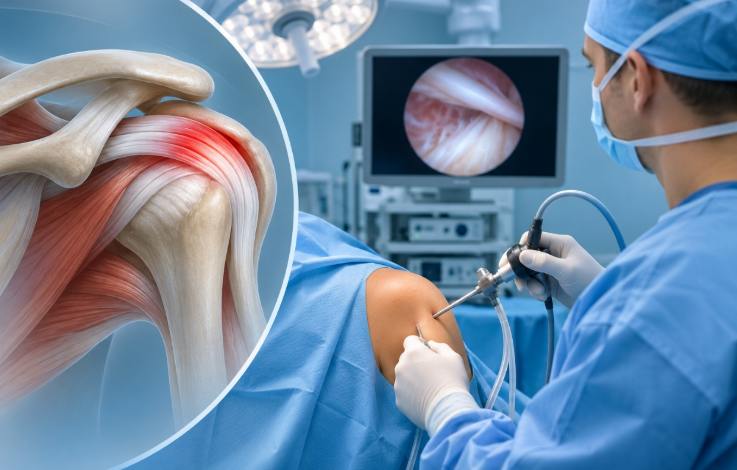
Shoulder pain can significantly affect mobility, physical activity, and everyday comfort. Conditions such as shoulder tendonitis, rotator cuff injuries, and joint instability may restrict movement and cause persistent discomfort. Fortunately, modern orthopaedic techniques offer effective treatment options with minimal tissue damage. Shoulder arthroscopy is a minimally invasive surgical procedure that allows orthopaedic surgeons to diagnose and treat various shoulder conditions through small incisions. Its precision, reduced postoperative discomfort, and shorter recovery period make it an important option in shoulder surgery.
Understanding Shoulder Anatomy
The shoulder is one of the body’s most mobile joints. It consists of three bones: the humerus, scapula, and clavicle. Its extensive range of motion depends on several muscles, tendons, and stabilizing structures.
The rotator cuff comprises four muscles: the supraspinatus, infraspinatus, subscapularis, and teres minor. Together, they support shoulder stability and facilitate movement.
Injuries affecting these structures can cause pain, weakness, and restricted mobility, sometimes requiring surgical intervention.
What Conditions Can Shoulder Arthroscopy Treat?
Shoulder arthroscopy addresses several orthopaedic conditions, including rotator cuff tears, shoulder impingement syndrome, calcific tendonitis, frozen shoulder, labral injuries, and recurrent shoulder dislocations.
It may also help treat joint instability, cartilage damage, and certain injuries involving the biceps tendon.
One particularly common condition is shoulder tendonitis, especially inflammation affecting the supraspinatus tendon.
Shoulder Tendonitis: Causes and Symptoms
Shoulder tendonitis often develops through repetitive movements, excessive physical activity, or prolonged mechanical stress.
Athletes performing frequent overhead movements, including swimmers and tennis players, face increased exposure to this condition. However, repetitive occupational activities and everyday movements can also contribute.
Common symptoms include shoulder pain extending toward the elbow, stiffness, weakness, swelling, and difficulty lifting the arm. Some patients experience persistent discomfort during rest or nighttime pain that interrupts sleep.
Diagnosis involves clinical examination, medical history assessment, and, when necessary, imaging tests such as ultrasound or magnetic resonance imaging.
Treatment Options and Arthroscopic Surgery
Initial treatment for shoulder tendonitis usually involves conservative measures. These include rest, activity modification, ice application, medication, and physiotherapy.
When symptoms persist despite appropriate treatment, shoulder arthroscopy may become necessary.
During the procedure, the surgeon introduces a miniature camera into the shoulder joint through incisions approximately five millimetres long. Magnified images allow detailed examination and precise treatment of damaged structures.
Specialized instruments, sutures, and anchors enable surgical repair while minimizing injury to surrounding healthy tissues.
Recovery After Shoulder Arthroscopy
Recovery depends on the underlying condition, surgical repair, and individual response to rehabilitation.
A personalized physiotherapy programme typically progresses through three stages: initial healing, restoration of movement, and muscular strengthening.
Exercises gradually advance from passive movements to assisted exercises and resistance training.
This structured approach supports functional recovery and a safe return to everyday activities.
Consult a Shoulder Surgery Specialist
Persistent shoulder pain or limited movement deserves specialist assessment. Early diagnosis helps determine whether conservative treatment or surgical intervention is appropriate.
For personalized evaluation and advanced treatment options, patients can contact Dr. Emmanouil Brilakis, an orthopaedic surgeon specializing in shoulder procedures, including shoulder arthroscopy.