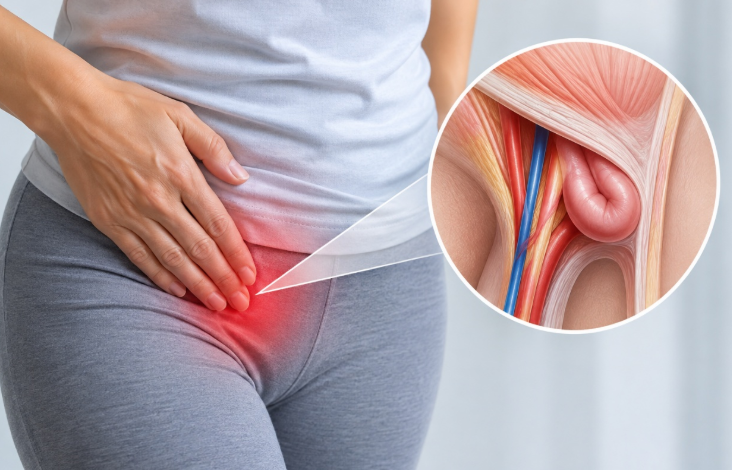
A femoral hernia is a relatively uncommon type of abdominal wall hernia that develops below the inguinal ligament, where the abdomen meets the upper thigh. It occurs when abdominal tissue protrudes through the femoral ring, creating a small bulge. Femoral hernias are more common in women, particularly those with obesity or a history of multiple pregnancies. Although usually small, they require medical attention because of their increased risk of strangulation.
What Causes a Femoral Hernia?
A femoral hernia develops when weakened areas of the abdominal wall allow internal tissue to protrude through an opening.
Several factors may contribute to its development, including obesity, repeated pregnancies, chronic constipation, persistent coughing, and heavy lifting. Strenuous physical work, urinary obstruction, and congenital predisposition may also increase the risk.
These factors can increase intra-abdominal pressure, placing additional strain on vulnerable areas of the abdominal wall.
Femoral Hernia Symptoms and Warning Signs
During its early stages, a femoral hernia may cause few or no noticeable symptoms. Some patients develop a small swelling near the groin or upper thigh, which becomes more prominent when standing, exercising, or straining.
Pain or discomfort in the femoral region is another common symptom, particularly during activities that increase abdominal pressure.
However, femoral hernias carry a significant risk of strangulation, a serious complication that occurs when blood supply to the trapped tissue becomes restricted.
Warning signs include sudden severe pain, painful swelling, nausea, vomiting, fever, and difficulty passing stools. These symptoms require immediate medical assessment.
How Is a Femoral Hernia Diagnosed?
Diagnosis typically begins with a physical examination by a qualified surgeon. The specialist examines the groin and upper thigh to identify swelling or other abnormalities.
When the diagnosis remains uncertain, an ultrasound or CT scan may be recommended. These examinations help distinguish femoral hernias from other conditions, including inguinal hernias.
Surgical Treatment for Femoral Hernias
Surgery is the only definitive treatment for a femoral hernia. Depending on the patient’s condition, repair may involve open, laparoscopic, or robotic surgery.
Among modern minimally invasive approaches, the eTEP technique allows surgeons to repair the hernia through small openings while positioning a surgical mesh outside the peritoneal cavity.
This approach supports abdominal wall reinforcement while reducing contact between the mesh and internal organs.
Robotic surgery using the Da Vinci Xi system provides magnified three-dimensional visualization and precise instrument control.
Potential benefits of minimally invasive repair include reduced postoperative discomfort, shorter hospitalization, and faster recovery.
Recovery and the Importance of Early Treatment
Following minimally invasive femoral hernia repair, patients can often return home the same day. Normal daily activities may resume within several days, while complete recovery generally takes approximately two to three weeks.
Early diagnosis and appropriate surgical treatment are essential for preventing complications.
For further information about femoral hernia treatment and modern surgical techniques, contact specialized abdominal wall hernia surgeon Dr. Fotis Archontovasilis to schedule a personalized consultation.