Stump Grinding: An Effective Solution for Removing Tree Stumps and Restoring Outdoor Spaces

Introduction
Maintaining an attractive, safe, and functional outdoor environment requires more than trimming trees, mowing lawns, and caring for plants. When a tree is removed because of disease, storm damage, age, or landscaping requirements, the remaining stump can become an unwanted obstacle that affects the appearance and usability of the surrounding property. Although cutting down a tree may seem like the most challenging part of the process, dealing with the remaining stump can present additional difficulties. Tree stumps can take years to decay naturally, occupy valuable outdoor space, attract unwanted insects, and create obstacles for people using the surrounding area. Leaving them untreated may also interfere with future landscaping, gardening, and construction activities. One practical solution for dealing with this problem is stump grinding, a specialized process that breaks down the remaining wood into smaller pieces using professional machinery.
Removing an unwanted stump can significantly improve the appearance and functionality of a yard, garden, commercial landscape, or other outdoor area. It can also help eliminate tripping hazards and make it easier to maintain the surrounding grass and plants. Unlike traditional excavation, which may require removing large portions of soil and disturbing nearby landscaping, grinding focuses primarily on reducing the visible stump and its upper root structure. This makes it a suitable option for many properties where preserving the surrounding landscape is important.
However, achieving good results requires appropriate equipment, proper planning, and an understanding of the tree’s size, root system, and surrounding conditions. Professional operators evaluate the work area, identify potential obstacles, and select suitable machinery before beginning. Understanding the process, benefits, preparation requirements, and maintenance considerations can help property owners make informed decisions when dealing with unwanted tree stumps.
Understanding the Purpose of Tree Stump Removal
Tree stumps are the remaining portions of a tree trunk after the main tree has been cut down. Depending on the tree species, age, size, and environmental conditions, these remains can stay in the ground for many years before naturally decomposing. During this period, they may become an inconvenience for property owners and interfere with the intended use of the outdoor space.
One of the main reasons for removing an old stump is to improve the appearance of the landscape. A large or deteriorating stump can make an otherwise well-maintained yard look unfinished. It may also interfere with the overall design of gardens, lawns, walkways, and recreational areas. Removing the visible remains creates a cleaner appearance and provides more flexibility when planning future landscaping improvements.
Safety is another important consideration. Stumps that remain close to walking paths, play areas, driveways, and frequently used outdoor spaces can create tripping hazards. Their roots may also produce uneven ground that makes mowing and routine maintenance more difficult. Children, visitors, and employees may accidentally trip over exposed sections, particularly when the stump is hidden by grass or vegetation.
Old tree remains can also attract insects and other organisms. Decaying wood may provide shelter and food for certain pests, depending on the surrounding environmental conditions. Although not every stump creates a pest problem, removing unwanted decaying material can help improve the cleanliness and manageability of the landscape.
What Is Stump Grinding and How Does It Work?
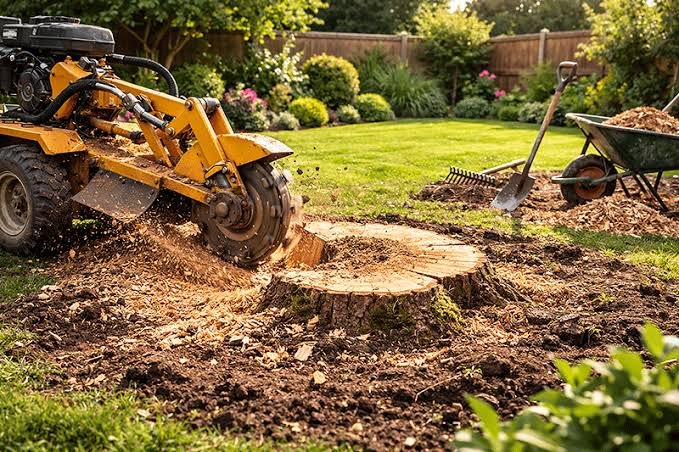
Stump grinding is a mechanical process that reduces a remaining tree stump into small wood chips using specialized cutting equipment. The machinery generally contains a rotating cutting wheel fitted with durable teeth designed to break down solid wood. As the equipment operates, the cutting wheel gradually removes sections of the stump until the visible trunk has been reduced below the surrounding ground level.
The process usually begins with an assessment of the stump and its surroundings. Professionals consider the diameter of the stump, the tree species, the ground conditions, and the accessibility of the work area. They also identify potential obstacles such as underground utilities, irrigation systems, landscaping features, and nearby structures.
Once the area has been evaluated, suitable machinery is positioned near the stump. Depending on the equipment and project requirements, the operator gradually moves the cutting mechanism across the remaining wood. The stump is reduced into smaller pieces, which accumulate around the work area as wood chips.
The grinding depth depends on the intended use of the space and the requirements of the property owner. A lawn restoration project may require a different depth from an area being prepared for new landscaping or other improvements. After grinding is completed, the remaining wood chips can be collected, reused, or mixed with other suitable organic materials as appropriate.
The final stage generally involves cleaning the area, filling the resulting depression with suitable soil, and preparing the surface for future landscaping. When performed correctly, this process helps eliminate the visible stump while minimizing unnecessary disturbance to the surrounding property.
The Difference Between Stump Grinding and Complete Stump Removal
Although stump grinding and complete stump removal are often discussed together, they involve different techniques and produce different results. Understanding the distinction helps property owners choose the right approach for their landscaping requirements.
Stump grinding focuses on reducing the visible stump and the upper portions of its root structure. The remaining wood is converted into chips, while deeper roots generally remain underground and gradually decompose over time. This approach is commonly selected when the goal is to restore the surface for lawn maintenance, gardening, or general landscaping.
Complete stump removal generally involves extracting the stump and a larger portion of its root system from the ground. This process may require excavation equipment, additional labor, and more extensive disturbance to the surrounding soil. It can be appropriate when the property needs to accommodate major construction, extensive excavation, or specific landscaping requirements that cannot be achieved through grinding alone.
The choice depends on what the property owner intends to do with the area afterward. If the goal is simply to remove an obstacle and restore the surface, grinding may be sufficient. However, if the area will be used for certain construction activities or requires extensive root removal, excavation may be more suitable.
Neither method is universally better. A professional assessment helps determine which option provides the most practical result based on the stump’s location, root structure, and intended future use of the property.
Benefits of Professional Stump Grinding Services
Removing an unwanted tree stump can provide several practical and aesthetic advantages. One of the most noticeable benefits is the improvement in outdoor appearance. Old stumps can make gardens and lawns look neglected, especially when they become discolored, cracked, or surrounded by unwanted vegetation. Reducing or removing these remains helps create a cleaner and more organized landscape.
Another benefit is improved accessibility. Stumps often occupy useful areas that could otherwise be used for seating, planting, walking paths, or recreational activities. Once the obstruction has been removed, property owners gain greater flexibility when arranging their outdoor spaces.
Professional services can also make lawn maintenance easier. Mowers and other landscaping equipment may struggle to move around exposed stumps and surface roots. These obstacles can damage equipment, create uneven mowing patterns, and increase the time required for routine yard maintenance. Grinding helps reduce these problems by creating a more manageable surface.
Safety improvements are equally important. Removing protruding wood reduces the likelihood of accidental trips and falls in areas used by residents, visitors, customers, or employees. This is particularly valuable for properties with children, older adults, or regular outdoor foot traffic.
In addition, professional operators have access to specialized machinery that can handle different stump sizes and conditions. Their experience allows them to select suitable equipment, manage the work area, and complete the project more efficiently than many improvised removal methods.
Equipment Used for Efficient Stump Grinding
The equipment selected for a stump removal project depends on several factors, including the stump’s diameter, wood hardness, location, and accessibility. Professional contractors use different types of machinery to accommodate residential gardens, commercial landscapes, and larger outdoor areas.
Walk-behind stump grinders are commonly used for smaller and medium-sized projects. These machines are designed to move through relatively narrow spaces and can be suitable for residential properties with limited access. Their compact design allows operators to work around landscaping features and certain obstacles while maintaining control over the cutting process.
Self-propelled stump grinders offer additional mobility and may be equipped with more powerful cutting systems. They are useful for larger stumps and properties where equipment needs to travel across uneven terrain. Their design can improve productivity when several stumps need to be processed.
Track-mounted machines are another option for demanding conditions. Tracks can provide improved stability and traction on certain surfaces, making them useful for larger projects or areas where wheeled equipment may have difficulty moving.
Large commercial stump grinders are generally designed for extensive landscaping and land-clearing operations. These machines can process substantial tree remains and are often used by professional tree service companies.
Regardless of the equipment type, safe operation requires proper training, protective equipment, and careful control of the cutting mechanism. Selecting machinery according to the work area’s limitations is important for achieving an effective result without damaging nearby property.
Preparing the Work Area Before Grinding Begins
Proper preparation helps make a stump removal project safer and more efficient. Before work begins, the surrounding area should be examined to identify objects and conditions that could interfere with machinery operation. Stones, branches, garden decorations, loose materials, and other debris should be removed where practical.
Underground utilities require particular attention. Electrical cables, water pipes, gas lines, drainage systems, and irrigation components may pass near the stump or through the surrounding soil. Their locations should be identified before any cutting or excavation-related activity begins. Where necessary, the appropriate utility identification service or qualified professional should be consulted.
The area should also be checked for nearby structures, fences, walls, vehicles, and valuable plants. Stump grinding can produce wood chips and debris, so suitable precautions may be needed to protect surrounding property.
Access is another important consideration. Contractors should determine whether the selected machine can reach the stump through existing gates, pathways, and entrances. In confined areas, compact equipment may be necessary to avoid damaging landscaping or structures.
Property owners should communicate any special concerns to the contractor before work starts. This may include underground systems, delicate plants, nearby water features, or plans for future construction. Good preparation reduces unexpected complications and helps ensure that the project is completed according to the property’s requirements.
How Tree Species and Stump Size Affect the Process
Not all tree stumps behave in the same way during grinding. The species, age, moisture content, and condition of the wood can influence how easily the cutting equipment processes the material. Hardwood species generally have denser wood than many softwood species, which may affect the amount of time and effort required.
Stump diameter is another major consideration. Small stumps can often be processed relatively quickly, while large tree remains may require more time and specialized machinery. Wider stumps may also contain extensive root flares that increase the working area.
The condition of the stump can influence the process as well. Freshly cut wood may behave differently from old, dry, or partially decayed material. Some older stumps may have developed extensive internal deterioration, while others remain relatively solid despite being exposed to the elements for years.
Root structure is also important. Certain tree species develop broad surface roots, while others produce deeper or more concentrated root systems. The visible size of a stump does not always indicate how extensive the underground structure may be.
Professional contractors consider these characteristics when estimating project duration and selecting equipment. Understanding the tree’s condition helps establish realistic expectations and ensures that the work is planned according to the actual requirements of the site.
Managing Wood Chips and Remaining Organic Material
One of the main results of stump grinding is the production of wood chips mixed with small amounts of soil and organic material. These materials can accumulate around the work area and may need to be managed before the property can be restored.
Wood chips can sometimes be reused in landscaping projects. When suitable and properly managed, they may serve as mulch around ornamental plants, shrubs, and garden beds. Mulch can help reduce moisture loss, limit certain weed growth, and improve the appearance of landscaped areas.
However, fresh wood chips are not always suitable for every application. They may temporarily affect soil conditions as they decompose, and they should not automatically be mixed into planting areas without considering the needs of the plants and soil. Large quantities of fresh material may be better handled separately or used as surface mulch in appropriate locations.
If the goal is to establish new grass, the remaining chips are generally removed or managed so that suitable soil can be added to the area. The amount of material requiring removal depends on the stump size, grinding depth, and intended final surface.
Property owners should discuss waste management with the contractor before work begins. Some services include collecting and removing the wood chips, while others leave the material on-site for the customer to manage. Clarifying this detail helps avoid misunderstandings and ensures that the finished area meets expectations.
Restoring the Ground After Stump Grinding
Once the stump has been processed, the surrounding area may contain a shallow depression filled with wood chips and loose soil. Restoring the ground is an important final step, particularly when the property owner intends to grow grass, install landscaping, or improve the appearance of the yard.
The first stage generally involves managing the accumulated wood chips and preparing the remaining area. Depending on the project, some material may be removed while suitable soil is added to create a stable surface. The amount of soil required depends on the depth and size of the resulting depression.
For lawn restoration, the area should be filled with appropriate topsoil and leveled to match the surrounding ground. Grass seed or suitable turf can then be introduced according to the property owner’s preference and the recommended growing conditions.
If the area becomes a garden bed, the soil may need additional preparation to support the selected plants. Organic matter and other suitable soil amendments can be incorporated when appropriate, depending on the existing soil condition and planting requirements.
It is also important to recognize that remaining underground roots may continue decomposing after grinding. Over time, this natural process can cause some settling in the restored area. Monitoring the surface and adding soil when necessary can help maintain a consistent appearance.Proper restoration transforms the work area from an unfinished patch into a useful part of the overall landscape.
Common Problems Associated With Leaving Tree Stumps in Place
Although a tree stump may initially appear harmless, leaving it in place can create several long-term inconveniences. One common issue is the gradual deterioration of the wood. As the stump decomposes, its structure may become soft, cracked, and uneven, making the surrounding area more difficult to maintain.
Insects may also use decaying wood as a source of food or shelter. Depending on the tree species and local environmental conditions, certain insects can establish colonies in or around old stumps. In some circumstances, decaying wood may provide suitable conditions for termites and other wood-damaging organisms. Removing unwanted material can help reduce potential shelter and food sources, although it does not replace proper pest inspection when an infestation is suspected.
Another problem involves unwanted vegetation. Stumps and surrounding roots may produce new shoots, depending on the tree species and its biological condition. These shoots can create additional maintenance requirements and may interfere with landscaping plans.
Surface roots can also create obstacles for mowing and walking. As they become exposed or deteriorate, they may contribute to uneven ground and make certain areas less convenient to use.For property owners planning outdoor improvements, an old stump can also restrict the placement of pathways, garden beds, seating areas, and other features. Addressing the issue early can provide more flexibility and prevent the need for additional work later.
Choosing a Reliable Stump Grinding Contractor
Selecting an experienced contractor is an important part of achieving good results. Although stump grinding is a specialized service, the quality of the work depends on more than the machinery being used. Operators must understand equipment limitations, site conditions, safety requirements, and the characteristics of different tree species.
One of the first factors to consider is professional experience. Contractors who regularly handle different stump sizes and property layouts are generally better equipped to assess the work and identify potential challenges. They should also be able to explain the proposed approach and discuss any special requirements associated with the site.
Insurance and appropriate business credentials should also be checked where applicable. Because stump grinding involves powerful cutting equipment, accidental damage or injury is a potential concern. Working with a properly insured and qualified provider can offer additional peace of mind.
Equipment condition is another important consideration. Well-maintained machinery is more likely to perform reliably and reduce the possibility of unnecessary delays. Contractors should also use appropriate protective equipment and establish suitable precautions around the work area.A clear quotation should explain what is included in the service. Property owners should confirm whether the price covers grinding depth, wood chip collection, debris removal, and basic ground restoration. Asking these questions before work begins helps prevent confusion and allows customers to compare service providers fairly.
Factors That Influence the Cost of Stump Grinding
The cost of a stump grinding project depends on several factors, and the price can vary significantly between properties. Stump size is generally one of the most important considerations because larger tree remains require more cutting time and may need more powerful machinery.
Tree species can also affect the cost. Dense hardwood may require additional effort compared with softer wood, while unusual root structures may increase the complexity of the work. The condition of the stump and the amount of surrounding material can also influence the time required.
Accessibility is another major factor. Stumps located in open areas may be relatively straightforward to reach, while those positioned behind fences, between buildings, or near delicate landscaping may require specialized equipment. Limited access can increase labor requirements and make the project more complicated.The number of stumps also matters. Removing several stumps during the same visit may provide operational efficiencies compared with arranging separate appointments. However, the total cost still depends on the size and location of each stump.
Additional services can influence the overall quotation. Collecting wood chips, transporting debris, supplying topsoil, leveling the ground, and preparing the area for new grass may all involve extra work.Property owners should request a detailed estimate that explains the included services and any potential additional charges. Comparing quotations based on the full scope of work makes it easier to identify a suitable contractor.
Safety Measures During Professional Stump Grinding
Stump grinding involves machinery with powerful rotating cutting components, making safety a critical part of the process. Operators must understand the equipment, inspect the work area, and follow appropriate procedures to reduce the possibility of accidents.
Protective equipment is essential. Depending on the machinery and working conditions, this may include eye protection, hearing protection, safety footwear, gloves, and other suitable personal protective equipment. Operators should also follow the equipment manufacturer’s instructions and relevant workplace safety requirements.The work area should be kept clear of unnecessary people, pets, and vehicles. Grinding can produce flying wood chips, stones, and other debris, so appropriate exclusion zones and protective barriers may be necessary.
Before starting, operators should inspect the stump and surrounding ground for potential hazards. Underground utilities, hidden metal objects, loose rocks, and unstable ground can create complications. Any identified hazards should be addressed before machinery is operated.
Professional operators should also monitor equipment performance throughout the project and stop work if unexpected conditions arise. Proper maintenance, training, and site management help reduce risks and support a more controlled operation.Property owners should avoid attempting to operate heavy stump grinding equipment without suitable training and experience. Hiring qualified professionals is generally the safer option for projects involving large or difficult tree remains.
Residential and Commercial Applications of Stump Grinding
Stump grinding is useful for many types of outdoor properties, including private gardens, residential developments, commercial landscapes, parks, and institutional grounds. Each setting has different requirements, but the overall objective is to remove unwanted tree remains and improve the usability of the surrounding area.
Residential properties often require stump removal to create more space for lawns, garden beds, outdoor seating, and children’s play areas. Removing old stumps can also improve the appearance of driveways, entrances, and landscaped front yards.
Commercial properties may need stump removal as part of regular landscape maintenance. Offices, shopping centers, hotels, restaurants, and industrial facilities often maintain outdoor spaces that contribute to their professional appearance. Unwanted stumps can interfere with landscaping operations and create obstacles for employees, customers, and visitors.
Property developers may also use stump grinding during site preparation. When existing trees have been removed as part of a landscaping or development plan, reducing the remaining stumps can help prepare the ground for subsequent work. However, projects involving foundations or major excavation may require additional root removal or engineering assessment.
Public spaces and recreational areas can also benefit from stump management because exposed tree remains may create hazards for people using walking paths, playgrounds, and open spaces.Regardless of the property type, selecting the appropriate removal method depends on the site’s intended future use and the condition of the remaining tree structure.
Long-Term Benefits of Removing Unwanted Tree Stumps
Removing unwanted tree stumps can provide lasting advantages that extend beyond immediate improvements in appearance. One major benefit is the ability to use outdoor space more effectively. Areas previously occupied by tree remains can become available for planting, lawn restoration, pathways, and other landscaping features.Ground maintenance may also become easier. Without exposed stumps and surface obstacles, mowing and routine landscaping activities can be completed more conveniently. This can reduce the time and effort required to maintain a property.
Another advantage is improved outdoor safety. Removing visible obstacles can make walking areas easier to navigate and reduce the possibility of accidental trips. This is particularly important in commercial spaces and properties with frequent visitors.Addressing decaying wood may also reduce certain pest-related concerns by removing a potential source of shelter and food for insects. Although professional pest management may still be necessary in some situations, eliminating unwanted organic material can contribute to better property maintenance.
From an aesthetic perspective, removing old tree remains allows homeowners and property managers to create a more consistent and attractive landscape. It provides greater freedom when planning future improvements and helps maintain a cleaner outdoor appearance.
Conclusion
Unwanted tree stumps can affect the appearance, safety, and functionality of residential and commercial outdoor spaces. They may interfere with lawn maintenance, restrict landscaping opportunities, create tripping hazards, and provide shelter for certain insects as they gradually decay. Leaving them untreated can make future property improvements more difficult and reduce the usable space available for everyday activities.
Stump grinding provides a practical solution by reducing remaining tree trunks into manageable wood chips while minimizing the need for extensive excavation. The process involves assessing the stump, selecting suitable equipment, preparing the surrounding area, and carefully processing the remaining wood. Proper debris management and ground restoration are also important for achieving a clean and useful final result.
Working with experienced professionals helps ensure that the project is completed efficiently and safely. Qualified operators can evaluate site conditions, identify potential hazards, select appropriate machinery, and recommend suitable restoration methods. They can also help property owners determine whether grinding or more extensive removal is necessary.
Ultimately, removing unwanted tree stumps is a valuable investment in outdoor maintenance and landscaping. With proper planning and professional workmanship, stump grinding can help restore usable space, improve property appearance, and create a safer, more attractive environment for years to come.