Pool Maintenance: Essential Practices for Keeping Your Swimming Pool Clean, Safe, and Beautiful

A swimming pool is more than just a place to swim; it is a space for relaxation, recreation, exercise, and spending quality time with family and friends. However, keeping a swimming pool in excellent condition requires regular attention, proper cleaning, and a consistent care routine. Without adequate maintenance, pool water can quickly become cloudy, unpleasant, and unsafe for swimmers. Dirt, leaves, bacteria, algae, and other contaminants can accumulate over time, affecting both water quality and the overall appearance of the pool. This is why understanding the right cleaning methods and maintenance practices is essential for every pool owner.
Proper pool maintenance helps protect the swimming environment while extending the lifespan of important equipment, including pumps, filters, heaters, and circulation systems. A well-maintained pool also reduces the likelihood of expensive repairs because small problems can be identified and addressed before they become serious. Whether someone owns a residential swimming pool or manages a commercial swimming facility, developing a reliable maintenance routine can make pool ownership easier and more cost-effective. By following suitable cleaning practices, monitoring water chemistry, and inspecting equipment regularly, pool owners can enjoy clear, comfortable, and hygienic water throughout the swimming season.
Understanding the Importance of Regular Swimming Pool Care
Regular swimming pool care is essential for maintaining a clean and comfortable environment. Water that appears clear is not necessarily free from harmful contaminants, as bacteria, microorganisms, and chemical imbalances may exist without being immediately visible. Consistent cleaning and water testing help identify these problems before they affect swimmers. A properly managed swimming pool provides a healthier environment and reduces the chances of irritation caused by unbalanced chemicals, excessive contaminants, or poor sanitation.
Another important reason to maintain a swimming pool regularly is to protect its structural condition and mechanical components. Swimming pools contain several interconnected systems that work together to keep the water clean and circulating properly. These include pumps, filters, skimmers, drains, and plumbing connections. When dirt and debris are allowed to accumulate, these components may experience additional strain, reducing their efficiency and potentially leading to equipment failure. Regular inspections and cleaning help ensure that every part of the system operates as intended.
Consistent care also improves the overall swimming experience. Nobody wants to swim in water that looks dirty, smells unpleasant, or contains visible debris. Clean surroundings, balanced water, and properly functioning equipment make the swimming area more inviting. Furthermore, a regular maintenance schedule saves time because routine tasks are generally easier to manage than major cleaning projects that result from neglect.
Establishing a Consistent Pool Cleaning Schedule
Creating a realistic cleaning schedule is one of the most effective ways to keep a swimming pool in good condition. Instead of waiting until the water becomes cloudy or debris starts collecting along the edges, pool owners should establish daily, weekly, and monthly responsibilities. A consistent schedule prevents dirt from accumulating and makes it easier to identify unusual changes in water quality or equipment performance.
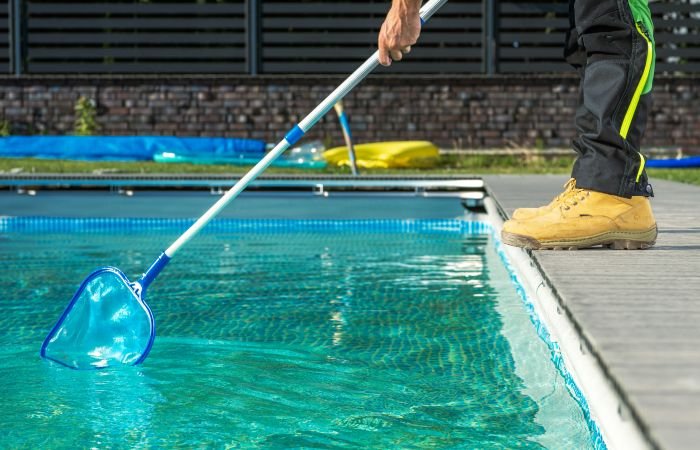
Daily cleaning tasks generally include checking the water surface, removing floating leaves, and inspecting the surrounding area. A pool skimmer or leaf net can quickly remove insects, grass, leaves, and other visible debris. Pool owners should also check the water level to ensure it remains within the recommended operating range for the skimmer system. If the water level becomes too low, the pump may struggle to draw water correctly, while an excessively high level can reduce skimming efficiency.
Weekly responsibilities usually involve brushing the pool walls, cleaning the floor, vacuuming accumulated dirt, and checking the filtration system. These activities help remove contaminants that ordinary circulation cannot eliminate. Monthly inspections should focus on equipment condition, plumbing connections, filter performance, and the overall appearance of the pool surface. The schedule may need adjustments depending on swimming frequency, weather conditions, surrounding vegetation, and the number of people using the pool.
Maintaining Proper Water Chemistry for a Healthy Swimming Environment
Water chemistry is one of the most important aspects of swimming pool care because chemical balance directly affects cleanliness, comfort, and sanitation. Pool water contains different substances that must remain within suitable ranges to maintain a safe swimming environment. Chlorine, pH, alkalinity, calcium hardness, and stabilizer levels all contribute to water quality. If any of these factors become unbalanced, the water may become irritating, develop unpleasant odors, or encourage algae growth.
Chlorine is commonly used to disinfect swimming pool water by controlling bacteria, algae, and other microorganisms. However, adding chlorine without testing the water can create unnecessary problems. Insufficient chlorine may allow contaminants to multiply, while excessive levels can irritate swimmers’ skin and eyes. Pool owners should use reliable testing kits or digital water testers to measure sanitizer levels and make adjustments according to product instructions and established pool water guidelines.
The pH level is equally important because it influences how effectively chlorine works and how comfortable the water feels. When pH becomes too low, the water may become corrosive and damage metal components, pool surfaces, and equipment. High pH levels can contribute to cloudy water and mineral deposits while reducing chlorine effectiveness. Total alkalinity helps stabilize pH and prevents sudden fluctuations. Calcium hardness also needs attention because excessively low levels may contribute to surface damage, whereas high levels can encourage scaling.
Testing the water regularly allows pool owners to make informed adjustments instead of guessing which chemicals are required. Chemical products should always be stored safely, handled according to their labels, and never mixed together directly. Proper chemical management is essential for maintaining a clean and comfortable swimming environment.
Cleaning Pool Filters and Maintaining Proper Water Circulation
The filtration system plays a major role in keeping swimming pool water clean. It removes suspended particles, dirt, and other contaminants that may not be visible to the naked eye. A swimming pool pump moves water through the filtration system and returns the filtered water to the pool. If circulation becomes weak or the filter becomes clogged, dirt can accumulate and water quality may deteriorate.
There are several types of pool filters, including sand filters, cartridge filters, and diatomaceous earth filters. Each type has different cleaning and servicing requirements. Sand filters generally require backwashing when pressure readings indicate that the filter has become restricted. Cartridge filters need periodic removal and rinsing, while diatomaceous earth filters require careful cleaning and replacement of filter media according to manufacturer instructions.
Pool owners should monitor the pressure gauge to identify changes in filter performance. A noticeable increase above the clean-filter baseline may indicate that the filter needs cleaning or backwashing. However, pressure readings should always be interpreted according to the equipment manufacturer’s recommendations. Cleaning a filter too frequently or using unsuitable methods can reduce its efficiency or damage its components.
Water circulation is also important because it distributes sanitizing chemicals throughout the pool and helps prevent stagnant areas. Return jets should be positioned to encourage effective water movement, while the pump should operate according to the pool’s design and usage requirements. Maintaining adequate circulation supports better filtration, improves chemical distribution, and reduces the likelihood of algae developing in areas where water movement is limited.
Brushing Pool Walls, Floors, and Hard-to-Reach Areas
Brushing is an important cleaning activity that helps remove dirt, algae, and mineral deposits from pool surfaces. Even when a swimming pool has an effective filtration system, certain contaminants can attach themselves to walls, steps, corners, and other surfaces. If these deposits are not removed regularly, they may become increasingly difficult to clean and can contribute to visible stains or algae growth.
The correct brush should be selected according to the pool’s surface material. Nylon brushes are generally suitable for vinyl, fiberglass, and many delicate surfaces, while certain plaster or concrete pools may require brushes with more durable bristles. Using an unsuitable brush can scratch or damage the pool finish, so owners should always check the manufacturer’s recommendations before selecting cleaning equipment.
Brushing should begin with the walls and gradually move toward the floor, directing loose debris toward the main drain or areas where it can be vacuumed. Particular attention should be given to corners, ladders, steps, waterline tiles, and areas behind fittings. These locations often receive less direct water circulation and can become collection points for dirt and algae.
Regular brushing also helps prevent stubborn deposits from developing. When combined with proper filtration and balanced water chemistry, it makes the entire cleaning process more effective. Pool owners should avoid using ordinary household cleaning products on pool surfaces because unsuitable chemicals may interfere with water balance or damage the finish.
Removing Leaves, Dirt, and Other Surface Debris
Leaves, insects, dust, grass, and other outdoor materials can enter a swimming pool every day. If they remain in the water, they gradually break down and contribute organic contaminants that increase the demand for sanitizing chemicals. Large amounts of debris can also block skimmer baskets, restrict water circulation, and place additional pressure on the filtration system.
A leaf net is a simple and effective tool for removing floating debris before it sinks. Pool owners should skim the surface regularly, especially after windy weather or heavy rainfall. Removing debris early reduces the amount of material that reaches the pool floor and makes vacuuming easier. Skimmer baskets should also be emptied frequently because accumulated leaves and insects can restrict water flow.
For pools surrounded by trees or gardens, preventive measures can reduce the amount of debris entering the water. Installing a suitable pool cover when the pool is not in use is one option. Maintaining nearby plants and trimming overhanging branches can also help limit leaves and organic material falling into the water.
It is important to remember that removing visible debris is only one part of keeping the pool clean. Fine particles, dissolved contaminants, and microorganisms still require proper filtration and sanitation. Combining surface cleaning with regular water testing and equipment inspections provides a more complete approach to pool care.
Preventing Algae Growth and Managing Cloudy Water
Algae growth is a common problem that can affect swimming pools when sanitation, circulation, or water chemistry becomes inadequate. Algae may appear as green, yellow, or dark patches on pool surfaces, while certain types can make the water cloudy or slippery. Once algae begins spreading, cleaning may require additional brushing, filtration, and carefully controlled chemical treatment.
Prevention is generally easier than dealing with an established algae problem. Maintaining suitable sanitizer levels, ensuring adequate circulation, and brushing surfaces regularly help reduce the conditions that encourage algae growth. Pool owners should also monitor water chemistry after heavy rainfall, periods of intensive swimming, or unusually hot weather because these conditions can affect chemical balance.
Cloudy water can develop for several reasons, including poor filtration, high levels of suspended particles, chemical imbalance, or early algae growth. The first step in addressing cloudy water should be testing the water rather than immediately adding several chemicals. Testing helps identify whether the problem involves sanitizer levels, pH, alkalinity, or another factor.
Filter cleaning may be necessary if the system is not removing suspended particles effectively. In some situations, a pool clarifier or other specialized treatment may be appropriate, but these products should only be used according to their instructions and compatibility requirements. If the water remains cloudy or its sanitation cannot be confirmed, swimming should be avoided until the underlying problem has been corrected and the water is safe.
Inspecting Pool Equipment and Identifying Early Problems
Swimming pool equipment requires regular inspection because even small mechanical problems can eventually affect the entire system. The pump, filter, heater, valves, pipes, and automatic cleaning equipment all contribute to proper operation. Ignoring unusual sounds, leaks, reduced water flow, or inconsistent performance can result in expensive repairs and unnecessary interruptions.
The pump should be checked for unusual vibration, overheating, leaks, and changes in operating noise. Pool owners should also inspect the pump basket and remove accumulated debris when necessary, following the manufacturer’s safety instructions. The filter pressure gauge should be monitored to determine whether cleaning is required, while visible plumbing connections should be checked for signs of leakage.
Pool heaters may require additional attention because mineral deposits, corrosion, and restricted water flow can affect performance. Electrical components and automated systems should also be inspected by qualified professionals when faults are suspected. Owners should never attempt electrical repairs without appropriate training and should follow proper shutdown and isolation procedures before any equipment servicing.
A maintenance record can be helpful for tracking equipment inspections, filter cleaning, repairs, and unusual changes in performance. Keeping these records makes it easier to identify recurring issues and plan preventive servicing. Addressing small problems early can improve equipment reliability and help avoid unexpected breakdowns.
Managing Pool Water Levels and Protecting Pool Surfaces
Maintaining an appropriate water level is another important part of keeping a swimming pool operational. Water levels can change because of evaporation, splashing, backwashing, rainfall, and leaks. If the level drops too low, the skimmer may begin drawing air instead of water, which can affect pump performance. If it becomes too high, surface debris may not enter the skimmer efficiently.
Pool owners should inspect the water level regularly and adjust it when necessary. However, repeated or unusually rapid water loss should not automatically be attributed to evaporation. A leak may be responsible, particularly if the water level continues dropping when the pool is not being used. Professional leak detection can help identify problems involving plumbing, fittings, drains, or the pool structure.
Pool surfaces also need attention because different materials respond differently to water chemistry and cleaning methods. Concrete, plaster, fiberglass, and vinyl liners each have specific care requirements. Harsh brushes, unsuitable chemicals, and poorly balanced water can cause discoloration, roughness, staining, or premature deterioration.
Using cleaning products designed for the particular pool surface helps protect its appearance. Pool owners should also avoid allowing chemical concentrations to become excessively high or low. A properly balanced swimming environment supports both swimmer comfort and the long-term condition of the pool structure.
Seasonal Pool Care and Preparation for Changing Weather
Swimming pools often require different care routines depending on the season and weather conditions. During warmer months, increased temperatures, sunlight, and frequent swimming can create additional demands on filtration and sanitation systems. More swimmers introduce sunscreen, sweat, cosmetics, and other contaminants, making regular testing and cleaning particularly important.
During periods of heavy rainfall, pool owners should check the water level, remove organic debris, and test chemical balance. Rainwater can dilute certain chemicals and introduce contaminants from the surrounding environment. Strong winds may also carry leaves, dust, and insects into the pool, increasing the need for surface cleaning.
When preparing a pool for colder weather or a period of extended inactivity, owners should follow a suitable seasonal care procedure. This may include cleaning the pool thoroughly, balancing the water, inspecting equipment, and using a suitable cover. In regions where freezing temperatures occur, pipes and equipment may require additional winterization measures to prevent damage caused by expanding ice.
For pools that remain operational throughout the year, regular inspection and adjustments are still necessary as environmental conditions change. The goal is to maintain consistent water quality rather than relying on a single cleaning routine regardless of temperature, weather, or usage.
Following Safety Practices When Handling Pool Chemicals
Pool chemicals are useful for controlling bacteria, algae, and other contaminants, but they must be handled carefully. Incorrect storage, accidental mixing, or improper application can create dangerous situations. Pool owners should always read product labels and follow the recommended instructions before using any chemical treatment.
Chemicals should be stored in a cool, dry, well-ventilated area away from children, pets, direct sunlight, and incompatible materials. Different chemical products should remain in their original containers with their labels intact. Chlorine products must never be mixed directly with acids, ammonia, or other incompatible substances because dangerous gases or chemical reactions may occur.
Appropriate protective equipment, such as gloves and eye protection, should be used when handling concentrated pool chemicals. Products should be measured carefully, and treatments should never be combined simply because the water appears dirty. Pool owners should also follow instructions regarding circulation, waiting periods, and water testing before allowing swimmers back into the pool.
Safety extends beyond chemical handling. Pool decks should be kept free from slippery debris, damaged ladders should be repaired, and suitable barriers should be maintained to restrict unsupervised access. Children should always be supervised around swimming pools, and appropriate rescue equipment should remain accessible.
Why Professional Pool Care Can Be a Valuable Investment
Although many routine cleaning tasks can be completed independently, professional pool care can provide additional support when specialized knowledge or equipment is required. Experienced technicians can identify mechanical faults, diagnose persistent water quality problems, inspect filtration systems, and recommend suitable treatments. Their knowledge can be particularly valuable for large pools, heavily used facilities, or systems with complex equipment.
Professional inspections can also help identify developing problems that may not be obvious during everyday cleaning. For example, a small plumbing leak, deteriorating seal, damaged pump component, or recurring chemical imbalance may require specialized testing to diagnose correctly. Early professional attention can prevent these issues from developing into more expensive repairs.
Another advantage is the ability to develop a maintenance plan based on the pool’s size, construction material, equipment, and usage patterns. Different pools have different requirements, so a customized approach is often more effective than applying the same routine to every swimming facility.
Hiring a professional does not mean that pool owners should stop monitoring their swimming environment. Daily observations, basic cleaning, and routine water testing remain valuable. Combining regular personal care with periodic professional inspections can create a dependable approach to keeping the pool in excellent condition.
Conclusion
Maintaining a swimming pool requires consistency, attention to detail, and a clear understanding of cleaning, sanitation, filtration, and equipment care. From removing floating debris and brushing pool surfaces to balancing water chemistry and inspecting mechanical systems, every task contributes to a healthier and more enjoyable swimming environment. Ignoring these responsibilities can lead to cloudy water, algae growth, equipment damage, and unnecessary expenses.
A well-planned pool maintenance routine makes it easier to protect water quality, preserve pool surfaces, and extend the working life of essential equipment. Pool owners should establish a practical cleaning schedule, test the water regularly, maintain effective circulation, and address small problems before they become major concerns. Chemical safety and professional inspections should also remain important parts of the overall care process.
Ultimately, a clean and properly maintained swimming pool provides more than visual appeal. It creates a comfortable place for recreation, supports swimmer safety, and protects the investment made in the swimming facility. By following consistent care practices and choosing suitable cleaning methods, pool owners can keep their swimming pools attractive, functional, and ready for use throughout the year.