Navigating the White Center, WA Housing Market: Trends, Value, and Opportunities

Understanding micro-market fundamentals in the Pacific Northwest requires examining areas where geographical constraints, infrastructure expansion, and shifting demographic patterns intersect. Located directly south of West Seattle, White Center represents an unincorporated pocket of King County that sits at a distinct real estate nexus. Long valued for its commercial accessibility and diverse housing stock, the neighborhood provides a unique case study in urban equity retention and residential positioning.
For buyers, property owners, and long-term investors, analyzing the regional forces that shape property valuations is critical for managing capital risk. Navigating local land use trends, transportation corridors, and structural property profiles ensures that real estate decisions remain grounded in economic reality rather than speculative hype.
The Structural Drivers of Unincorporated King County Real Estate
Metropolitan housing dynamics in western Washington are defined by strict land-use boundaries and topographical barriers. Because bodies of water and protected greenbelts limit outward expansion, urban residential demand naturally concentrates in established close-in communities.
Unincorporated pockets like White Center operate under King County jurisdiction rather than city municipal management, introducing distinct planning, permitting, and taxation dynamics:
- Jurisdictional Flexibility: County building and land-use regulations can offer different pathways for accessory dwelling units (ADUs), lot subdivisions, and residential expansions compared to neighboring city jurisdictions.
- Property Tax Structures: Base property tax calculations differ from incorporated municipalities, impacting overall annual holding costs for residential assets.
- Commercial Corridor Revitalization: Targeted infrastructure investments along major arterial routes directly influence adjacent residential valuations and foot-traffic density.
Longitudinal data tracked by the Case-Shiller Home Price Index demonstrates that core Seattle-area residential assets maintain structural pricing stability across multi-year cycles, driven primarily by persistent regional supply deficits.
Evaluating Housing Inventory and Architectural Footprints
Evaluating property values requires a granular look at the physical structures that make up a neighborhood. The residential layout of the area features a varied mix of mid-century single-family homes, modest craftsman bungalows, and modern infill developments.
Matching physical housing characteristics with long-term capital goals allows purchasers to anticipate necessary maintenance reserves and structural upgrade paths:
| Property Style | Construction Era | Structural Profile | Primary Capital Consideration |
| Post-War Single-Story | 1940s–1950s | Wood-frame framing, expansive lot footprints | Side-sewer updates, electrical panel upgrades |
| Craftsman / Tudor | 1920s–1930s | Dense hardwood construction, distinct character | Masonry foundation retrofits, insulation upgrades |
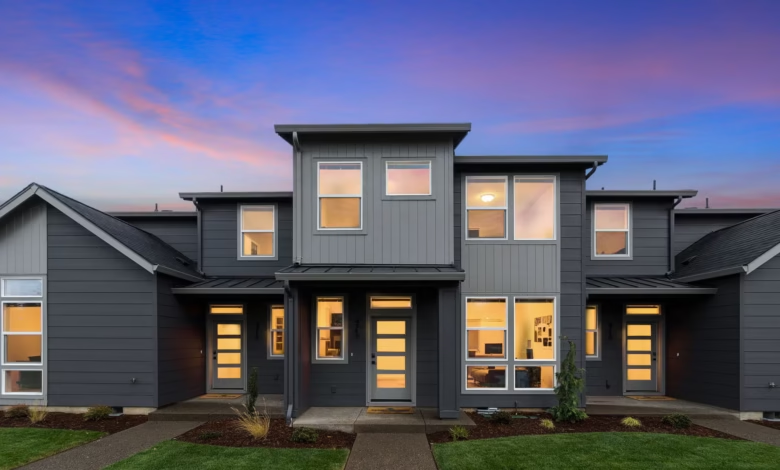
| Modern Infill Townhomes | 2010s–Present | Multi-story vertical framing, efficient envelopes | Shared maintenance agreements, minimal lot footprint |
Prospective buyers and property owners evaluating regional inventory, structural layouts, and neighborhood valuations often track active listings across the White Center, WA housing market to identify emerging property opportunities and monitor local price movements.
Infrastructure, Transit Connectivity, and Regional Access
Real estate valuation relies heavily on proximity to primary employment centers and transportation infrastructure. A primary operational advantage of this sub-market is its direct physical connection to major regional transit lines and commercial hubs.
Key transportation and location advantages include:
- Downtown and Industrial Corridor Access: Direct roadway connections to the Duwamish industrial area, Downtown Seattle, and Port of Seattle facilities provide short commute times for local workers.
- West Seattle Bridge Connectivity: Restored east-west transit capacity guarantees uninterrupted vehicular and bus transit across the Elliott Bay corridor.
- Regional Airport Proximity: Efficient access south toward Seattle-Tacoma International Airport supports commercial logistics and corporate mobile workers.
Analysis published shows that residential neighborhoods with direct access to multi-modal transit networks experience lower vacancy volatility and stronger long-term equity retention compared to isolated suburban corridors.
Structural Due Diligence for Legacy Residential Properties
Acquiring mid-century or early-twentieth-century residential inventory requires rigorous physical due diligence. While older homes often boast larger lot sizes and solid framing, unaddressed mechanical or structural deficiencies can quickly erode profit margins or planned renovation budgets.
Before waiving inspection contingencies or finalizing purchase contracts, buyers should conduct thorough evaluations of core building systems:
- Side-Sewer Infrastructure: Original concrete or clay sewer connections are susceptible to tree-root intrusion and collapse. Performing a video scope inspection prevents unbudgeted excavation expenses.
- Electrical Capacity: Legacy 60-amp or 100-amp electrical panels require upgrading to 200-amp service to safely support modern HVAC systems, heat pumps, and electric vehicle charging stations.
- Foundation and Seismic Anchor Placement: Inspecting unreinforced concrete foundations and verifying proper mudsill bolting ensures structural stability against seismic activity.
According to technical specifications from the U.S. Bureau of Labor Statistics Consumer Price Index Housing Survey Methodology, ongoing housing maintenance and capital improvements play a major role in preserving the real, inflation-adjusted economic value of residential structures over long holding periods.
Positioning Capital for Long-Term Equity Retention
Securing lasting value in evolving urban markets requires a disciplined operational strategy. By evaluating property characteristics, analyzing regional transit infrastructure, and conducting thorough physical due diligence, buyers can position themselves to build lasting equity.
As western Washington continues to navigate supply constraints and demographic shifts, well-located residential assets featuring solid construction, flexible land-use potential, and strong regional connectivity remain resilient components of a balanced real estate portfolio.