Best Practices for Safe Blood Storage and Transportation of Blood Bank Monitoring

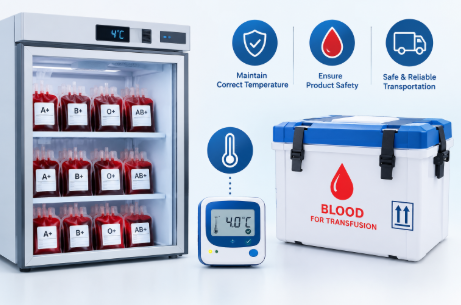
The blood bank is a crucial component in healthcare as it collects, processes, stores, and distributes blood and blood components for transfusion. Blood quality and patient safety are key areas of importance when it comes to proper storage conditions. Changes in temperature during storage and transportation can affect the blood components, leading to the loss of product and the risk of harm to the recipients. Temperature controlled storage and transportation are recognized as critical components of the blood cold chain by the World Health Organization
Healthcare facilities can have greater visibility over storage conditions with modern monitoring technology. The adoption of digital monitoring systems, automated alerts, and temperature data captures can enhance blood banks’ quality management procedures and boost operational efficiency.
Knowing why blood bank monitoring is important.
Best Blood bank monitoring refers to the monitoring and recording of environmental conditions in the refrigerators, freezers, storage rooms and transport containers of blood products.
The blood components need to be stored in different conditions. It is not always possible to maintain the other components, such as red blood cells, platelets, plasma and others at the same temperature. Hence, the blood bank should have proper procedures for the storage of blood based on the relevant regulations, product specifications and approved SOPs.
With effective monitoring, facilities:
- Properly store blood components.
- Detects any temperature variations quickly.
- Keep an accurate temperature log.
- Help with quality assurance and quality inspection.
- Minimize unnecessary product waste.
- Increase the accountability of health care staff.
The important elements of the cold chain according to WHO are storage, transportation, equipment maintenance and proper monitoring.
The problems with the traditional blood bank temperature monitoring system.The traditional blood bank temperature monitoring system problems.
Traditionally, medical establishments have been using conventional thermometers or monitoring sheets for manual temperature measurement. While these approaches can be integrated into an already in place monitoring process, they may offer limited monitoring coverage between scheduled monitoring events.
Common problems are:
The improper timing of temperature fluctuations identification.Delayed identification of temperature deviations.
If temperatures are only taken at regular times, a discrepancy between checks could not be detected until the next check is taken.
- Manual Record-Keeping
Staff attention is needed to keep handwritten records. Internal reviews may be complicated due to missing entries, transcription errors, and incomplete documentation.
- Limited Remote Visibility
Staff personnel should be required to go to storage equipment to verify operating conditions, especially if it is not possible to use monitoring systems that can be accessed remotely.
- Disruptions of equipment and power
Storage conditions are vulnerable to refrigerator failures, electrical outages, and other equipment issues. There should be documented procedures for responding to such events in the facilities.
The difficulties reflect the need for appropriate monitoring equipment, trained staff and quality procedures to be in place.
The Blood Bank depends on the accuracy of the temperature data that it records.The accuracy of the temperature data recorded in the Blood Bank is important.
Real-Time Temperature Data Logger is a digital monitoring device used to record and measure the temperature over time. It can relay readings to a connected platform and alerts for temperature limits if they are set.
This technology can help blood banks to continuously monitor and enhance access to temperature information.
- Continuous Temperature Monitoring
Real-time monitoring gives more frequent insights on storage conditions compared to periodic manual readings.
The system records the temperature at the configured time intervals and is measured with sensors. This data provides an understanding of temperatures and unusual temperature change to the personnel.
For instance, a monitoring system in a blood storage refrigerator can allow staff to see the temperature changes in the fridge throughout the day and night.
- Automated Alerts for Temperature Excursions
Some digital monitoring systems can alert when the temperatures reach the set limits.
Alerts can be sent via local alarms, connected dashboards, email or SMS depending on the device and communications system.
These notifications provide for the responsible personnel to investigate the possible equipment problems and to apply the deviation-handling procedure.
Importantly, an alarm should not automatically give a decision on suitability of a blood component for use, but initiate an investigation.
- Accurate Digital Record-Keeping
Digital temperature record is helpful to document quality management activities.
A monitoring platform can store:
- Readings of temperature with time-stamps.
- Recorded temperature excursions.
- Alarm events and acknowledgements.
- Device identification information.
- Tracking history during specific time periods.
These records can be used for internal audits, investigations into equipment and regular quality review.
- Remote Monitoring Capabilities
Authorized users can monitor storage conditions with connected monitoring systems without having to be physically next to the equipment.
This feature can come in handy in facilities that use more than one storage unit, or for those that have monitoring devices away from their normal business hours.
The system can also be set up with remote access to assist supervisors in checking ambient temperatures in various departments, depending on the system.
- Improved Transportation Monitoring
Blood products can be transported between collection centres, processing centres, hospitals and clinical departments.
Appropriate blood transportation conditions are key elements of the blood cold chain. The WHO recommendations cover the following aspects of transportation procedures, packaging, quality control, and temperature monitoring.
Portable data loggers can be used to store data for temperature during transport, allowing temperature receiving personnel to check shipment records and find out if anything is amiss.
The following are some of the things to look at when making a choice of monitoring equipment:
The choice of appropriate monitoring equipment depends on the operational needs of the facility and relevant regulatory requirements.
Important considerations include:
For storage use, select equipment that has the proper measurement specifications.
- Calibration and verification: Develop documented procedures for calibration or verification for equipment as required by equipment specifications and quality standards.
- Alarm configuration: Set up thresholds and alarm methods required, depending on approved storage specifications.
- Documentation period: Provide data storage to meet required documentation period.
- Connectivity: Consider and choose between wired and wireless, cellular and standalone monitoring for the facility.
Power backup, communication failure procedures and contingency monitoring.
Easy to operate: Choose equipment that is readily accessible for staff to operate, review and maintain.
Documentation: Keep installation, maintenance, calibration and deviation records.
WHO guidance for blood establishments emphasizes the need for a holistic quality system on the blood transfusion chain.
World Health Organization
The material in this section is based on the Best Practices for Effective Blood Bank Monitoring.
Any technology can be useful if accompanied by a consistent approach and trained staff.
Develop Standard Operating Procedures (SOP)
Record for documentation the responsibilities involved in the monitoring of documents, acceptable temperature range, response to alarms, escalation protocols, and corrective action procedures.
Perform routine equipment maintenance.
Check refrigerators, freezers, sensors and monitoring equipment as per manufacturer’s instructions and procedures of the facility.
Review Temperature Records
Designate individuals to watch for monitoring events and investigate any abnormal patterns or repeat alarms.
Train Healthcare Staff
Make sure that appropriate personnel are familiar with the monitoring equipment, alarm signalling, record keeping, and escalation protocols.
Maintain Contingency Plans
Put in place protocols for equipment failure, power outages, communication failure and emergency transfers of blood products.
Carry out Periodic System Evaluation.
Analyze monitoring performance, alarm response times, documentation quality, and recurring deviations to determine the opportunities to improve.
The application of the Temp Note system to support Reliable Blood Cold Chain Management.Use of Temp Note system to support Reliable Blood Cold Chain Management.
Reliable monitoring systems are crucial for healthcare organizations to keep track of products that are sensitive to temperature. Temp Note offers temperature monitoring solutions to help monitor cold chain operations in various industries.
Blood banks can enhance temperature documentation, gain visibility of their operations, and complement existing quality management processes with digital temperature monitoring technology.
Healthcare organizations need to assess various factors like measurement needs, connectivity, calibration, access to data, and integration with current tools and protocols when selecting a monitoring solution.
Conclusion
Blood bank monitoring is an integral and vital component in the quality and integrity of temperature-sensitive blood components. While traditional monitoring is still crucial, digital technology offers extra visibility, notifies automatically, and stores the temperature in a structured format.
A Real-Time Temperature Data Logger can aid in continuous monitoring, enable identification of temperature deviations and enhance the documentation of temperature measurement during storage and transportation.
The application of appropriate monitoring systems and equipment, preventive maintenance, documentation, and contingency planning will help reinforce blood cold chain management in healthcare facilities and ensure smooth blood storage.