Lash artistry has grown from a niche service into a mainstream part of the beauty industry. For many people, it offers creative work, flexible hours, and the chance to build a client base from home, a studio, or a salon. But the quality of training varies enormously, and a poor course can leave you unprepared, unsafe, and out of pocket.
If you’re comparing an eyelash extensions course with other training options, this guide covers what a good program should include, the questions to ask, and what happens after you finish.
Why Quality Training Matters
Lash extension work happens millimetres from the eye. Mistakes can cause irritation, allergic reactions, infections, or damage to natural lashes. Clients trust you with a sensitive area, so strong technical skills and a solid understanding of hygiene and safety are essential.
Good training also affects your business. Clients notice neat, long-lasting work and return for infills and referrals. Sloppy work leads to complaints, poor retention, and a damaged reputation.
What a Good Course Should Cover
Anatomy and Natural Lash Health
Understanding the natural lash cycle, lash structure, and eye anatomy helps you work safely and recognise when to proceed, modify, or decline a service.
Hygiene, Sterilisation, and Infection Control
Training should cover handwashing, sanitising tools, disinfecting surfaces, managing single-use items, and preventing cross-contamination. This is non-negotiable.
Consultation and Client Care
Learn how to assess clients, ask about allergies and medical history, set expectations, perform patch tests where appropriate, and recognise contraindications.
Product Knowledge
Understand adhesives, including how humidity, temperature, and ventilation affect curing, as well as lash types, curls, lengths, and thicknesses. Know how to store products and why they matter.
Application Techniques
A solid program will teach the main styles:
- Classic lashes: One extension applied to one natural lash
- Volume lashes: Multiple fine extensions fanned and attached to a single natural lash
- Hybrid sets: A mix of classic and volume
- Mega volume and special styles, typically in advanced training
Expect instruction on isolation, adhesive control, mapping, spacing, and finishing.
Troubleshooting and Corrections
Learn how to identify and fix sticking lashes, uneven application, poor retention, and client reactions. Knowing how to remove lashes safely is also vital.
Aftercare and Infills
Teach clients how to look after their lashes, and learn how to schedule and perform infills.
Business Basics
Good courses include pricing, scheduling, marketing, record keeping, insurance, and client retention.
Format: In-Person, Online, or Blended
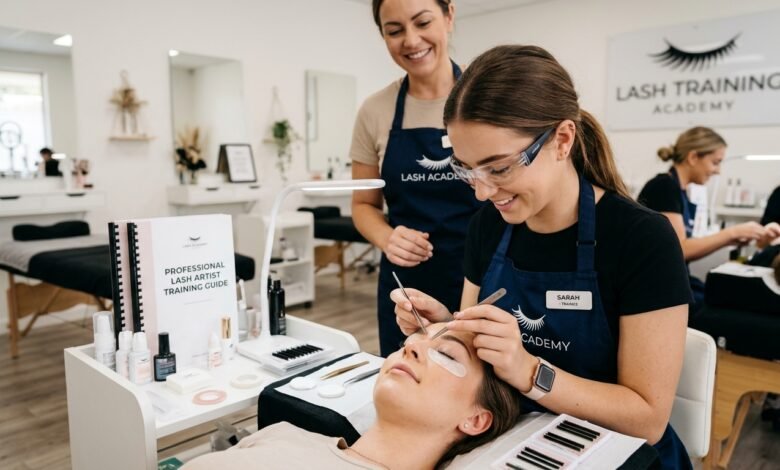
In-person training offers hands-on feedback, supervised practice, and immediate correction of technique. It’s often the best choice for beginners.
Online training can be flexible and affordable, with theory modules and video demonstrations. Without hands-on feedback, you’ll need to practise carefully and consider adding a live assessment.
Blended programs combine online theory with in-person practice, offering a balance of flexibility and support.
Practice Matters
Lash application is a manual skill. Look for courses that provide:
- Mannequin practice before working on real people
- Live model sessions under supervision, when appropriate
- Small class sizes so the trainer can watch your technique
- Detailed feedback on isolation, adhesive use, and application
Ask how many hours are hands-on and how many models you’ll work on.
What Should Be Included in the Kit
Many courses supply a starter kit. Check what’s in it and its quality, including tweezers, adhesive, lash trays, primers, removers, pads, tape, mannequin heads, and sanitation supplies. Cheap tools can hinder your learning, so make sure the equipment is suitable for professional use.
Qualifications, Insurance, and Regulations
Requirements vary. In Australia, lash extension work isn’t covered by a single national licence, but regulations and expectations can vary by state, local council, and venue. Consider:
- Training certificates and whether the course is accredited or recognised
- Public liability insurance, which is important for protecting yourself and clients
- Local council or health authority rules for operating a business or mobile service
- Product safety and labelling requirements
Check with your insurer, local council, and relevant authorities about what applies to you.
Questions to Ask Before Enrolling
- Who is the trainer, and what is their experience?
- How many hours of training are included, and how many are hands-on?
- What techniques are taught?
- What’s in the kit?
- Is there ongoing support after the course?
- What certification do I receive?
- What is the cost, and what else might I need to buy?
- Can I speak with past students or see their work?
- What is the refund and cancellation policy?
Red Flags
Be cautious if a course:
- Promises you’ll earn a large income quickly
- Offers very short training with limited practice
- Doesn’t cover hygiene or safety in depth
- Has no clear curriculum
- Pressures you to pay quickly
- Cannot show the trainer’s credentials or work
After the Course
Finishing a course is the beginning of learning. Speed and consistency come with practice. To keep improving:
- Practise regularly on mannequins and models
- Take photos of your work and assess them honestly
- Seek feedback from experienced artists
- Pursue advanced training in volume and speciality styles
- Stay up to date with product and safety developments
- Build a portfolio and refine your style
Final Thoughts
A good lash course gives you more than technique. It builds judgement, safe habits, and confidence. Compare programs carefully, prioritise hygiene and hands-on practice, and choose trainers who are transparent and supportive. With the right foundation and plenty of practice, you can build a skilled, trusted, and sustainable career.