Yoga is much more than performing physical postures or developing the ability to practise advanced asanas. It is a holistic discipline that involves understanding the relationship between the body, breath and mind. To practise yoga safely and effectively, it is important to develop an awareness of how the human body functions and responds to different movements and breathing techniques. This is where the study of anatomy and physiology in yoga becomes an essential.
Yoga anatomy helps practitioners understand the structures of the human body, including bones, muscles, joints, ligaments and connective tissues. Physiology, on the other hand, explains how different body systems function and respond to physical activity, breathing exercises and relaxation.
For aspiring yoga teachers, this knowledge is particularly valuable. It helps them understand proper alignment, recognise individual physical limitations, offer appropriate modifications and guide students towards a safer and more informed practice.
At Yoga Vidya Mandiram, anatomy and physiology form an important part of our 200 Hour Hatha Yoga Teacher Training in Rishikesh, helping students connect the practical aspects of yoga with a deeper understanding of the human body.
What Is Yoga Anatomy And Physiology In Yoga?
In the study of yoga anatomy and physiology the students learn the structures of the body and physiological systems work during asana practice, pranayama, meditation and other yogic techniques. It teaches how the body moves, aligns, and cooperates during movement. The lessons focus on bones, muscles, ligaments, joints, connective tissues, nervous system and breath. Understanding the human body is important for anyone who practices, or aspires to teach yoga. You can understand how the human body moves, breathes, and gives responses, in a practical and hands-on manner. By understanding yoga anatomy and physiology, you go deeper into a pose, and extract much more than the physical aspects.
Understanding The Skeletal And Muscular Systems
Bones are living structures that adapt to mechanical loading in the human body and create boundaries for every movement. Joints are structures where bones meet; their forms and functions vary. Joint range varies between individuals and depends on several factors. The bones and muscles work together to give shape and facilitate movement. Additionally, the musculoskeletal system works towards protecting your organs. Bone marrow produces blood cells, while bones also serve as important storage sites for minerals such as calcium and phosphorus. Furthermore, bones also store minerals.
There is cartilage, which acts as a shock absorber in the joints. And ligaments help in standing load bearing during standing poses, and balancing poses. Ligaments connect bone to bone as well, while tendons primarily transmit muscular force to bones and contribute to joint stability. In yoga practice, the muscles contract, lengthen and adapt to training loads.
How Joints And Connective Tissues Influence Asana Practice?
Joints act as pivot points, when you engage in asana practice. You must know how each joint moves, to facilitate safe practices. When you move into an asana or pose, some muscles shorten, while others lengthen. These movements improve both strength and flexibility, which lead to the formation of a balanced body. Those of you, who practice yoga with sufficient knowledge, improve upon joint mobility, stability, and other functions. The knowledge of range of motion in the main joints in various yoga poses, helps in supporting the overall joint health and makes you flexible. A professional 200 Hour Yoga Teacher Training in Rishikesh, facilitates knowledge around these aspects of yoga.
The Role Of The Nervous System In Yoga
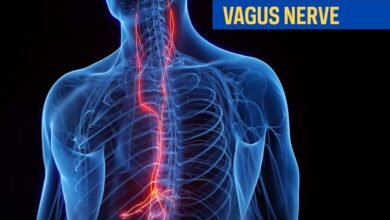
In yogic practices, the nervous system has an important role to play. It is the communication centre of the body, which controls other organs’ functions. The autonomous nervous system controls the involuntary functions of the body and the internal organs. The two parts of which are the sympathetic nervous system and parasympathetic nervous system. The former generates the fight or flight response, when the body faces risk. On the other hand, the parasympathetic nervous system is responsible for rest and digest. Yoga techniques such as breathing, relaxation and movement can influence autonomic nervous system activity. This helps in stress reduction and regulation of emotions.
On the other hand, the somatic nervous system regulates voluntary movements. So, when you move your hands or legs, it’s an intentional movement. It carries motor and sensory information to and from the central nervous system, which help with balance and alignments. Additionally, it also mediates reflexes like stretch for deep stretching movements and balance. Thus, both nervous systems play different roles in yoga. This explains the importance of anatomy in yoga for aspiring yoga teachers.
Understanding Breathing And The Respiratory System
There are many breathing exercises in yoga, like Pranayama which impacts the respiratory system. When you do Pranayama, your lungs are engaged and may yield positive benefits. Slow, controlled breathing can influence autonomic activity, but the response is not identical in everyone. So, you need a yoga mentor to facilitate what works for you. The breath has a huge impact on your health in several ways.
Breathing plays an essential role in supplying oxygen to the body and supporting normal physiological functions. Slow, controlled breathing can promote relaxation, help regulate stress responses and contribute to an overall sense of well-being. In yoga, we mainly engage in nose breathing, which slows down breath and allows more time for gaseous exchange. This nasal breathing exercise can support the body’s natural process of respiration. The slow and controlled breathing exercises can promote relaxation, mental clarity and awareness. You will explore these concepts and their application in detail as a part of the 200 Hour Yoga Teacher Training in Rishikesh.
How Anatomical Knowledge Improves Yoga Alignment?
In the 200 hour hatha yoga teacher training in Rishikesh, you also learn about alignment which impacts the body posture and its movements. When your bones, ligaments and joints are in perfect co-ordination with one another, the body can function at an optimal level. If the postural alignment is not good, this may increase the risk of discomfort or injury during yoga practice. Some postural issues that may arise, when you practice without the knowledge are kyphosis or rounded back, lordosis or inward curvature of lower back, or scoliosis, sideways curvature of the spine. Having the basic knowledge helps you to avoid such issues.
Moreover, when your alignment is correct, it helps in the proper stretching and strengthening of the muscles, ligaments, tendons, and connective tissues, leading to fluidity in your movements. When you are physically at ease, then it also has a positive effect on your mental and emotional health.
Why Yoga Teachers Need Anatomy And Physiology Knowledge?
- One of the foremost benefits of the knowledge of yoga anatomy for teachers is practice as per the body’s capabilities. If you do not know about the body structure and functions, you cannot get the best out of this practice. Moreover, you may end up pressurising yourself more than your capacity. You will be able to identify discomfort levels early on, with proper knowledge of anatomy and physiology.
- You also get to enhance the mind-body connection, when you do yoga with the knowledge of anatomy and physiology. In poses like Tree Pose and Eagle Pose, for example, you start understanding the alignment of the body. You also learn to distribute your weight. It can lead to a lot of focus in the long run.
- Proper knowledge of anatomy and physiology can lead to better professional growth for teachers. When you guide others, knowledge can help you to respect other body types. You create movement patterns in keeping with the specific alignment and comfortability.
- You also develop a lot of confidence, to not just engage in self-practice, but also propagate the knowledge safely. You are also in a better position to suggest modified versions.
- Your breathing techniques and lung functioning also improves a lot, leading to efficient diaphragmatic breathing. You can also use the breath to deepen your poses. Several studies have related slow breathing to lower heart rate and more focus, too.
Understanding Science Behind Poses: Practical Examples
- Tadasana – In this pose, your spine’s alignment and pose are interconnected, so you learn to adapt both.
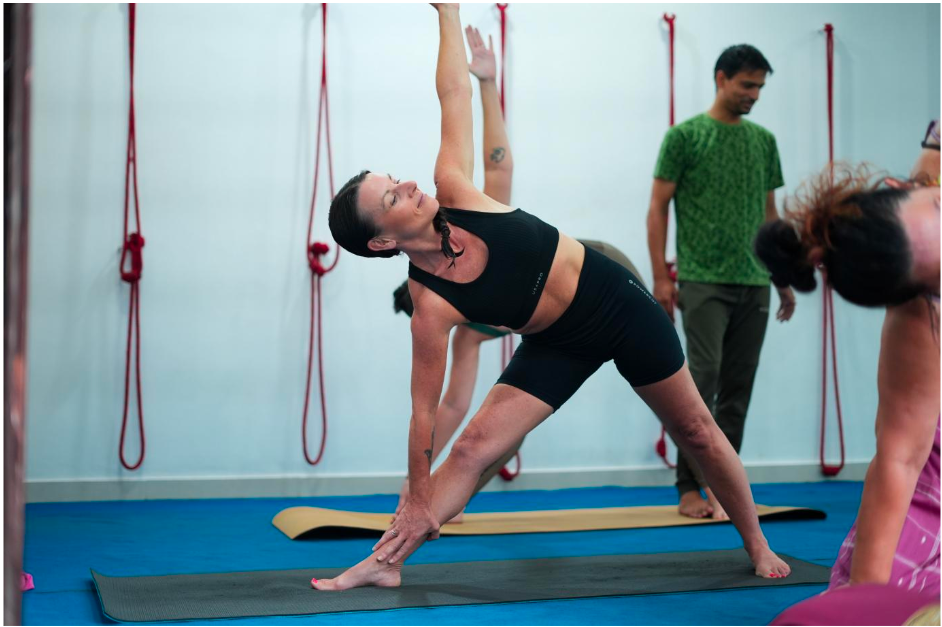
- Trikonasana – Your mobility and lateral flexibility comes into play in this pose, which improves with knowledge on positioning.
- Balasana – You find the point of relaxation and comfort.
- Adho Mukha Svanasana – You learn to position the body, to maximise stretching the right muscles.
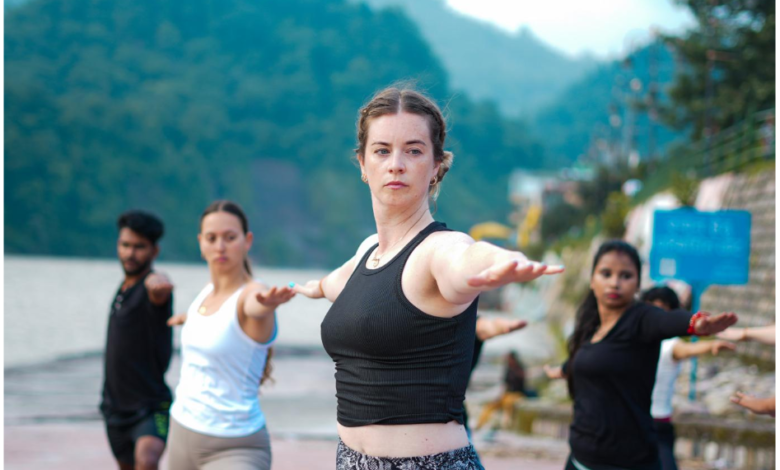
- Virabhadrasana II – With proper anatomical knowledge, you learn to position the body in a proper manner. It leads to proper lengthening of muscles, to get complete benefit from it.
Thus, in these poses, scientific understanding of the human body comes into play. You must connect anatomical knowledge and yogic philosophy in yoga practice to achieve success.
The Importance Of Anatomy In A 200-Hour Yoga Teacher Training
The modern day practice needs you to keep a tab on all the above aspects of yoga, to gain physically, mentally, as well as spiritually. As a part of the best 200 hour hatha yoga teacher training in Rishikesh, you gain the comprehensive knowledge on the foundations of safe practice, which involves knowledge on:
- Knowledge of body structure
- Offering tailored adjustments and modifications
- Ensuring safe and effective yoga practice
- Injury prevention and rehabilitation
- Adapting yoga to different body types
- Building confidence in a yoga class
Conclusion
Thus, the knowledge of anatomy and physiology in yoga has the ability to take your yoga teaching career to great heights. Join the Yoga Teacher Training in Rishikesh to get complete know-how of systems and processes, spanning the body, breath and energy systems. It is the backbone of transformative yoga practices, which ensures confidence and the ability to guide oneself and others in the sphere of yoga. Yoga Vidya Mandiram is one of the premier schools of yoga, imparting scientific knowledge in alignment with yogic philosophies. Small groups, expert teachers, and personalised attention are factors that make the course worthwhile.