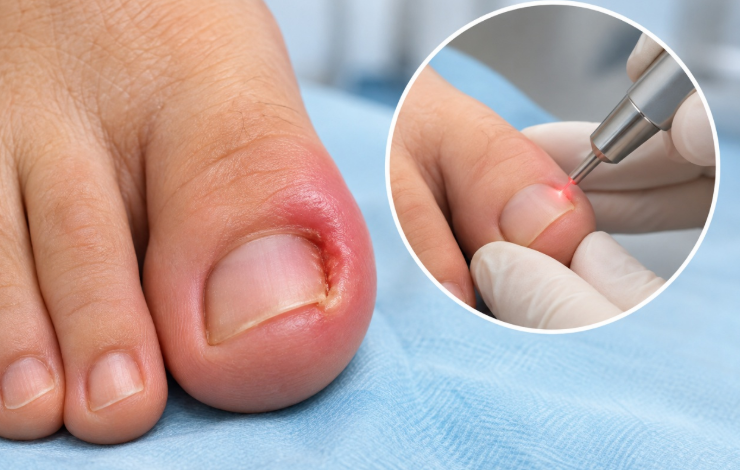
An ingrown toenail, medically known as onychocryptosis, is a common condition that occurs when the edge of a nail grows into the surrounding skin. It most frequently affects the big toe, causing inflammation, swelling and discomfort. Although initially mild, the condition can gradually worsen without appropriate treatment. Early diagnosis and proper medical care are essential for preventing complications and recurring symptoms.
What Causes an Ingrown Toenail?
Several factors can contribute to the development of an ingrown toenail. One of the most common causes is improper nail trimming, particularly when the corners are cut too deeply.
Wearing tight shoes that place excessive pressure on the toes can also increase the risk. Other contributing factors include nail injuries, excessive sweating, poor foot hygiene, hereditary predisposition and abnormal nail curvature.
Certain nail infections, obesity and hormonal changes may also play a role.
The condition frequently affects children, young adults and athletes, especially individuals participating in activities that place repeated pressure on their toes.
Ingrown Toenail Symptoms and Stages
The symptoms of an ingrown toenail depend on the severity of the inflammation. The condition generally progresses through three stages.
Stage 1: Mild swelling, redness and tenderness develop around the affected nail. Pain usually becomes noticeable when pressure is applied.
Stage 2: Inflammation becomes more pronounced, accompanied by increased pain and possible discharge of fluid or pus.
Stage 3: Chronic inflammation develops, often involving persistent discharge and the formation of granulation tissue around the nail.
Without treatment, severe cases may lead to deeper infections. Individuals with diabetes or vascular conditions face an increased risk of serious complications and should seek prompt medical evaluation.
How Is an Ingrown Toenail Treated?
Treatment depends on the severity and duration of the condition.
In its early stages, conservative management may include antiseptic care, appropriate footwear, medication and foot baths. Antibiotic treatment may be recommended following medical assessment.
When symptoms persist or the condition becomes recurrent, surgical intervention may be necessary.
The procedure involves removing the problematic portion of the nail. In recurrent cases, treatment may also target the nail matrix to reduce the likelihood of further episodes.
Laser Treatment for Ingrown Toenails
CO2 laser treatment offers a minimally invasive approach to managing ingrown toenails, particularly in recurrent cases.
The procedure is performed under local anesthesia and generally takes approximately 5–10 minutes per affected area.
Laser technology allows precise treatment of the nail matrix without requiring conventional incisions or stitches. It also helps minimize bleeding and postoperative discomfort.
Patients can usually return to their daily activities on the same day, while strenuous sports should generally be avoided for 2–3 days.
When Should Medical Advice Be Sought?
Persistent pain, swelling, redness, discharge or granulation tissue around the nail indicate the need for medical assessment.
Timely intervention can prevent worsening inflammation and help determine the most appropriate treatment.
For personalized evaluation and treatment of ingrown toenails, contact General Surgeon Dr. Ioannis Dontas.