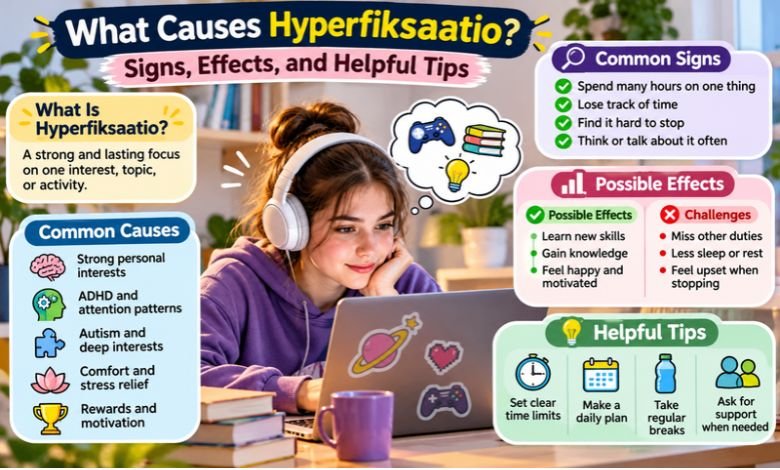
Have you ever spent hours doing something you love and lost track of time? You may have been playing a game, reading a book, or learning a new skill. You felt so interested that you forgot to eat, rest, or check the clock. This kind of deep interest may relate to Hyperfiksaatio. It can make one topic or activity feel more important than everything else.
Hyperfiksaatio is a Finnish word often used to describe an intense focus on one interest. People may use it when talking about ADHD, autism, or strong personal interests. It can help someone learn new things and build useful skills. Yet it can also make daily tasks harder. This guide explains what Hyperfiksaatio means, what may cause it, how to spot its signs, and how to manage it in daily life.
What Is Hyperfiksaatio?
Hyperfiksaatio means having a strong and lasting interest in one subject, hobby, person, or activity. The Finnish word is close to the English term hyperfixation. A person may think about the same topic for hours or return to it each day. The interest may bring joy, comfort, and a strong wish to learn more. Some people spend much of their free time reading, watching videos, or talking about their favorite subject.
Hyperfiksaatio is not a medical diagnosis on its own. It is a common term people use to describe a pattern of strong interest and focus. It is also not the same as simply enjoying a hobby. The main difference is how much time and attention the interest takes. A person may find it hard to stop even when other tasks need care. Still, a strong interest does not always mean there is a health problem.
What Causes Hyperfiksaatio?
There is no single known cause of Hyperfiksaatio. People can develop strong interests for many reasons. Some enjoy the fun of learning something new. Others find comfort in doing the same activity each day. Attention, emotions, habits, and the way a person responds to rewards may all play a part. Research on attention and deep interests can help explain these patterns, but the exact causes of hyperfixation are not yet clear.
1. Strong Personal Interests
One common reason for Hyperfiksaatio is a strong personal interest. A person may love art, science, sports, music, or computer games. The subject feels fun and gives them a reason to keep learning. Each new fact can lead to another question. Over time, the person may spend more hours on that topic than they planned. This can help them gain knowledge and build skills. Problems may start when the interest leaves little time for sleep, meals, school, or work.
2. ADHD and Attention Patterns
Hyperfiksaatio is often discussed with attention-deficit/hyperactivity disorder, or ADHD. People with ADHD may find some tasks hard to start or finish. Yet they may also become deeply focused on activities that feel fun or rewarding. This pattern is often called hyperfocus. Some people also use the word hyperfixation when talking about strong interests linked to ADHD. However, not everyone with ADHD has this experience. Hyperfiksaatio alone does not show that a person has ADHD.
3. Autism and Deep Interests
Some autistic people have strong interests in certain subjects. They may enjoy learning small details and spending time with a favorite topic. These interests can bring comfort, joy, and a sense of purpose. They may also help a person connect with others who enjoy the same things. Hyperfiksaatio can overlap with this pattern, but the terms do not mean the same thing. Strong interests are only one part of the wider picture of autism. A person cannot tell if someone is autistic from one interest alone.
4. Comfort and Stress Relief
A favorite activity can help a person feel calm after a hard day. Reading, drawing, building models, or playing a familiar game may offer a break from stress. Some people return to the same interest because it feels safe and easy to enjoy. This may help explain why an interest becomes so important. Yet stress does not always cause Hyperfiksaatio. If an activity becomes the only way someone handles hard feelings, it may help to find other ways to rest and feel better.
5. Rewards and Motivation
The brain helps us notice things that feel useful or rewarding. When an activity brings joy, success, or new facts, we may want to keep doing it. This can make it easier to stay focused on something we love. Dopamine is one brain chemical involved in reward and motivation. However, it would be too simple to say that dopamine alone causes Hyperfiksaatio. Strong focus can involve many parts of attention, learning, and personal interest.
Common Signs of Hyperfiksaatio
Hyperfiksaatio can look different from one person to another. Some people spend hours on one activity. Others think about a favorite subject throughout the day. The interest may last for days, weeks, or much longer. The most useful sign to watch is whether the person can still meet their daily needs.
Common signs may include:
-
Spending many hours on one subject or activity.
-
Losing track of time while doing something enjoyable.
-
Finding it hard to stop or change tasks.
-
Talking or thinking about the same topic often.
-
Forgetting meals, breaks, or bedtime.
-
Feeling upset when an activity ends.
-
Spending a lot of free time learning about one interest.
These signs do not prove that someone has a medical condition. Many people enjoy deep focus without facing any harm. The concern grows when the pattern causes stress, poor sleep, missed duties, or problems with other people.
How Does Hyperfiksaatio Affect Daily Life?
Hyperfiksaatio can have both good and hard effects. A person may gain new skills because they spend so much time learning. For example, someone who loves drawing may practice each day and become a better artist. A person who enjoys computers may learn how to write code or fix simple problems. Deep interest can also make free time more fun and meaningful.
Yet the same focus may cause trouble when a person cannot stop. Someone may plan to play a game for one hour but keep playing late into the night. A student may spend too much time on a favorite subject and forget other homework. An adult may put off chores or miss plans with friends. These problems do not happen to everyone. The effect depends on the person, the activity, and how well they can manage their time.
Hyperfiksaatio vs. Hyperfocus: What Is the Difference?
People often use Hyperfiksaatio and hyperfocus as if they mean the same thing. They are closely related, but there is a useful difference in how people use these words.
Hyperfiksaatio often means a strong interest in one topic that may last for a long time. Hyperfocus often means deep attention during a task or activity. For example, a person may love space for many months. That can be described as hyperfixation. When they spend three hours reading about planets without checking the time, that may be called hyperfocus.
These are everyday descriptions rather than two separate medical diagnoses. The words can overlap, and people may use them in different ways.
Is Hyperfiksaatio Good or Bad?
Hyperfiksaatio is not always good or bad. It depends on how it affects a person’s life. A strong interest can help someone feel happy, learn new skills, and meet people with the same hobbies. It may also help them find a future career or build confidence in something they enjoy. There is no need to stop a healthy interest simply because it takes a lot of attention.
Problems begin when the interest takes time away from basic needs or important duties. Poor sleep, missed meals, and constant stress can affect health. A person may also feel upset when they must stop an activity. The goal is not to remove the interest. It is to enjoy the interest while making room for rest, work, family, and other needs.
Helpful Tips to Manage Hyperfiksaatio
Managing Hyperfiksaatio starts with small changes. A person does not need to give up a favorite hobby. Instead, they can build habits that make it easier to enjoy the activity without losing control of their day.
Set Clear Time Limits
A timer can help a person notice how much time has passed. Before starting an activity, choose how long to spend on it. For example, set a timer for 30 or 60 minutes. When it rings, take a short break and check what needs to happen next. Some people find it useful to set two alarms. The first gives a warning, while the second marks the time to stop. This method may not work for everyone, but it is a simple place to start.
Make a Daily Plan
A daily plan can help keep important tasks in view. Write down the main things that need care, such as meals, schoolwork, chores, and sleep. Then choose a time for the favorite activity. A clear plan makes it easier to enjoy an interest without forgetting other duties. Keep the plan simple so it does not become another hard task. A short list of three or four important jobs may be enough.
Take Breaks and Care for Your Body
Deep focus can make people forget basic needs. Regular breaks can help protect sleep, comfort, and health. Keep water nearby and plan time for meals. Stand up, stretch, or walk for a few minutes after sitting for a long time. Try to stop screen activities before bedtime if they keep you awake. These habits do not cure Hyperfiksaatio, but they can reduce some of the problems that come with spending too much time on one task.
Learn to Change Tasks
Changing tasks can feel hard when an activity is fun. One helpful method is to make a clear stopping point. Finish a chapter, save a game, or write down the next step before leaving. This makes it easier to return later. A short note can also reduce the fear of forgetting an idea. With practice, a person may find it easier to move from a favorite activity to another part of the day.
Ask for Help When Needed
Some people need more support with attention and time management. A parent, teacher, friend, or partner may help with gentle reminders. If strong focus leads to missed work, poor sleep, or serious stress, a health professional can help look for the cause. Support may include ways to plan tasks, manage attention, or deal with stress. The right help depends on the person’s needs.
When Should You Seek Professional Help?
Hyperfiksaatio does not always need treatment. A person who enjoys a strong interest and manages daily life may not need any help. However, it is worth speaking with a qualified health professional when the pattern causes lasting problems. These may include missing school or work, losing sleep often, feeling unable to stop an activity, or having major problems with family and friends.
A professional can ask about attention, mood, sleep, and daily habits. They may also check whether ADHD, anxiety, or another condition needs care. No single hobby or sign can confirm a diagnosis. A full review is important before making any medical decision.
Conclusion
Hyperfiksaatio describes a strong interest or deep focus that can take up a large part of a person’s attention. It may relate to personal interests, ADHD, autism, or the comfort that comes from a favorite activity. There is no single known cause, and it is not a medical diagnosis on its own.
For many people, Hyperfiksaatio can bring joy, new knowledge, and useful skills. For others, it may make daily tasks and time management harder. Simple habits such as setting timers, taking breaks, and planning the day can help. The most important goal is to enjoy strong interests while keeping enough time for health, rest, and everyday life.