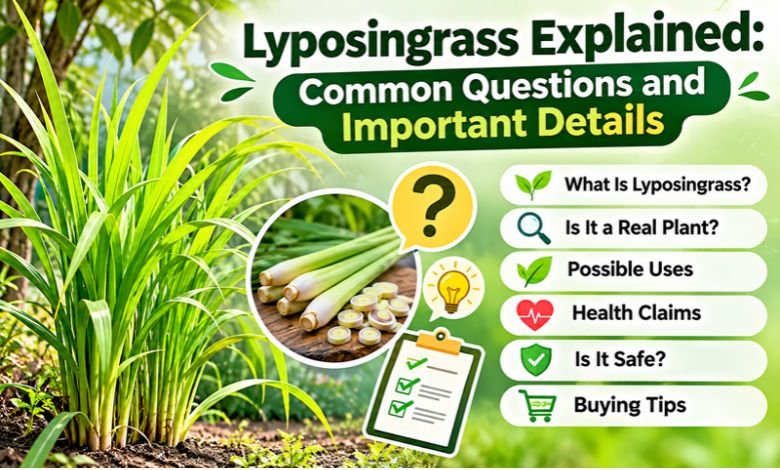
Lyposingrass is a name that may seem hard to understand at first. Some people may think it is a type of grass. Others may wonder if it is a plant, a garden product, or a natural health item. The word sounds like a plant name, but its true meaning is not clear. This makes it important to look at the facts before trusting what you read online.
Lyposingrass does not have a confirmed plant identity or a clear scientific name. Some online descriptions may link it to common garden plants or herbs. Yet these links do not prove that the names mean the same thing. This guide explains what is known about Lyposingrass, how to check plant names, what health claims mean, and how to avoid false facts. You will also learn how to check a plant or product before buying it.
What Is Lyposingrass?
Lyposingrass is an unclear name that may appear in content about plants, grass, or natural products. The word ends with “grass,” which may lead people to think it names a real plant. Yet there is no confirmed scientific plant name linked to Lyposingrass in the information available for this guide. This means we cannot say that it is a special grass, herb, or garden plant.
A common name can refer to more than one plant. For this reason, plant experts use scientific names to tell species apart. If you see Lyposingrass on a website or product label, check what the writer or seller means. The name may refer to a plant sold under another name. It may also be a new product name or a spelling error. Without more details, its true identity remains unknown.
Where Did the Name Lyposingrass Come From?
The history of Lyposingrass is not clear. There is no confirmed record in the information used for this article that shows who first made the name. Some plant names come from the shape, color, or smell of a plant. Others come from the place where a plant grows. Businesses may also create new names to make their products easy to remember.
Lyposingrass could fit more than one of these cases, but there is no proof for any one answer. To find its true origin, we would need an early record that uses the exact word. This could be a plant label, a book, a product page, or a dated website. The source would also need to explain what the name means. Until that proof exists, it is better to say that the origin is unknown.
Is Lyposingrass a Real Plant or Grass?
There is not enough proof to call Lyposingrass a real plant species. The word “grass” does not always mean that a plant belongs to the grass family. Many plants have long, thin leaves that look like grass. Some are true grasses, while others belong to different plant families. For example, lemongrass is a true grass.
Liriope has grass-like leaves but belongs to the asparagus family. Both can grow in gardens, yet they are not the same plant. This shows why names can cause confusion. If someone sells Lyposingrass as a plant, ask for its scientific name. You can then check that name in a trusted plant guide. This step helps you learn what the plant looks like, where it grows, and how to care for it.
Is Lyposingrass the Same as Lemongrass?
Lemongrass is a well-known plant that people use in cooking and drinks. Its scientific name is Cymbopogon citratus. It grows in thick groups of long green leaves. The lower stalk has a fresh lemon smell. People often use the stalks in soup, curry, and tea. Lemongrass grows best in warm places with plenty of sunlight. It also needs soil that drains well.
Some people may link Lyposingrass with lemongrass because both names contain the word “grass.” Yet this does not prove that they are the same plant. If a website uses Lyposingrass to describe lemongrass, check whether it gives the scientific name. A clear name helps you avoid mixing up plants that may look alike but have different uses.
Is Lyposingrass Related to Liriope?
Liriope is a garden plant with long, narrow leaves. People often call it lilyturf or monkey grass. It grows in thick groups and can help cover bare soil. Some types produce small purple or white flowers. Gardeners use Liriope near paths, under trees, and around garden beds. It can grow in places where some other plants struggle.
However, Liriope is not a true grass. It belongs to the asparagus family. There is no confirmed evidence that Lyposingrass is an accepted name for Liriope. If you see the two names together, look for more details before treating them as the same plant. The scientific name, flower shape, leaf size, and growing needs can help you find the correct plant.
What Are the Possible Uses of Lyposingrass?
The uses of Lyposingrass depend on what the name refers to. There is no verified list of uses for one known plant or product with this exact name. If a seller uses the name for a garden plant, its purpose may be to cover soil, fill empty spaces, or add green color. If the name refers to an herb, the seller may describe food or drink uses.
If it appears on a health product, it may refer to a mix of ingredients. These are different kinds of products, so they should not share the same claims. A plant that looks nice in a garden may not be safe to eat. A food herb may not work as medicine. Always check the exact identity before deciding how to use something sold as Lyposingrass.
Does Lyposingrass Have Health Benefits?
There is no clear scientific evidence that Lyposingrass offers health benefits. Some natural products are sold with claims about better digestion, more energy, or weight control. Yet a claim is not the same as proof. Scientists must know the exact plant or ingredient before they can test it. They also need to study how much people use and what effects it may cause.
A product may contain several ingredients, which makes it harder to know what each one does. If a website says Lyposingrass can treat an illness, look for research that supports the claim. Do not trust a product only because it has a natural-sounding name. Good health advice should come from clear facts and trusted medical sources.
Can Lyposingrass Help With Weight Loss?
There is no verified evidence that Lyposingrass helps with weight loss. Some sellers use plant names to promote teas, powders, or pills. They may promise fast results without giving enough proof. Weight loss depends on many things, such as food choices, daily activity, sleep, and health needs. No unknown plant should be treated as a quick answer.
If a product sold as Lyposingrass claims to burn fat, check its ingredients and the research behind the claim. Be careful with products that promise large changes in a short time. Such claims can hide risks or lead people to spend money on items that do not work. A doctor or trained dietitian can help people choose a safe plan based on their needs.
Is Lyposingrass Safe for Daily Use?
The safety of Lyposingrass is unknown because the name has no clear identity. If it is a plant, you need to know the species before eating it or putting it on your skin. Some plants can cause a rash, stomach pain, or other health problems. If Lyposingrass is a powder, tea, or capsule, the ingredients and amount matter.
A natural product can still cause harm. It may also react with medicine. Do not drink tea made from an unknown plant or use a product without a clear label. Check the maker’s name, ingredients, use directions, and safety warnings. If the product has no clear details, avoid using it. This is a simple way to protect your health while you learn more about the item.
How Can You Identify a Plant Sold as Lyposingrass?
If you find a plant sold under the name Lyposingrass, start by looking at its leaves, stems, roots, and flowers. These parts can help you tell one plant from another. Long green leaves alone are not enough because many plants look alike. Check whether the plant grows in thick groups or spreads across the ground. Look at the color and shape of any flowers.
You should also ask the seller for its scientific name. A clear photo of the full plant can help with a first check, but photos do not always prove its identity. Trusted plant guides can help you compare the details. The Royal Botanic Gardens, Kew, offers a plant name database called Plants of the World Online. This can help you check whether a scientific name is accepted.
How Should You Care for a Plant Called Lyposingrass?
You should not follow one set of growing rules until you know which plant the name describes. Different plants need different care. Some grow best in full sun, while others prefer shade. Some need moist soil, but others can suffer if their roots stay wet. For example, lemongrass likes warm weather and plenty of light.
Liriope can grow in a wider range of light conditions, depending on the type. These plants also have different growing habits. If you buy a plant called Lyposingrass, ask the seller about its real name, water needs, and best growing place. Keep the plant label so you can check the details later. Correct plant care starts with correct plant identity.
How Can You Find Trusted Information About Lyposingrass?
The best way to learn about Lyposingrass is to check the source of each claim. Start with the page where you found the name. Look for a clear meaning, a real plant name, or full product details. If the page says it is a plant, check the scientific name in a trusted plant database. If the page makes health claims, look for medical research on the exact ingredient.
You can use trusted sources such as Plants of the World Online for plant names and MedlinePlus for general health information. Be careful with websites that repeat the same claims without giving proof. Also, check the date of the information. A new article may still contain old or false facts. Clear sources help readers make better choices.
What Should You Know Before Buying Lyposingrass?
Before buying anything called Lyposingrass, find out what the seller is offering. A live plant should come with a clear name and care details. A food item should show its ingredients and safe-use advice. A health product should also give the maker’s details, serving amount, and warnings.
Look at the product photos and read the full description. Check whether the seller has a real contact page and a clear return policy. Do not depend on reviews alone because some reviews may be false or may describe a different item. If the seller cannot explain what Lyposingrass is, do not rush to buy it. A clear label and trusted facts are more useful than a bold claim.
Conclusion
Lyposingrass is a name that needs more clear information before anyone can give it one fixed meaning. It may appear in content about plants, gardening, or natural products, but its exact identity is not confirmed. The word should not be treated as the name of a proven herb or health product without evidence.
Some plants, such as lemongrass and Liriope, have clear scientific names and known uses. Lyposingrass does not yet have that same clear link. If you see the name on a website or product, check the source, label, and full details. Never eat an unknown plant or trust health claims without proof. Learning the real identity is the best way to understand what Lyposingrass means and whether it has any useful purpose.