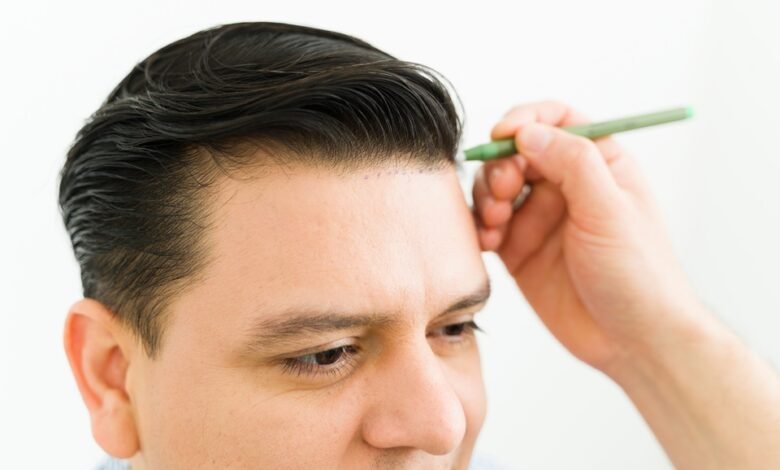
Imagine being able to wear your favourite hairstyle again without constantly checking whether your thinning hair is showing.
If you’ve considered a hair replacement system, you might have wondered how it could match your natural hair. After all, everyone has a different hair colour, texture, hairline and growth pattern.
That’s where customisation comes in. Rather than choosing a standard hairpiece, you can have a custom-made hair system designed around your existing hair and the appearance you want to achieve.
It starts with understanding your hair
Before designing a hair system, a specialist needs to understand your existing hair and what you’d like the finished result to look like.
During a consultation, they may examine your remaining hair, assess the areas affected by hair loss and take measurements to guide the design.
For example, someone experiencing thinning around the crown may need a different design from someone with extensive hair loss across the top of their head.
How are hair colour, texture and density matched?
Getting the colour right is important, but it’s only one part of creating a natural-looking result.
Hair colour
Natural hair often contains subtle colour variations. You might have darker roots, lighter strands or a few grey hairs mixed throughout.
A custom system can incorporate different tones to reduce the contrast between the replacement hair and your existing hair.
Hair texture
Straight, wavy and curly hair behave differently when cut and styled.
The texture and thickness of individual strands can influence how the replacement hair falls. For example, fine, straight hair may require a different approach from thick, curly hair.
Hair density
Density refers to how much hair is present within a particular area.
More hair doesn’t automatically mean a better result. If your existing hair is relatively fine, an unusually dense system may create an obvious difference between the replacement hair and the surrounding areas.
A specialist can assess the density needed for the intended hairstyle.
Why does the hairline matter?
Think about how your hair naturally grows around your forehead. The hairline isn’t usually a perfectly straight, uniform edge.
Its position, shape and density can influence the overall appearance, particularly if you prefer to wear your hair brushed back or away from your face.
The direction of the hair also matters. Around the crown, for example, hair may follow a natural swirl, while hair near the temples can grow at different angles.
These growth patterns can be considered when positioning the replacement hair, helping it fall in the intended direction when styled.
How is the base designed to fit?
The base is the foundation of a hair replacement system. It supports the replacement hair and sits against the scalp.
Its size and shape depend on the area to be covered. Measurements help determine where the system will sit and how its edges will meet the surrounding hair.
Different base materials and construction methods may also be considered. These can affect how the system is attached, how it feels when worn and the maintenance involved.
Can you still choose your own hairstyle?
Perhaps you’ve spent years styling your hair forward to disguise a receding hairline. Or you’ve avoided shorter hairstyles because thinning around your crown becomes more noticeable.
A custom hair system allows you to explore hairstyles you may have avoided because of thinning hair, whether that means returning to a familiar look or trying something different.
The length, direction and positioning of the replacement hair can be considered during the design process, while the final cutting and styling help shape the finished appearance.
What happens after your hair system is fitted?
A custom hair system needs ongoing care to maintain its appearance and fit.
Depending on the system, this may involve cleaning, professional maintenance appointments and adjustments. Your natural hair may also continue growing beneath or around the system, affecting how it sits over time.
Before committing, ask how often maintenance appointments may be needed, what care you can manage at home and when the system might require replacement.
Understanding these practical requirements can help you decide whether a particular system suits your routine.
Explore what’s possible with a custom hair system
Curious about what a custom hair system could look like for you?
Transitions Hair provides information about finding the best custom-made hair system for your hair characteristics and styling preferences.
Explore the available options and see how a personalised approach to hair replacement could help you achieve the hairstyle you’re looking for.
For more latest stories: Daily Celeb Magazine