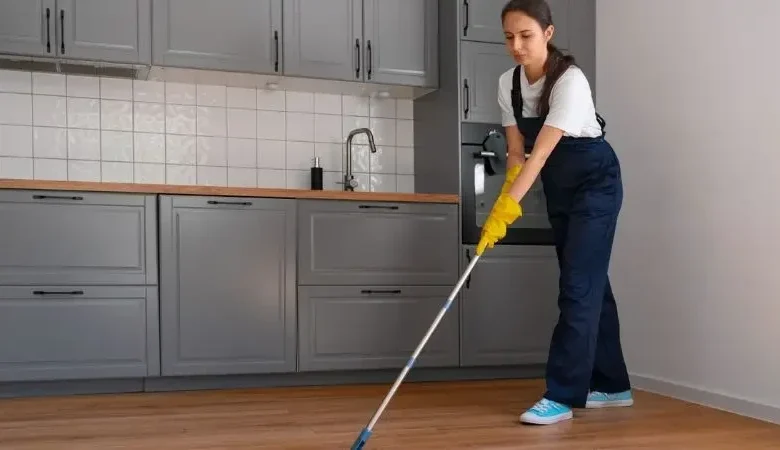
Many buildings have a ‘mixed flooring’ regime, i.e. A single building may have sealed concrete at the loading dock, Luxury Vinyl Plank (LVP) on the corridors, quarry tile in the kitchen and engineered hardwood in the boardroom. While writing separate procedures for each of these seems a very logical approach, in reality, no one writes enough procedures. Clean floor procedures are intended to be followed by speedy floor cleaning teams and the worst thing that can happen is that they are not implemented at all because they are too complicated to remember. Therefore, a single procedure with a few adjustable elements is the most practical approach.
What a shared routine can standardize, and what it cannot
The dry soil removal method also works well for all surfaces and transfers easily. The order of operations can also transfer between surfaces, work from the perimeter in and sweep toward a pile rather than toward a door, complete the dry removal of all the dry soil before introducing any moisture for cleaning.
The only three variables which cannot be standardized in a written floor care procedure are the Chemistry used, the Moisture Volume present and the Dwell Time allowed on the floor. Therefore these must be treated as the only true branch points within the routine and the rest of the sequence written out in full for both alternatives.
Why the dry pass carries most of the result
The vast majority of hard floor wear comes from particulate ground underfoot, turned to an abrasive slurry by the introduction of water. By removing these particles in a dry pass of the mop, solution usage is also dramatically reduced.
Reading the surface before choosing the tool
Classify floors by 3 key traits that can be observed by all to deliver a consistent service, porosity, finish and texture. Sealed concrete floors and glazed porcelain tile floors for example may be referred to by different names by different suppliers but for mopping purposes behave exactly the same. The processes outlined above can be applied to all of these floor types.
- Porous and unsealed, such as honed stone or unglazed quarry tile, where solution soaks in and residue stays behind.
- Sealed and smooth, including most vinyl, laminate, and glazed ceramic, which tolerate moisture but show streaking and film.
- Finished and moisture sensitive, such as waxed wood or polished natural stone, where water volume and pH both matter.
- Textured or profiled, like safety vinyl and slip resistant tile, where mechanical agitation matters more than chemistry.
One sequence, four controlled adjustments
See how the same routine will adapt for different floor surfaces in the following table.
| Surface group | Dry pass tool | Moisture level | Solution choice | Common failure |
| Porous, unsealed | Stiff bristle broom | Moderate, rinse after | Neutral, low residue | Residue darkening grout lines |
| Sealed, smooth | Soft or flagged broom | Damp only | Neutral detergent | Streaking from overdilution errors |
| Finished, sensitive | Microfiber dust mop | Barely damp | PH neutral, no gloss strippers | Finish dulling and edge swelling |
| Textured, profiled | Stiff bristle, two directions | Moderate, agitate | Degreaser where permitted | Soil held in the texture |
Setting the moisture rule in plain terms
Visible standards are far better than numeric standards for crew members. Floors that appear to be wet after thirty seconds of cleaning need to have the solution content reduced, the mop needs to be wrung out more tightly.
Selecting equipment that covers the range
Selecting floor care cleaning equipment for your Mixed Floor Type Portfolio should simplify the cleaning process. Look for a system that enables the use of one single cleaning tool for cleaning of a damp wood corridor and a wetter tile washroom area, such as the Libman Tornado Spin Mop System. Most floors are cleaned with two broom types and one mop, all housed on one floor care cleaning trolley.
In terms of disposable components for your floor cleaning program, buy a lot of spare heads for your mops and brooms. Color code them by zone. It is usually the cross contamination of a kitchen with the entry transition to carpets that causes most inconvenience to occupants and this is far greater than any inconvenience caused by the different methods of sweeping.
Keeping the routine honest over time
Three short controls need to be included in the periodic inspection schedule to ensure the shared procedure still works.
- Inspect mop heads weekly and retire any that have flattened or lost absorbency, since worn fibers push soil rather than lift it.
- Verify dilution at the point of use monthly, because concentrate creep is gradual and invisible until the finish starts hazing.
- Walk each floor type quarterly under raking light to catch early abrasion patterns before they need refinishing.
A process that covers all floors in a building is not a compromise between them. It is a solid backbone, with a short list of exceptions which are clearly listed and can be found where needed by the crews.