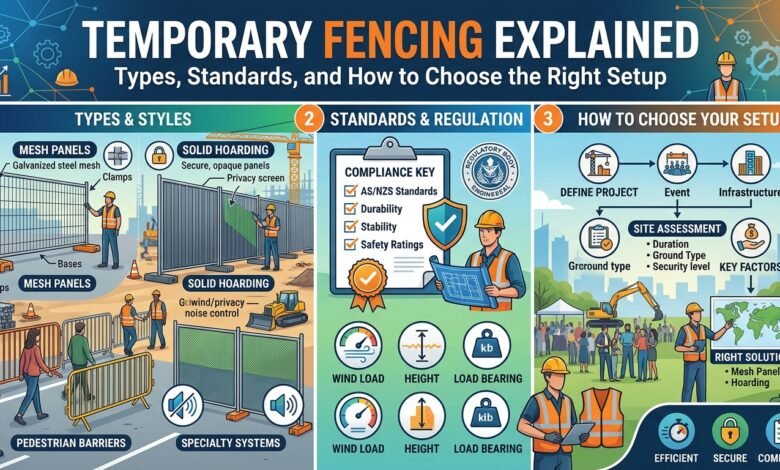
Whether it’s a building site, a street festival, or a patch of open ground that needs to stay off limits, temporary fencing does a surprisingly important job. It keeps people out of hazardous areas, protects equipment and materials, controls crowds, and helps a property owner meet their legal responsibilities. Choosing the wrong type, or setting it up poorly, can undermine all of those goals.
If you’re comparing options for temporary fencing melbourne, a little background on the common styles and the rules behind them makes the decision much easier. This guide covers what’s available, what to consider, and the mistakes worth avoiding.
Why Temporary Fencing Matters
A temporary fence is usually the first line of defence on a worksite or event. It serves several purposes at once:
- Safety: It separates the public from excavations, machinery, falling objects, and other hazards.
- Security: It deters theft and unauthorised entry, particularly out of hours.
- Compliance: Councils, building surveyors, and workplace safety rules commonly expect perimeter control on construction sites.
- Crowd management: At events, it guides foot traffic, forms queues, and protects restricted zones.
- Liability: A visible, well-maintained barrier shows you’ve taken reasonable steps to protect people.
The Most Common Types
Panel Fencing
The classic option is a series of galvanised steel mesh panels set in concrete or plastic feet and joined with clamps. These panels are typically around two metres high and are the standard for construction sites. They’re sturdy, quick to install, and easy to reconfigure or remove.
Hoarding and Solid Barriers
Where privacy, noise control, or dust suppression matter, solid hoarding is used. Panels can be fitted with shade cloth, wind-rated mesh, or printed screens. Hoarding is also common beside footpaths, where a solid barrier protects pedestrians from site activity.
Pool-Style and Child-Safe Panels
Some situations call for finer mesh and tighter spacing to prevent small hands and feet gaining a hold. These are used around temporary pool areas, schools, and childcare settings where children’s safety is a priority.
Crowd Control Barriers
Lightweight steel barriers that interlock are used for events, parades, and queue lines. They’re not designed to resist determined intrusion, but they’re excellent for directing movement.
Water-Filled and Plastic Barriers
For road works or vehicle separation, heavy barriers filled with water or sand provide impact resistance. These are separate from pedestrian fencing and are usually specified by traffic management plans.
Standards and Regulations
In Australia, temporary fencing is commonly guided by AS 4687, the standard that covers temporary fencing and hoardings. It sets out expectations for materials, stability, wind loading, and installation. Compliance matters because a fence that blows over in a gust becomes a hazard rather than a protection.
Other requirements depend on the project:
- Council permits may be needed if fencing occupies a footpath, nature strip, or road reserve
- Building permit conditions often specify site boundary protection
- Workplace health and safety duties require managing risks to workers and the public
- Event approvals may stipulate crowd barriers and emergency access
Always check with your local council and your building surveyor or event coordinator early, since approval timelines can affect your schedule.
Factors to Consider When Choosing
Several practical questions help narrow your options:
- Duration. A two-day event needs different fencing from a twelve-month build.
- Location. Footpaths, windy sites, and sloping ground each present challenges.
- Purpose. Is the main concern security, safety, privacy, or crowd flow?
- Ground conditions. Concrete, soil, grass, and asphalt need different footings and weighting methods.
- Access. Gates for vehicles, pedestrians, and emergency services must be planned in advance.
- Appearance. Printed screens can soften the look of a site or display project information.
- Wind exposure. Open sites and tall structures need properly rated bracing and wind-permeable screens.
Installation and Stability
Even a good fence performs poorly when installed badly. Key points include:
- Secure clamps and bracing. Loose connections allow panels to separate under pressure or wind.
- Proper footings. Feet should be positioned correctly and weighted when needed.
- No gaps. Small spaces at corners or gates allow entry or create trip hazards.
- Stable ground. Fence bases should not sit on soft or unstable ground that may shift.
- Clear signage. Hazard and contact signs help warn the public.
Inspect the fence regularly, especially after storms or heavy winds. Re-tighten clamps, replace damaged panels, and keep gates latched.
Cost Considerations
Costs vary based on the length of fencing, number of gates, extra features, and hire duration. Hiring is commonly more economical than buying for short and medium projects, since you avoid storage, maintenance, and disposal. Ask about what’s included, such as delivery, installation, removal, and any call-outs for adjustments. Clarify the hire period and what happens if your project runs long.
Common Mistakes to Avoid
- Underestimating length. Leaving gaps at the end of the perimeter defeats the purpose.
- Ignoring wind. Solid screens catch gusts and can topple poorly braced panels.
- Blocking access. Fencing must not obstruct emergency routes or neighbouring entrances.
- Skipping permits. Occupying public space without approval can lead to fines.
- Forgetting inspections. Damage left unchecked becomes a safety problem.
- Using the wrong type. Crowd barriers are not a substitute for site security fencing.
The Bottom Line
Temporary fencing may be a short-term measure, but it protects people and property in very real ways. Understanding the available types, the standards behind them, and the practical details of installation helps you choose a setup that is safe, compliant, and suited to your project. Take the time to get it right at the start, and your site or event will run more smoothly from day one.