What Homebuyers Should Know About Roof Conditions Before Purchasing a Las Vegas Home

A roof is more than a curb-appeal feature
In Las Vegas, house hunters often notice the tile roof before they look at anything else. Clay and concrete tiles fit the Southwest architectural style, and a roof can look attractive from the street even when important components underneath are aging. That distinction matters when a buyer is weighing the overall condition of a home.
Roof concerns do not have to derail a sale. The goal is to understand what is visible, what remains uncertain and what it could cost to address a problem before the transaction is finalized.
What a general home inspection tells you—and what it may not
Nevada standards for certified home inspectors include examination of roofing components. A general inspection can identify visible concerns such as missing tiles, damaged flashing, stains and signs of improper drainage. But a visual inspection does not necessarily establish the condition of every concealed layer or pinpoint every possible leak.
When the inspector flags roofing concerns—or when a home has a history of leaks or a notably older roof—a separate evaluation by a qualified roofing contractor can help clarify the scope of needed work. Buyers should review their purchase contract and inspection deadlines with their real estate professional rather than assume they can request additional inspections at any time.
For tile roofs, ask about the underlayment
Many residential properties across Las Vegas, Henderson and North Las Vegas use concrete or clay tile. The visible tiles shed much of the rain, but the underlayment beneath them is a key water-resistive component. It can age at a different rate than the tiles above it.
A buyer should ask whether the underlayment has ever been replaced, whether there have been recurring leaks and whether any repair work came with invoices, photos or transferable warranty information. An older tile roof does not automatically need replacement, but unknown underlayment history is a reason to investigate rather than guess.
Look beyond cracked tiles
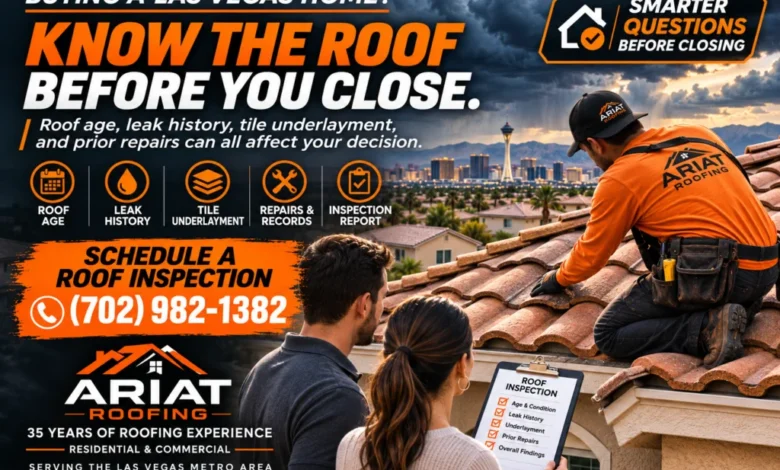
Broken or displaced tiles are easy to understand, yet some vulnerable areas receive less attention. Roof penetrations, vents, chimneys, valleys, skylights and wall-to-roof intersections all depend on proper water-shedding details. Damaged flashing or aging sealants around these areas can allow moisture to enter even when most roof tiles appear intact.
Interior clues matter, too. Look for ceiling stains, peeling paint, patched drywall and signs of prior moisture in attics or closets. A stain does not by itself prove an active roof leak, but it is worth asking for an explanation and supporting repair records.
Five questions to ask the seller
First, how old is the roofing system, and when was the most recent inspection? Second, has the roof ever leaked—especially after monsoon rain or wind-driven storms? Third, what repairs have been made, by whom, and are records available? Fourth, is any warranty transferable to the new owner? Fifth, if the house has solar panels or rooftop equipment, has roof access or prior installation affected roofing components?
Answers are not a substitute for inspection, but they help a buyer prepare more specific follow-up questions.
Understand repairs before negotiating
A report saying “roof needs attention” is less useful than a description of the affected area, likely causes and appropriate next steps. If repairs are recommended, request a written scope from a qualified roofer. Distinguish localized tile or flashing repairs from widespread underlayment work; those are different projects with different implications for cost and scheduling.
Depending on the purchase contract, buyers and sellers may discuss repairs, credits or other solutions. A real estate professional can explain contractual options, but a roofing contractor should assess the technical condition of the roof.
Make the inspection decision before closing
A buyer purchasing an established Southwest home should not rely on appearance alone. Roof age, maintenance records, visible defects and past storm exposure all help determine whether a specialty inspection would be useful.
For buyers who want a roof-specific assessment, roof inspections in Las Vegas can help identify visible conditions and recommend next steps. A written understanding of the roof today can support better planning for maintenance and repair after move-in.
The best outcome is not necessarily a flawless roof. It is a buyer who knows what is being purchased, what the roof needs and which issues require timely attention.
About Ariat Roofing
Ariat Roofing serves homeowners throughout Las Vegas, Henderson, North Las Vegas and surrounding Southern Nevada communities with roof inspection, repair and replacement services. For information, visit AriatRoofing.com or call (702) 982-1382.