Planning a Garden Irrigation System: What to Check Before Installation

A garden irrigation system can take much of the effort out of watering, particularly during long dry spells. However, getting good results involves more than installing a few sprinklers and setting a timer. Every garden has different requirements, and a system that works well for a large lawn might be completely unsuitable for flower beds, vegetable patches or established shrubs.
Before choosing any equipment, it’s worth understanding how garden irrigation system installers assess a property’s layout, water supply and planting requirements. Planning these details early can help avoid uneven watering, unnecessary water consumption and expensive changes once the system has been installed.
Work Out Which Areas Actually Need Watering
One of the most common mistakes when planning garden irrigation is assuming every part of the garden needs watering at the same time. In reality, a newly planted hedge, an established flower border and a collection of patio containers can have very different requirements.
New plants often need additional attention while their roots establish, and vegetables may require consistent moisture during important growing stages. Established shrubs and trees, however, can often manage with natural rainfall except during particularly dry conditions. Watering everything on the same schedule can waste water and may even damage plants that prefer drier conditions.
A useful starting point is to divide the garden into watering zones. These might include lawns, planted borders, vegetable beds, containers and areas with particularly demanding plants. It’s also worth looking at how much sunlight each area receives. A south-facing border exposed to afternoon sunshine will often dry out faster than a shaded area alongside the house.
Don’t overlook places sheltered from rainfall, either. Soil beneath overhanging roofs or dense tree canopies can remain surprisingly dry even after a wet week.
Check the Soil and Available Water Supply
The type of soil in your garden can make a considerable difference to irrigation performance. Sandy soil tends to drain quickly, meaning plants may need smaller amounts of water applied more frequently. Clay soil holds moisture for longer but can become compacted, causing water to collect on the surface rather than reaching the roots.
Understanding these differences helps determine how water should be delivered and how long each watering cycle needs to run. Sloping ground also requires consideration, as water can travel downhill before it has time to soak into the soil.
The available water supply is equally important. A garden tap might provide sufficient water for a small drip irrigation system but struggle to operate several lawn sprinklers simultaneously. Checking the available flow rate and operating pressure before selecting equipment can prevent disappointing performance.
Larger gardens may require separate irrigation zones that operate at different times. Depending on the property, additional equipment such as pumps, storage tanks or pressure regulation may also be necessary.
Any connection to the mains water supply also needs appropriate protection against backflow, which can contaminate drinking water. The requirements depend on the type of system being installed, so these should be checked during the design process. Homeowners should also be aware that temporary water-use restrictions may affect how an irrigation system can be operated.
Choose the Right Watering Method for Each Area
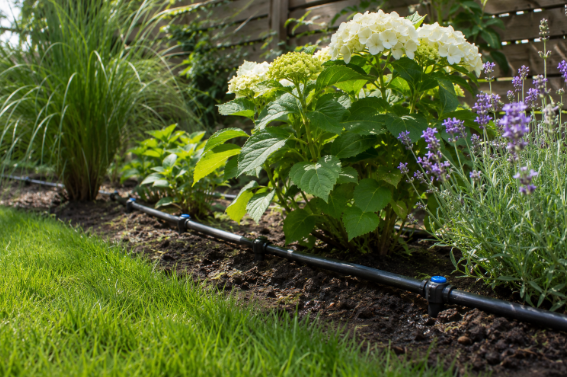
There isn’t one irrigation method that suits every garden. Drip irrigation, for example, can work particularly well for planted borders, vegetable beds and containers. Water is delivered close to the roots, reducing the amount lost through spray drift or landing on paths and other hard surfaces.
Sprinkler systems are sometimes more suitable for larger open areas, particularly when establishing newly laid turf. However, their positioning matters. Poorly arranged sprinklers can leave dry patches, repeatedly soak the same sections or send water onto patios and driveways.
Sprinklers also have limitations. During hot or windy weather, more water can be lost before it reaches the soil. For established lawns, regular sprinkler use may not be necessary at all, as many grasses can recover naturally when rainfall returns.
Automatic controllers can make managing different watering zones easier. More advanced systems may use rain sensors, soil moisture readings or weather information to adjust watering schedules. However, automation doesn’t remove the need to check whether plants actually require additional water.
For many gardens, a combination of methods works better than relying entirely on one type of equipment. Drip lines might serve planted borders, while a separate system handles areas with different requirements. The important thing is matching the equipment to the planting rather than designing the garden around the equipment.
Think About Installation, Maintenance and Long-Term Use
It’s worth considering where irrigation pipes, valves and controllers will be positioned before installation begins. Pipe routes should account for existing paving, tree roots, underground services and areas that may be landscaped in the future.
In established gardens, careful planning can help limit unnecessary digging and disturbance. Components that require occasional inspection, such as filters and control valves, should also remain accessible. Burying everything out of sight might look tidy initially, but it can make maintenance considerably more difficult.
Once installed, each watering zone should be tested to make sure water reaches the intended areas without excessive runoff or pooling. Settings may need adjusting as plants become established or seasonal conditions change. Filters, emitters and connections should also be checked periodically for blockages and leaks.
It’s equally important to remember that irrigation is only one part of managing garden water use. Improving soil with organic matter, applying mulch and collecting rainwater can all reduce the demand for additional watering. Combining an irrigation system with sensible garden watering methods can help maintain healthy plants without using more water than necessary.
Before committing to an installation, homeowners should understand which areas will be watered, how the system will operate and what maintenance will be involved. A clear plan, based on the garden’s actual requirements, is far more useful than simply installing the largest or most complicated system available.