If you run or manage a business, water probably feels like background infrastructure until something fails. Then it turns into downtime, repair bills, compliance stress, and unhappy customers or staff. Across offices, restaurants, manufacturing plants, schools, and healthcare facilities, water systems affect equipment life, utility costs, sanitation, and daily operations. Once you look closely, water quality and system upkeep stop being a maintenance detail and start looking like a business decision with real financial impact.
Water Problems Usually Start Quietly
Most commercial water issues don’t announce themselves with a burst pipe. They start with scale inside a boiler, spotting on glassware, odd taste complaints, reduced pressure, or equipment that suddenly needs service earlier than expected.
If you manage a café, that might mean an espresso machine losing consistency. In a hotel, it can show up as laundry quality problems or mineral buildup in guest room fixtures. In light manufacturing, untreated water can interfere with process control and damage expensive components.
The tricky part is that teams often treat these as isolated headaches. In reality, they’re often connected to a broader water chemistry issue. Hardness, sediment, iron, chlorine, and total dissolved solids can all shape how your building performs, even when the water still looks clean at first glance.
Maintenance Is Not the Same as Waiting for a Breakdown
A lot of businesses still take a reactive approach: fix it when it stops working. That strategy may seem practical, especially when budgets are tight, but water systems rarely reward delay.
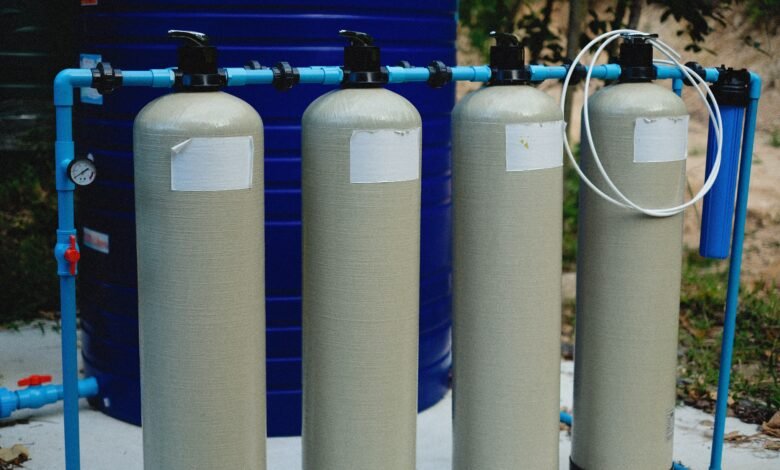
Preventive service has a different goal. Instead of waiting for visible failure, you track performance, replace consumables on schedule, inspect treatment equipment, and test the water feeding your critical systems. That includes softeners, filters, chemical feed setups, UV systems, and membrane-based treatment systems.
For businesses reviewing long-term operating risk, water treatment maintenance often becomes part of asset protection, not just facility upkeep. That can mean checking resin performance, calibrating controls, sanitizing storage, verifying pretreatment stages, and catching chemistry drift before it affects production or service quality.
The difference is simple: reactive work restores function after damage begins, while maintenance protects output before customers and staff feel the consequences.
Your Equipment Pays the Price First
Commercial equipment tends to be less forgiving than people expect. Water heaters, dishwashers, ice machines, cooling towers, steam systems, and reverse osmosis setups all depend on stable water conditions.
When mineral scaling forms on heat-transfer surfaces, the system needs more energy to do the same job. That means higher operating costs before you even get to repair expenses. A thin layer of scale can reduce efficiency enough to matter on monthly bills, especially in buildings with high hot-water demand.
Then there’s premature failure. Pumps wear down, valves clog, membranes foul, and sensors lose accuracy. Replacing a single component may not look catastrophic on paper, but repeated failures create a pattern: more emergency calls, more downtime, and less predictability in your maintenance budget. Businesses usually notice the cost late, after it has already spread across several systems.
Water Quality Affects Customer Experience More Than You Think
Customers may never ask about your water system, but they notice its effects. In foodservice, poor water can alter beverage taste, cloud ice, spot dishes, and reduce consistency in cooking. In hospitality, it can affect showers, linens, and fixture appearance. In healthcare or senior care settings, cleanliness and reliability carry even more weight.
Even in offices, water quality shapes perception. Employees notice strange odor, unpleasant taste, or recurring plumbing issues. Those details influence how well a workplace feels managed.
That matters because operations and brand perception overlap more than many companies admit. People connect small physical signals with overall quality. If your facility looks polished but your ice machine keeps failing or your breakroom water tastes off, it creates friction. Good facility management often shows up through these seemingly minor details.
Compliance and Safety Sit in the Background Until They Don’t
Water-related risk isn’t only about efficiency. In many sectors, it also touches compliance, sanitation, and occupant safety. Cooling systems can require monitoring for microbial risk. Food and beverage operations face sanitation standards. Labs, medical settings, and certain industrial facilities may need tighter control over purity levels and system validation.
Even buildings without highly specialized processes can run into trouble if they neglect inspection and recordkeeping. A failed backflow assembly, unmanaged corrosion, or poor filtration performance can become a larger issue when regulators, insurers, or auditors start asking questions.
You don’t need to overcomplicate this. You do need documentation, service intervals, water testing where relevant, and a clear understanding of what each treatment component is supposed to do. The businesses that handle this well usually build routines early, long before an inspection or incident forces the issue.
Choosing a Water Strategy Means Looking at the Whole System
It’s easy to buy a filter, install a softener, or replace one failing component and assume the problem is solved. Sometimes it is. Often, it isn’t.
A better approach looks at incoming water quality, peak usage, equipment sensitivity, discharge requirements, pretreatment needs, and maintenance capacity. A restaurant, apartment building, school, and fabrication facility can all have very different treatment priorities even if they share the same municipal supply.
For example, one facility may need hardness reduction to protect heaters, while another needs deionization for process accuracy. Some buildings need iron removal. Others need reverse osmosis, carbon filtration, or chemical treatment for boiler and cooling performance.
The main point is that water treatment works best as a systems decision. When businesses match the treatment setup to actual operating conditions, they get fewer surprises and better lifecycle performance.
Budget Conversations Change When You Measure Total Cost
Water treatment can be framed as an expense, but that framing is often too narrow. The smarter question is what untreated or poorly managed water is already costing you.
Look at labor hours spent on emergency service, shortened equipment lifespan, energy waste, product inconsistency, cleaning time, chemical overuse, guest complaints, and interrupted operations. Those costs tend to hide in separate line items, so they’re easy to underestimate.
A facility manager who spends less time dealing with recurring scale issues can focus on planned work. A restaurant with reliable filtration may reduce service calls and protect beverage quality. A plant with proper pretreatment can avoid process variation that affects output.
Once you start measuring total cost of ownership instead of isolated repair invoices, water system care stops looking optional. It becomes part of business continuity planning, operational efficiency, and quality control all at once.
The Best Time to Fix Your Water Plan Is Before It Becomes Urgent
By the time water problems become obvious, they’ve usually been developing for months. That lag creates a false sense of security. Everything seems fine until one day your equipment stack, utility bills, or customer experience says otherwise.
A useful next step is simple: identify where water touches your most important operations. Review the systems you rely on, the symptoms you’ve normalized, and the maintenance tasks that keep getting postponed. Then connect those dots.
Businesses that treat water as critical infrastructure usually end up with fewer breakdowns, steadier performance, and better control over operating costs. You don’t need to turn your building into a laboratory. You do need to stop treating water like an invisible utility. For many companies, it’s one of the quiet forces shaping profit, reliability, and reputation every single day.