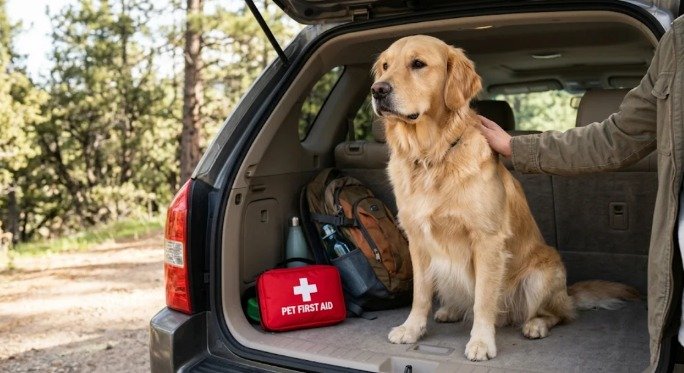
Traveling with a dog can be fun, but new places bring many dangers that don’t exist when you are at home. Your pet could break their foot stepping on a piece of broken glass while out for a stroll; your pet might pick up something poisonous off the ground and possibly die within hours; your pet is very susceptible to heatstroke as well. Prompt first aid and veterinary treatment can be critical in an emergency and may improve the chances of a successful outcome.
First aid does not replace veterinary medical treatment. First aid is about stabilizing the injured animal, preventing the condition from worsening, and obtaining the proper veterinary help as soon as possible.
Travel related injuries can range from minor lacerations to major trauma due to vehicle accidents, falls or altercations with other animals.
Check the situation before approaching.
Even normally friendly dogs may bite when they are frightened, painful, or disoriented, so approach an injured dog cautiously. It’s best to approach slowly and cautiously and not have your head close to the injured dog.
If there is an immediate danger such as traffic, move yourself and the injured dog to a safe place. Restrict the movement of the dog since it will likely panic and run when it is in pain.
Managing Bleeding
To manage surface level bleeds (bleeding at the site of the cut), gently apply steady pressure to a clean gauze pad or clean cloth on top of the bleed. If blood continues to seep through this first layer of absorbent material, do not continually lift off the original layer to view the cut. Instead, add another layer of absorbent material on top of the existing layer and continue to press.
All heavy bleeding cases (heavy loss of blood), deep cuts, wounds involving the chest cavity, or injuries resulting from vehicle contact should receive immediate veterinary care.
Never attempt to pull out foreign objects (such as broken glass or sharp metal) that are lodged inside of a pet’s body. Removing these items could lead to further bleeding, damaged tissues around the object, or an increased chance of infection.
What About Broken Bones?
A dog that rapidly develops a non weight bearing leg, displays an unusual positioning of a limb, or demonstrates evidence of extreme pain likely has either suffered from a fracture or a serious soft tissue injury.
Don’t continue to move your dog around in order to try to find out what is causing their lameness. The longer you can keep your dog completely motionless, the better off they will be. Don’t let them walk until you must transport them.
When transporting your dog, please do so with care and make sure to cradle their body in such a manner that there are no hard edges against which the injured part could hit. If the dog is too large to fit into a crate (a safe place for the dog), then consider using another enclosure or barrier.
If Your Dog May Have Been Poisoned
Traveling increases the potential for an animal to have unintended contact with unknown materials.
Animals can ingest discarded items such as food, medicine, chemicals, poisonous plants, or hazardous waste found at various areas including hotels, campsites, parks, and roadside locations.
Some possible indicators of poisoning in animals include excessive drooling, vomiting, weakness, trembling, altered behaviors, respiratory distress, seizure activity, or collapse.
Note: Animals poisoned by toxins will often appear normal (or “fine”) immediately after ingesting a toxin.
Do not induce vomiting on your own
One of the most common errors in emergency treatment for dogs is attempting to induce vomiting by yourself before consulting with an appropriate veterinarian. Inducing vomiting can be hazardous when ingested toxic materials (chemicals), harmful substances (corrosives), petroleum products, or sharp objects. Additionally, it increases the risk of the dog aspirating.
Identify as much as you possibly can about what was consumed. Collect any packaging labels or take a photo of the substance that was ingested. Record the time of consumption and how much of it was eaten.
Heatstroke Requires Immediate Action
Heatstroke is among the most serious travel related emergencies that can affect your dog.
Heatstroke occurs in dogs as a result of their being exposed to extremely high temperatures while on a walk or during an intense exercise period. It also occurs if you leave your dog in a car. Some breeds are at greater risk of developing heatstroke due to their physical characteristics (such as brachycephalic breeds), obesity, or other medical issues.
Some symptoms of early onset of heatstroke include rapid breathing, increased salivation, agitation, muscle weakness, nausea and vomiting, and disorientation.
If heatstroke has progressed to a more severe stage, your dog could exhibit such behaviors as confusion, falling over, seizure activity, or unconsciousness.
Start cooling while arranging emergency care.
Immediately move the dog away from the heat source and place it in a cooler area.
Use cool (not ice cold) water to assist in lowering the dog’s temperature while you are using ventilation or air conditioning to aid in heat dissipation. Do not use a wet, heavy towel on top of the dog as this will only allow additional heat to accumulate on the dog’s body.
Do not delay veterinary evaluation simply because your dog appears to improve after cooling. Internal organ damage caused by heat stroke may develop without the owner noticing it.
Keep a Travel First Aid Kit
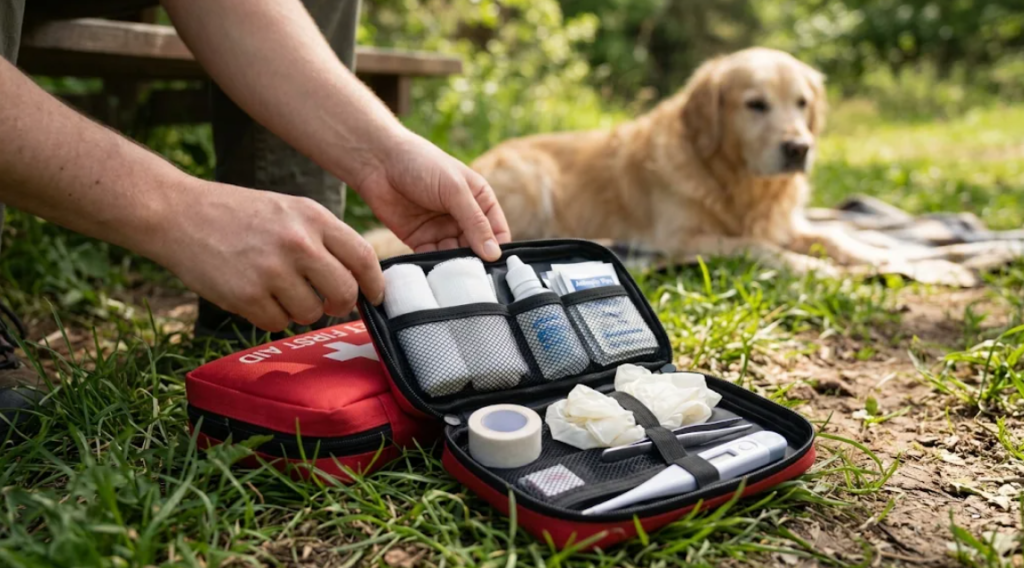
A basic emergency travel kit will assist in managing your pet’s minor needs until professional assistance is available.
Clean gauze and non stick dressings
Adhesive tape
Saline for gentle wound rinsing
Disposable gloves
Clean towels
A digital thermometer
Bottled water
A leash and spare collar
A secure carrier or crate
Copies of important medical information
Do not give your pet medication unless advised by your veterinarian.
Know Where Veterinary Care Is Available
Before a lengthy trip (to travel with your pet), it would be helpful for you to determine where veterinary clinics are located on your route as well as at your final destination. If you will be traveling to unknown locations, or across international borders, this becomes even more critical.
Rather than packing in a difficult to access area of the vehicle, keep vaccination information, prescription medication information, the dog’s ID tags, and pertinent medical history easily available.
Watch the Dog During the Rest of the Journey
When your pet has been injured, exposed to something you suspect poisoned their body or experienced excessive heat, monitor them for signs of ongoing problems even if they appear okay at first.
Monitor changes in your pet’s breathing, alertness, ability to walk, appetite, vomiting, urination, and overall behavior.
If your pet remains quiet (and appears tired) after a traumatic event, it doesn’t necessarily mean they are weak or in pain; however, it is possible.
Conclusion
Injury, poison and heat stroke are all potential medical emergencies that may develop quickly during what would otherwise be a normal trip. If your pet is injured, you should always take steps for their safety, stop bleeding (if possible), and minimize any unnecessary movements.
If your pet has ingested something it shouldn’t have, don’t try anything at home or attempt to cause them to vomit except as directed by a veterinarian. Heatstroke is also a life threatening condition and immediate action will need to be taken to cool your pet down and obtain a veterinary evaluation.
Traveling with a well stocked first aid kit, copies of your pet’s medical history, and information about local veterinarians can greatly assist in handling emergencies when traveling with your pet.