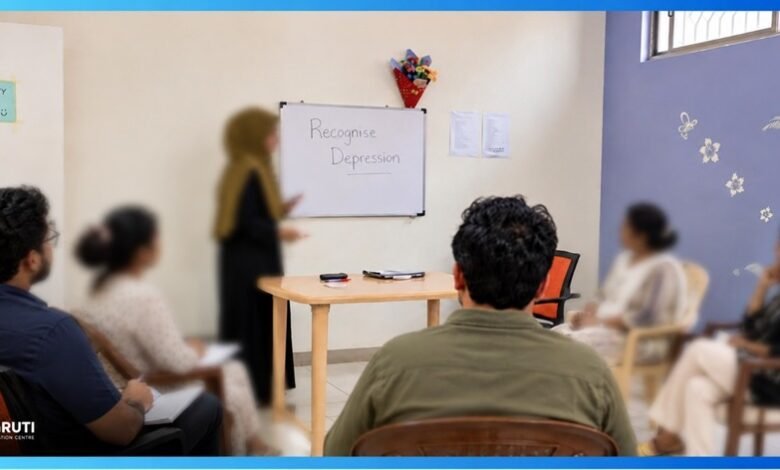
Not everyone who is depressed will tell you about it. Most will not. They will carry it quietly, behind a smile, behind a busy schedule, behind the simple phrase “I am fine” repeated enough times that everyone around them believes it.
Depression does not always look the way you expect it to. Sometimes it shows up as someone who has gone quieter than usual, someone who used to laugh easily but does not anymore, someone who is sleeping too much or barely sleeping at all. The people closest to them sense that something has shifted, but because the person never brings it up, nobody knows how to name it.
If you are reading this because someone in your family feels different and you cannot quite explain why, you are already paying the kind of attention that matters.
What Does Depression Look Like When Someone Hides It?
Depression that is not spoken about shows up through behaviour, the body, and habits. The signs are easy to miss because they look like ordinary life changes, until you realise how many of them are happening at the same time.
Watch for:
- A noticeable drop in energy that does not improve with rest
- Losing interest in things they used to enjoy, whether it is cooking, meeting friends, watching cricket, or going for walks
- Eating much less than usual, or far more, often at odd hours
- Lying awake for hours or sleeping through most of the day
- Becoming more irritable or short-tempered than their usual self
- Withdrawing from family conversations and social gatherings without giving a clear reason
- Letting personal grooming slip: not bathing regularly, wearing the same clothes for days
- Complaining of headaches, back pain, or stomach problems that do not have a medical explanation
In India, where talking openly about emotions is not something most people grow up doing, depression often hides behind physical complaints and social withdrawal. A father who has stopped going for his morning walk, a mother who no longer calls her friends, a brother who spends every evening locked in his room: these are not personality changes. They are signs worth paying attention to.
Families in Chennai who have sought help at a mental hospital in Chennai for a loved one often describe the same pattern. The person was never openly sad. They were just gradually becoming a smaller version of themselves, pulling away from everything that used to make them who they were.
How Should You Approach Someone You Think Is Depressed but Will Not Open Up?
The biggest mistake families make is waiting for the person to bring it up themselves. If someone is not talking about their feelings when they are well, they are unlikely to start when they are depressed. The conversation has to come from you, and it has to come gently.
A few things that help:
- Choose a quiet, private moment. Not over a family dinner. Not in front of other people. Not when either of you is rushed.
- Lead with what you have noticed, not what you have diagnosed. “I have noticed you have not been sleeping well and you seem more tired than usual” opens a door. “I think you are depressed” closes it.
- Do not push for a response in the first conversation. Sometimes just hearing “I have noticed, and I am here” is enough to plant a seed.
- Avoid statements like “just be positive” or “you have nothing to be sad about.” Depression does not respond to logic. It is a medical condition, not a mood.
- If the person resists talking, suggest a doctor’s visit for the physical complaints they have been having. Many people will agree to see a doctor for headaches or fatigue even if they will not agree to see one for their emotions.
A proper psychiatric assessment at a psychiatric hospital in Chennai can determine whether what you are seeing is clinical depression, and if it is, what the right treatment looks like. Depression responds well to a combination of medication and therapy when it is identified and treated early.
What Happens When Depression Goes Unnoticed for Too Long?
Depression that is not addressed does not stay the same. It deepens. The withdrawal becomes more severe. The physical complaints become chronic. The person’s ability to work, to maintain relationships, and to take care of themselves keeps declining. In some cases, untreated depression leads to thoughts of self-harm or suicide, often without any warning that the family could see.
The earlier you act, the more straightforward the recovery. A person whose depression is caught in the first few months responds far better to treatment than someone who has been silently struggling for years. You do not need to wait for the person to ask for help. You do not need to wait for certainty. If the signs are there and they have been there for more than two weeks, that is enough reason to speak with a professional.
Getting in Touch for Mental Health Support in Chennai
If you or a family member needs professional mental health support in Chennai, you can reach out to:
T Nagar Centre:
Jagruti Rehabilitation Centre – Mental Hospital in Chennai | Alcohol De-addiction Centre in Chennai
Address: 15, Venkataraman Street, T Nagar, Chennai, Tamil Nadu 600017
Phone: +91-9080437676
Annanagar Centre:
Jagruti Rehabilitation Centre – Alcohol De-Addiction Centre in Chennai | Rehabilitation Centre in Chennai
Address: 944, 17th Main Rd, Sector H, Thirumoolar Colony, Anna Nagar, Chennai, Tamil Nadu 600038
Phone: +91-9080437676