

Introduction
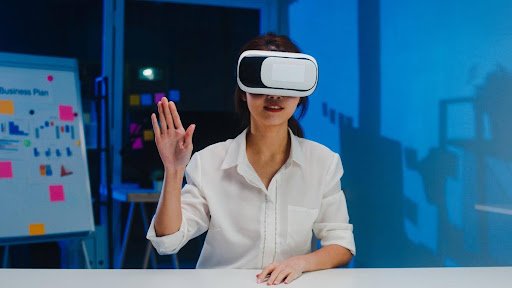
Augmented Reality and Virtual Reality are revolutionizing human interactions with technology. Whether it is about training in healthcare, education, gaming, retail, or manufacturing industries, businesses are now leveraging immersive technology to address real-world problems and to provide users with compelling experiences. As the demand for such solutions keeps increasing, the need for professionals skilled in AR/VR development is becoming greater.
Taking up ARVR courses will enable one to gain the necessary technical and artistic skills that are essential in becoming successful in this promising industry. If you are a student and are trying to explore your future options or are a professional willing to enter the world of new technology, an ar and vr course is for you!
AR Developer
Another highly desirable career path is that of an AR Developer.
An AR Developer is one who builds applications which integrate digital information with the real world. These developers work on projects that involve augmenting user experience by incorporating interactive digital information into the real world.
Responsibilities often include:
- Creating augmented reality applications
- Developing interactive user experiences
- Integrating digital content into physical environments
- Optimizing performance across devices
Organizations value AR Developers because they help create engaging and innovative customer experiences.
VR Developer
VR Developers specialize in developing fully immersive virtual worlds that give users the ability to interact in the virtual environment.
They develop applications for use in education, training, entertainment, health care and business industries. They blend creative and technical skills to create highly realistic virtual experiences.
People who love interacting with technology can find VR Developer a great career choice.
AR VR Designer
Design plays a critical role in creating successful immersive experiences. AR VR Designers focus on the visual and interactive aspects of applications.
Their responsibilities may include:
- Creating immersive user interfaces
- Designing virtual environments
- Developing interactive experiences
- Improving usability and accessibility
- Enhancing user engagement
This role is well suited to creative professionals who enjoy combining design thinking with technology.
User Experience Designer for Immersive Technologies
The user experience becomes very important in applications related to augmented reality and virtual reality. A bad user experience design may render the best technology useless.
User Experience Designers for this job are supposed to know about the requirements of the users as well as create an intuitive user interaction process.
This profession helps companies provide products to their users in an easy manner.
Game Designer
The gaming industry continues to be one of the largest adopters of immersive technologies. AR and VR have created entirely new possibilities for interactive entertainment.
Game Designers working in this domain are responsible for:
- Developing gameplay experiences
- Creating virtual environments
- Designing interactive storylines
- Enhancing player engagement
- Improving overall user experiences
This career path offers exciting opportunities for individuals with a passion for creativity and digital storytelling.
AR VR Content Creator
Content is at the heart of every immersive experience. AR VR Content Creators develop the visual and interactive materials that users engage with inside virtual and augmented environments.
Their work may involve creating:
- Interactive experiences
- Digital assets
- Educational content
- Product demonstrations
- Immersive storytelling experiences
As companies increasingly adopt immersive solutions, the demand for skilled content creators continues to expand.
Simulation Specialist
A wide range of industries makes use of simulation technologies for education and development purposes. Simulation Specialists develop realistic virtual worlds that enable users to hone their skills and improve their performance.
Industries including the health care industry, manufacturing industry, aviation industry, and education industry, among others, need the services of simulation specialists to develop efficient learning environments.
AR VR Product Manager
This career path is very appealing to professionals who want to be involved in the field of leadership and project management.
Product Managers play a critical role in bringing immersive technology products to market. They work together with many people including designers, developers, stakeholders, and businesses.
Key responsibilities often include:
- Defining product goals
- Managing development processes
- Coordinating cross functional teams
- Aligning technology with business needs
- Supporting product growth strategies
This role combines business knowledge, communication skills, and technological understanding.
AR VR Consultant
Organizations that are experimenting with such technologies tend to consult experts prior to undertaking any project. AR VR Consultants assist organizations in realizing how such technologies can facilitate their purposes.
They will analyze the needs of the organization, offer recommendations on the solutions and guide the organization in the strategy of its project implementation.
The chosen profession allows people to work in various industries and introduce new technologies into organizations.
Technical Artist
Technical Artists bridge the gap between creative design and software development.
Their responsibilities may include:
- Optimizing visual assets
- Supporting development workflows
- Ensuring smooth integration of design elements
- Improving performance within immersive environments
- Collaborating with designers and developers
This role is ideal for individuals who enjoy both artistic creativity and technical problem solving.
Training and Learning Specialist
More and more companies utilize AR and VR technologies to enhance learning and development initiatives for their employees. The job of the Training Specialist is to create engaging and impactful educational content for employees.
Individuals who take up this profession develop virtual settings where the learning process is hands-on and constructive for learners.
With more investments being made in developing employees, prospects in this domain are going to flourish.
Opportunities Across Industries
One of the biggest advantages of completing ar and vr courses is the ability to work across a wide variety of industries.
These industries include:
- Education
- Healthcare
- Manufacturing
- Real estate
- Retail
- Entertainment
- Media
- Tourism
- Automotive
- Technology
Because immersive technologies continue to evolve, professionals with AR and VR expertise can explore diverse career paths based on their interests and strengths.
Conclusion
The increasing use of immersive technologies has resulted in many opportunities for the professional. There is an array of careers that an individual can opt for after taking the ar and vr course, such as AR Developer, VR Developer, Product Manager, Consultant, Technical Artist, and User Experience Designer.
These jobs give people the chance to use their creativity, technological skills, problem-solving abilities, and innovation in order to contribute to the future of digital experiences. As businesses keep trying to find innovative ways of reaching out to their customers and improving efficiency, the professionals who go through good ar vr training courses will be ready for successful careers.