Growing a food business is exciting, but every new customer, product line, and delivery route adds pressure to the systems behind the scenes. A bakery that once served one neighborhood may now supply several cafes. A small meat shop may start selling to restaurants across town.
Growth like this rewards owners who plan ahead, because the habits that worked on a small scale often break down once volume rises. Three areas decide whether expansion feels smooth or chaotic: how well you protect quality, how you store stock, and how you move products to customers.
Making Room for More Perishable Stock
As a food business grows, the question of where to keep extra stock moves from a minor concern to a daily challenge. Without enough refrigerated containers or similar cold space on site, perishable goods end up crammed into crowded coolers where air cannot move freely, and temperatures start to drift. Portable cold storage units placed right on the property solve this by adding chilled or frozen space exactly where it is needed.
Many growing businesses choose to buy refrigerated containers for sale with stainless steel interiors, digital thermostats, automatic defrost, and lockable doors, so stock stays at a steady temperature around the clock. With that extra space in place, owners can take on larger orders without worrying about where the next delivery will go.
Protecting Product Quality as Volume Rises
Quality is the reason customers return, and it is also the first thing to slip when a business scales too quickly. A recipe that tastes perfect in a small batch can turn out differently when made in larger amounts. Ingredients from a new supplier may not behave the same way as the ones you used before. Staff who are rushing to meet bigger orders may cut corners without meaning to.
The best defense is a clear written standard for every product. Write down exact recipes, cooking times, portion sizes, and how the finished item should look, smell, and taste. Share these standards with everyone in the kitchen, and check finished products against them every day.
It also helps to test suppliers before switching to them fully. Order a small amount first, use it in a trial batch, and compare the result with your usual product. A cheaper ingredient is only a saving if it does not lower the quality that built your reputation.
Building Strong Food Safety Habits
Food safety becomes harder to manage as more people handle more products. One careless moment can lead to illness, complaints, and lasting damage to a brand. For this reason, safety should be built into daily routines rather than treated as an occasional check.
Start with clear cleaning schedules for every surface, tool, and storage area. Assign each task to a named person so nothing is left to chance. Make handwashing, clean uniforms, and proper glove use part of every shift. Keep raw and ready-to-eat foods apart at all times, from the moment they arrive to the moment they leave.
Training matters just as much as rules. New team members should learn safe handling on their first day, and long-serving staff benefit from regular refreshers. When people understand why a rule exists, they are far more likely to follow it during busy periods.
Organizing Stock for Freshness and Speed
A larger operation means more goods coming in and going out every day. Without a clear system, items get lost at the back of shelves, older stock goes to waste, and staff waste time searching for what they need.
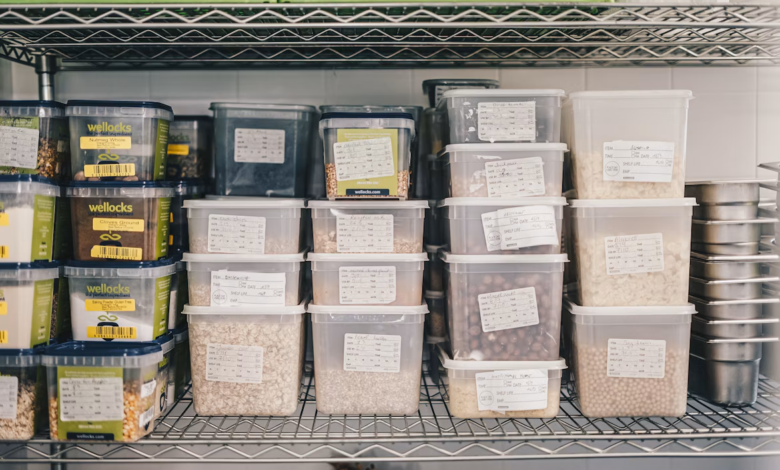
The simplest approach is first in, first out. Place new deliveries behind older stock so the oldest items are always used first. Label everything with the date it arrived and the date it should be used by. Group similar items together and give each group a fixed spot, so anyone on the team can find what they need quickly.
Keep a close eye on temperatures in every cold space. Check them at set times each day and write the readings down. If a reading moves outside the safe range, act at once and find the cause. Small, regular checks like these help prevent costly waste and spoilage.
Planning Reliable Distribution
Getting products to customers on time and in perfect condition is where many growing food businesses struggle. A late delivery can leave a restaurant short during a busy service, and goods that warm up on the road may not be safe to sell.
Plan delivery routes carefully so drivers spend less time on the road and products spend less time in transit. Group nearby customers into the same run, and schedule the longest trips at cooler times of day where possible. Make sure every vehicle can hold the right temperature for the goods it carries, and check it before each trip.
Clear communication with customers also builds trust. Agree on delivery windows in advance, let customers know quickly if there is a delay, and confirm each drop once it is complete. Reliable service often matters to buyers as much as the product itself.
Preparing for Busy Seasons
Most food businesses see their busiest periods around holidays, summer events, and local festivals. These peaks bring welcome income, but they also test every part of the operation at once.
Look back at earlier busy seasons to see which products sold fastest and where problems appeared. Use that knowledge to order ingredients early, schedule extra staff, and arrange more delivery runs before demand arrives. Prepare items that keep well ahead of time so the team can focus on fresh orders during the rush. A little planning in quieter months makes the busy ones far less stressful.
Keeping Clear Records
Good records tie quality, storage and distribution together. They show where each batch of ingredients came from, when it was used, and which customers received the finished product. If a supplier ever reports a problem, these records let you trace affected items quickly and act before anyone is harmed.