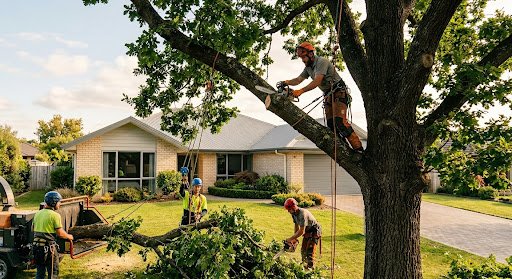
Trees add shade, beauty, and value to a property, but there comes a point when keeping one around does more harm than good. Maybe a storm left it leaning dangerously close to your roof. Maybe disease has hollowed out its trunk. Or maybe it’s simply grown too large for the space it occupies. Whatever the reason, knowing when and how to part ways with a tree safely is something every homeowner should understand.
At Austin Tree Specialists, we’ve spent years helping property owners across Austin make these exact decisions. This guide walks through the warning signs, the process, and why professional help matters more than most people realize.
Signs a Tree May Need to Come Down
Not every tree problem requires removal. Many issues can be fixed with proper pruning, fertilization, or pest treatment. But some signs point to a tree that’s beyond saving.
Structural damage is one of the clearest indicators. A trunk with deep cracks, large cavities, or extensive rot has lost much of its strength. Trees in this condition can fail unexpectedly, especially during high winds or heavy storms, which are common throughout Central Texas.
Leaning trunks deserve close attention too. A slight lean that’s always been there is usually fine. A sudden lean, or one that’s gotten noticeably worse, often signals root failure underneath the soil.
Dead branches scattered throughout the canopy, especially in the upper portions, suggest the tree is struggling to support itself. If more than half the tree shows signs of decline, removal is often the safer and more cost-effective route compared to ongoing treatment.
Root damage near sidewalks, driveways, or foundations can also be a red flag. Trees with compromised root systems are more prone to toppling, particularly in Austin’s clay-heavy soil, which shifts significantly with seasonal moisture changes.
Why DIY Tree Removal Is Riskier Than It Looks
It’s tempting to think a chainsaw and a free afternoon are all you need. The reality is far more complicated. A mature tree can weigh several tons, and predicting exactly where it will fall once cut requires experience, the right equipment, and a solid understanding of load distribution.
Power lines complicate things further. Austin’s older neighborhoods often have overhead lines running close to mature trees, and a miscalculated cut can knock out power to an entire block, or worse, cause serious injury.
Then there’s the cleanup. Removing a tree isn’t just about felling the trunk. Stump grinding, limb disposal, and site restoration all require specialized tools that most homeowners simply don’t own.
What to Expect From a Professional Tree Removal Service
A reputable company follows a structured process designed to protect your property and everyone nearby. Here’s what that typically looks like.
Initial assessment. A certified arborist inspects the tree, evaluates its health, and determines the safest removal method based on its size, location, and surrounding structures.
Permits and planning. Depending on the tree’s species and size, the City of Austin may require a permit before removal, particularly for heritage trees or those in protected zones. A knowledgeable team handles this paperwork so you don’t have to navigate it alone.
Safe removal. Using cranes, rigging systems, or sectional cutting techniques, the crew removes the tree in a controlled manner that minimizes risk to nearby structures, vehicles, and landscaping.
Stump and debris removal. Once the tree is down, the stump can be ground below grade, and all branches, logs, and wood chips are cleared from the site.
Site cleanup. A thorough job leaves your yard looking better than before the crew arrived, not littered with sawdust and leftover debris.
How Much Does Tree Removal Cost?
Pricing varies based on several factors: the tree’s height and diameter, its proximity to structures or power lines, and how difficult access is to the site. Smaller trees under 30 feet typically cost less to remove than large oaks or pecans that require cranes and extended labor.
Getting a detailed, written estimate upfront protects you from surprise charges later. At Austin Tree Specialists, every quote breaks down labor, equipment, and disposal costs clearly, so you know exactly what you’re paying for before work begins.
Choosing the Right Team for the Job
Not all tree services operate the same way, and the difference shows up in both safety and results. Look for a company that carries proper insurance, employs certified arborists, and has a track record of positive reviews from local customers.
Ask about their equipment. Companies that invest in modern cranes, stump grinders, and rigging systems can typically handle a wider range of jobs safely, including those in tight urban lots where a tree sits close to a home or fence line.
It’s also worth asking how they handle cleanup. A company that leaves your yard spotless demonstrates the kind of attention to detail that reflects their overall standards.
Protecting Your Property Starts With the Right Call
Trusting a dead or damaged tree to fall on its own terms can put your home, your family, and your neighbors at serious risk, which is exactly why Tree Removal should always be handled by trained professionals rather than left to chance. Austin Tree Specialists brings years of hands-on experience to every job, pairing careful assessment with the right equipment to get the work done safely and efficiently.
Our team understands the unique challenges Austin properties face, from unpredictable storm patterns to tricky soil conditions that affect root stability. We’ve built our reputation on thorough assessments, transparent pricing, and cleanup that leaves your property looking its best.
If you’ve noticed warning signs in a tree on your property, don’t wait for a storm to make the decision for you. Reach out to Austin Tree Specialists for a professional assessment and find out what options make the most sense for your yard, your budget, and your peace of mind.
Frequently Asked Questions
How long does tree removal usually take?
Most residential tree removals take between two and six hours, depending on the tree’s size, location, and whether a crane is needed for access.
Do I need a permit to remove a tree in Austin?
In many cases, yes, particularly for heritage trees or those located in protected zones. A professional tree service can confirm requirements and handle the permitting process on your behalf.
Will removing a tree damage my lawn?
A skilled crew uses protective boards and careful rigging techniques to minimize impact on surrounding grass, gardens, and hardscaping during the removal process.
What happens to the wood after removal?
Depending on your preference, wood can be hauled away, chipped into mulch, or left in sections for firewood. Most companies will discuss these options with you before the job begins.