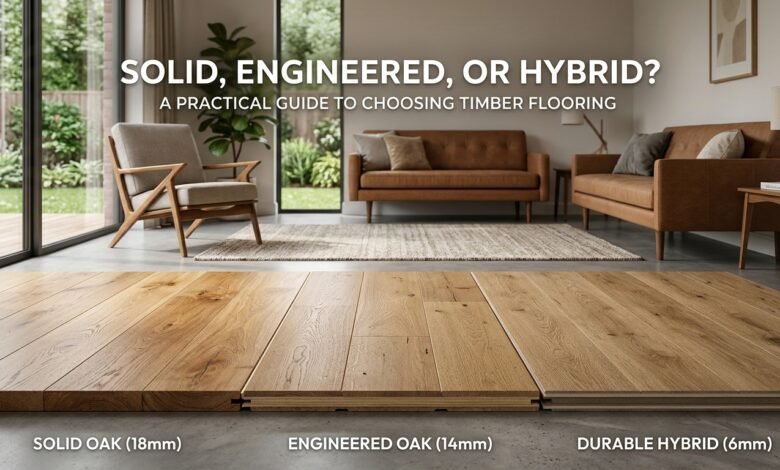
Few finishes change the feel of a home as much as a good timber floor. It adds warmth, ages gracefully, and suits everything from heritage cottages to modern townhouses. But the range of species, constructions, and finishes can be overwhelming, and a poor choice can mean cupped boards, scratches, or a floor that simply doesn’t suit your lifestyle.
If you’re researching timber flooring Melbourne, it helps to understand the main options and the questions to ask before committing. This guide walks through the essentials.
The Main Types of Timber Flooring
Solid Timber
Solid boards are cut from a single piece of timber, usually around 19 millimetres thick. They can be sanded and refinished multiple times over decades, which is one of their biggest advantages. Solid timber is typically nailed or glued to a subfloor and works best in rooms with stable moisture levels.
Engineered Timber
Engineered boards have a real timber veneer bonded to a stable plywood or composite core. The layered structure resists movement better than solid timber when humidity changes, making it suitable for a wider range of installations, including over concrete slabs. The thickness of the top layer determines how many times it can be sanded.
Hybrid and Laminate Alternatives
Hybrid flooring combines rigid cores with decorative layers, while laminate uses a photographic layer on a fibreboard core. These are often more water resistant and budget friendly, but they aren’t real timber and cannot be refinished in the same way. They can be a sensible choice for rentals or very wet areas.
Choosing a Species
Hardness, colour, and grain vary between species. Australian hardwoods are popular for good reasons:
- Spotted gum: Hard, durable, with a range of tones from chocolate to light brown, and a distinctive grain
- Blackbutt: A pale, honey-toned timber with an even grain, popular in contemporary interiors
- Messmate and Victorian ash: Lighter tones, commonly used in older Victorian homes and renovations
- Jarrah: Deep red tones, strong and long-lasting
- Tasmanian oak: A lighter, softer timber that is suitable for light-traffic areas
Hardness is often compared using the Janka scale, where a higher number means greater resistance to dents. If you have pets, children, or heavy foot traffic, a harder species may suit you better, though no timber is entirely dent-proof.
Matching Flooring to Your Home
Consider the conditions in each room:
- Concrete slabs: Moisture can rise through slabs, so engineered or specifically designed installations with moisture barriers are usually safer.
- Timber subfloors: Solid boards often suit these, but ventilation under the house matters.
- Underfloor heating: Check the manufacturer’s guidance, as some products tolerate heat better than others.
- Sunny rooms: Timber can change colour with UV exposure, so rugs and window coverings can help even out ageing.
- Kitchens and bathrooms: Water is the enemy. Use appropriate products and wipe up spills quickly.
Finishes and Maintenance
The finish protects the timber and shapes its appearance.
Polyurethane (water-based or oil-modified). Forms a durable surface film. Water-based options dry faster, have lower odour, and come in clear or matte looks. Oil-modified finishes tend to deepen the colour and add warmth.
Hardwax oils. Penetrate the timber and offer a more natural, matte look. They’re easy to spot-repair but may need more regular maintenance.
Pre-finished boards. Factory-applied coatings can be very hard wearing, and installation is quicker with no on-site sanding or curing.
Day-to-day care is simple:
- Sweep or vacuum regularly with a soft brush head.
- Use a slightly damp, well-wrung mop, not a wet one.
- Choose cleaners recommended for your finish.
- Place felt pads under furniture legs.
- Use mats at entrances to catch grit.
- Keep indoor humidity reasonably stable.
Preparing for Installation
Good preparation separates a long-lasting floor from a disappointing one.
Acclimatisation. Timber should rest in the home for the period the supplier recommends so it adjusts to indoor humidity before installation.
Subfloor assessment. The base must be flat, dry, and structurally sound. Moisture testing is essential, particularly on concrete.
Expansion gaps. Timber expands and contracts with the seasons, so gaps at the edges are necessary and are hidden by skirting or trims.
Layout planning. Consider board direction, transitions between rooms, and how the floor meets doors and stairs.
Time and mess. Sanding and coating involve dust and fumes. Plan for temporary relocation of furniture, and in some cases of people and pets.
What Affects the Cost
Pricing depends on species, board width, grade, finish, subfloor work, and the size and complexity of the job. Wider boards and premium grades with fewer natural features usually cost more. Rustic grades that include knots and colour variation can be less expensive and often hide wear well. Remember to include the cost of skirting, stairs, removal of old flooring, and moisture barriers in your budget.
Sustainability and Sourcing
Look for timber sourced from certified, responsibly managed forests, or recycled and reclaimed boards salvaged from old buildings. Recycled timber can bring character and history, though it needs careful preparation and may vary in quality. Ask about certifications and where the timber comes from.
Questions to Ask Before You Buy
- What species, grade, and thickness is the board?
- Is it solid, engineered, or a hybrid product?
- How many times can the floor be sanded?
- What finish is recommended and how is it maintained?
- Is it suitable for my subfloor and heating system?
- What warranty applies, and what voids it?
- What is the installation process and timeline?
The Takeaway
The best timber floor is the one matched to your home, lifestyle, and budget. Understand the differences between solid, engineered, and hybrid products, choose a species and finish you’ll enjoy living with, and invest in proper preparation and installation. With sensible maintenance, timber flooring can look beautiful for decades and add lasting value to your home.