Relocating a business involves more than moving furniture, equipment and stock. Whether you’re moving to a new office, warehouse or retail space, the transition can create security gaps that are easy to miss.
Doors may remain open during the move, contractors may need temporary access, and valuable equipment could be left unattended. Your new premises may also have keys or access codes that were previously used by other occupants.
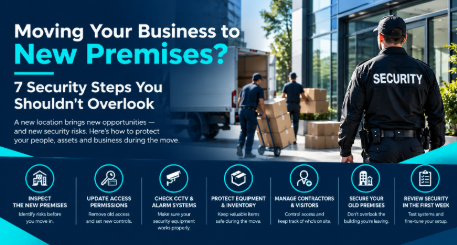
Planning ahead can help protect your employees, property and business operations. Here are seven practical security steps to consider before moving day.
- Inspect Your New Premises Before Moving In
Before bringing equipment or inventory into your new property, inspect the building and its surroundings. Check whether entrances, windows, emergency exits and loading areas are secure.
Pay particular attention to:
- Exterior lighting and poorly visible areas.
- Gates, fencing and parking areas.
- Storage rooms and restricted spaces.
Warehouses may need extra attention around loading docks, while offices may require better control over reception areas and staff-only rooms.
Address any significant concerns before valuable assets arrive. This is also a good time to review your overall security services requirements and determine which measures suit your premises.
- Update Keys, Access Codes and Permissions
Previous tenants, employees or contractors may still have keys, access cards or entry codes. Without reviewing these arrangements, you may not know who can enter the property.
Speak with the property manager about existing access permissions. Consider changing locks or resetting codes where appropriate, and remove access rights belonging to previous occupants.
Where possible, provide individual access credentials rather than sharing one code among multiple employees. Keep a record of issued keys and cards, and establish a clear process for reporting lost credentials.
For workplaces with frequent visitors, contractors or deliveries, effective access management can help reduce confusion and prevent unauthorized entry.
- Check CCTV and Alarm Systems
A new property may already have CCTV cameras or an alarm system, but existing equipment should not be assumed to work correctly.
Before operations begin, check camera coverage around entrances and other important areas. Confirm that recordings can be accessed when needed and that the system is configured appropriately for your premises.
Alarm systems should also be tested, with contact details and response procedures updated.
Businesses that need additional visual monitoring can explore CCTV monitoring services as part of their wider security arrangements. The aim is to ensure that equipment, monitoring and incident response work together effectively.
- Protect Equipment and Inventory During the Move
Moving day can be hectic, making it easier for valuable items to be misplaced or left unsecured. Prepare an inventory of important equipment and stock before transportation begins.
Assign someone to check that important items leave the old premises and arrive at the new location. Keep expensive equipment out of public view where practical, and avoid leaving valuable goods in unsecured areas overnight.
For warehouses and industrial businesses, loading docks and vehicle access points deserve particular attention. Multiple deliveries and open access doors can make it difficult to monitor activity.
If the relocation takes several days, establish a consistent closing routine for both properties. Secure equipment and stock at the end of each working day rather than assuming the site is safe because the move is nearly complete.
- Manage Contractors and Visitors
Relocations often involve removalists, electricians, IT technicians, cleaners and furniture installers. These people may need access to different parts of the building, but unrestricted entry can create unnecessary risks.
Decide who can authorise access and which areas contractors may enter. Where appropriate, maintain visitor records or arrange escorted access to restricted rooms.
Employees should know how to identify authorised contractors and whom to contact if someone requests unexpected access.
If contractors need to work outside normal business hours, establish who is responsible for securing the premises afterwards. Clear procedures help protect the site without disrupting relocation work.
- Remember to Secure Your Old Premises
Businesses often concentrate on the new location and overlook the property they are leaving. However, the old premises may still contain equipment, documents or stock until the move is complete.
Before handing back the property, make sure:
- Remaining equipment and confidential documents are removed.
- Keys and access cards are accounted for.
- Unnecessary access permissions are revoked.
- Doors and windows are secured.
Also review the arrangements for alarm monitoring and other security services in line with your lease and service agreements.
If both properties remain operational during the transition, assign clear responsibility for each location. Businesses that need additional after-hours checks may consider mobile patrol security to help monitor agreed areas and identify potential security concerns.
- Review Security During Your First Week
Once the move is complete, check whether your security arrangements work as intended. Walk through the premises after business hours and review entrances, windows, loading areas and restricted rooms.
Make sure employees understand the new access procedures and know what to do if an alarm activates. Update emergency contact details and test relevant equipment according to the provider’s recommendations.
Your new property may have different operating hours, delivery schedules or access requirements. Review these changes and adjust procedures where necessary.
It’s also worth checking whether staff know who is responsible for locking up, activating alarms and reporting suspicious activity. Simple, consistent routines can help prevent security oversights from becoming everyday habits.
Give Your New Business Premises a Secure Start
Relocating gives businesses an opportunity to review existing security arrangements and address weaknesses before normal operations resume.
Checking access permissions, testing security equipment and protecting assets throughout the transition can help reduce avoidable risks. The right approach depends on your premises, operating hours and business activities.
Alfa Security Services provides security solutions for Melbourne businesses, including security guards, mobile patrols, CCTV monitoring and alarm response. Reviewing your requirements before moving day can help you identify the measures most appropriate for your new location.
Plan your security before the move, so your business can start its next chapter with confidence.