

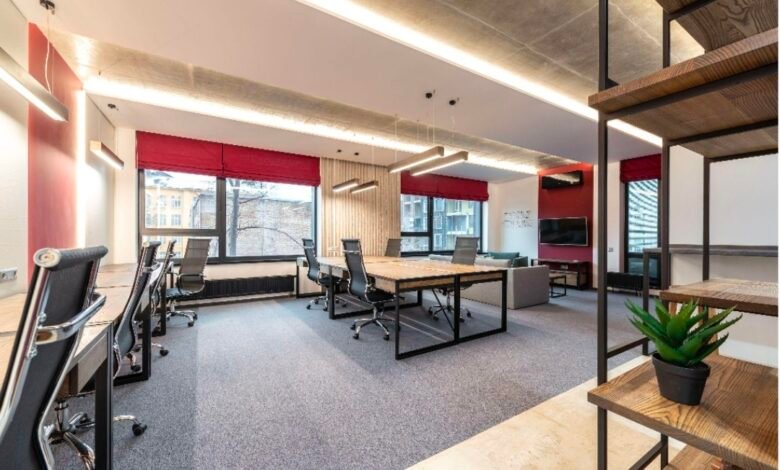
You already have an opinion about a company before anyone speaks. It happens the moment you walk through the door. That same instinct works on your own team, your visitors, and anyone deciding whether they want to work with you. The place where your staff spend eight hours a day is quietly doing a job of its own, shaping how they work and what outsiders assume about the business behind it.
If you’re an Australian business owner weighing up an upgrade or a fresh fitout, the payoff can be hard to see on paper. Fair enough. But look at the data alongside what actually happens inside busy workplaces, and a pretty steady picture emerges. Good commercial design isn’t decoration. It moves the needle on performance.
The Connection Between Space Design and Business Performance
Layout, lighting, the general feel of a room – these things change how people work. Give staff natural light and chairs that don’t punish their backs, and you tend to hear about higher energy and fewer aches by mid-afternoon. There’s a simple logic to it. When nobody’s squinting at glare or shifting around to get comfortable, more of their attention lands on the work.
Clients are running their own quiet assessment too. Long before they open your proposal, they’ve clocked the reception area, the meeting room, whether the place looks looked-after. A tired, cluttered office can chip away at a strong pitch. A sharp, professional one does some of the persuading for you.
Then there’s talent. Hiring and keeping good people is a genuine slog across most industries right now, and the quality of your space plays a bigger part in that than owners tend to expect. People who feel their surroundings respect them are more inclined to stay. And when a candidate is choosing between two offers, the office they walked into often tips the scales.
Key Elements of Growth-Supporting Commercial Design
A few design choices show up again and again in workplaces built to grow, not just cope.
- Open floor plans. When people can see and reach each other, conversation happens on its own, no calendar invite required. The trick is balance. You still need quiet corners for focused work alongside the open, collaborative zones.
- Flexibility. Design purely around today’s headcount, and you’ll feel the pinch the day you hire number eleven. Modular furniture, meeting rooms that adapt, layouts you can rework without gutting the place – all of it buys you room to change.
- Wellness and light. Daylight does measurable things to mood. Add a bit of greenery and somewhere to step away, and burnout eases over time. These aren’t luxuries. They keep a workforce steady.
- Technology. Hybrid and remote work aren’t going anywhere, so reliable connectivity, proper video conferencing, and enough data and power to handle whatever tool you adopt next are simply the baseline now.
- Branding. Your values sink in far better through how a space looks and works than through any framed statement on the wall. Staff and visitors absorb the identity without really noticing.
Investing in Design as an Investment in Growth
A good commercial space earns its keep well beyond first impressions. It backs the people inside it, shapes how clients read you, and leaves room to expand without immediately bursting at the seams.
So if a fitout is on the cards, treat the decisions as strategy rather than styling. That’s where the right partner matters. Working with the experienced Ultimate Fitout Group, business fitout specialists, for example, keeps those choices grounded in what genuinely helps a growing team, not just what photographs well in a rendering. Build a space with intention, and it can quietly become one of the more useful tools you’ve got for lasting growth.