Renting an e-bike can be a very convenient way of getting around without having to make a large initial outlay. If you’re commuting several days a week though, the rental costs can very quickly work out to be more than the cost of simply owning your own bike.
For the regular commuter the purchase of an e-bike is often going to be the better long term value, whereas for the occasional rider, the vacation rider or the rider who just wants to try it out before they commit, renting is the way to go. The right choice will obviously depend on how often you ride, what the local rental rates are, what your maintenance costs are and whether you have a safe place to store your best electric bike.
Here’s how to compare the costs and work out which option is best for your commute.
How Much Does It Cost to Rent an Electric Bike?
Electric bike rental prices will vary from city to city, from provider to provider, depending on the length of the hire and the type of bike. Some shared e-bikes will charge you an unlock fee plus a per minute rate. Others (local bike shops for instance) will offer you hourly, daily or weekly hires.
As a general budgeting guide, some U.S. rental services advertise rates in these ranges:
| Rental Type | Illustrative Cost | Best For |
| Hourly Rental | 10–20 per hour | Short trips and test rides |
| Daily Rental | 50–100 per day | Occasional outings |
| Weekly Rental | 200–400 per week | Vacations or temporary use |
| Monthly Rental | 300–600 per month | Temporary commuting |
These are broad market examples rather than standardised rates. Shared bike schemes can charge by the minute and local prices can be considerably more or less. Always check the actual price, time limits, insurance and late return charges in your area before you do any comparison.
Renting is the ideal option if you’re not sure whether an e-bike is going to be suitable for your route. You can trial the commute, check out the availability of charging at work and get a feel for how the ride actually is before you commit to buying one.
How Much Does Buying an Electric Bike Cost?
Buying an e-bike requires a bigger initial outlay but once you’ve got one you can ride without having to pay a rental fee for each trip.
For day to day commuting you can find a whole host of practical e-bikes in the 1k-2k bracket (although some of the premium models are of course considerably more expensive). Your total out of pocket cost will also likely include a helmet, lock, lights etc if they aren’t already part of the purchase.
Take the Leoguar Sprint fat tire utility electric bike as an example. The product page currently has a promotional price of $1,050 as opposed to the regular listed price of $1,299. Prices and promotions are subject to change so always check the official Sprint product page prior to purchase.
Sprint is for commuting, for errands, for light mixed surface riding. It’s a 350W rated rear hub motor, has a removable 614Wh battery, five levels of pedal assist, a half twist throttle and a utility rear mount for compatible ebike accessories.
Advertised range is up to 55 miles under ideal conditions. Actual range will vary depending on speed, level of assistance, hills, rider and cargo weight, temperature and other riding conditions.
For a commuter who rides the bike regularly you’re paying for the bike once and then budgeting separately for the electricity, maintenance and replacement parts.
Buying vs. Renting: Which Costs Less Over Time?
Buying usually becomes more economical when your total rental costs exceed the purchase price plus the cost of ownership. The more you commute the sooner that crossover point is likely to be reached.
Let’s look at three ways of using an electric bike. These are all simplified calculations, not actual quotes for any particular rental service.
| Usage Pattern | Rental Cost Assumption | Annual Rental Cost |
| 2 days per month | $50 per day | $1,200 |
| 2 days per week | $50 per day | $5,200 |
| 5 days per week | $50 per day | $13,000 |
These figures are for 24, 104 and 260 rental days per year respectively (no discounts). The actual total will be affected by actual commuting days, local prices and the season.
Now compare that to owning a $1,050 electric bike. Add another $150 for initial accessories, $180 per year for maintenance and $10 per year for electricity and your estimated first year total would be:
- Electric bike purchase: $1,050
- Initial accessories: $150
- Maintenance: $180
- Electricity: $10
- Estimated first-year total: $1,390
Under those assumptions renting two days a month would be $1,200 a year (slightly less than the first year of ownership). At two rental days a week it would be $5,200 a year.
Ownership also gives you the bike to keep after the first year (although you’ll need to factor in its resale value, future repairs and battery condition).
When Does Buying Break Even?
Same $1,050 purchase price and same $150 accessory budget so the initial outlay is $1,200. At $50 per rental day that’s 24 rental days (before maintenance and electricity).
Once you take into account the ongoing ownership costs, the break even point is actually quite a bit later. If your annual maintenance and electricity comes in at $190, your purchase cost is roughly $1,390 in the first year which is equivalent to about 28 rental days at $50 per day.
At a rental rate of $20 per day the same initial ownership budget gets you 60 rental days before you’re up against the ongoing costs.
The trick is to use your actual local rental rate and your actual local ownership costs. A commuter who rents a few times a month may well be able to choose either option. Someone who is commuting to work every day will typically end up saving more by buying.
What Are the Hidden Costs of Owning an Electric Bike?
Buying gets rid of the ongoing rental fees but ownership isn’t free. A sensible comparison would take into account all the costs that come after the initial purchase.
1. Maintenance and Replacement Parts
Tires, brake pads, chains and all the other wear items will need looking at at some point. Frequent riding, wet weather, poor road surfaces and heavy loads will all tend to increase the rate at which you’ll need to maintain them.
As a planning estimate a commuter might budget $100 to $300 a year for maintenance (depending on mileage and whether they do the basic jobs themselves). That’s just a guide as to what the cost might be.
2. Charging Electricity
Charging is generally a very small cost. A 614Wh battery holds 0.614kWh of energy. At an electricity rate of $0.18 per kWh and assuming an 85% charging efficiency, a full charge would cost around $0.13.
Actual charging costs will vary with the electricity rates, the capacity of the battery and the charging losses. Even with regular use electricity is generally going to be a smaller cost than the cost of maintenance or rental.
3. Battery Replacement
Lithium ion batteries of course degrade with age and usage. A replacement can run into several hundred dollars or more depending on the model and the availability of the right parts.
You don’t necessarily have to replace the battery every few years. The life of the battery is going to be dictated by how you charge it, how much temperature it’s exposed to, how it’s stored and how it’s used. Just follow the manufacturer’s care instructions and check that a replacement battery is available before you go and buy one.
4. Security and Storage
A good quality lock is important if you’re parking outside of work, shops or at transit stations. You may also require secure indoor storage or insurance depending on where you live and how you use the bike.
These costs will vary enormously so only include the costs that are relevant to your own circumstances. If your apartment doesn’t permit indoor bike storage and secure parking is prohibitively expensive then renting may be the way to go.
Is Buying an Electric Bike Better for Your Daily Commute?
For the regular commuter the benefit of ownership is clearly more than just potential cost savings. You have a bike you can rely on when you need it, you can keep your preferred bits and pieces on it and you’re not reliant on the availability of a rental.
However renting can be useful if your commute is very fluid or if you only ever combine cycling with public transport a handful of times a month.
| Factor | Buying | Renting |
| Upfront Cost | Higher | Lower |
| Cost for Frequent Riding | Often lower over time | Can add up quickly |
| Maintenance | Your responsibility | Usually handled by provider, subject to terms |
| Bike Availability | Available when stored and ready | Depends on fleet or reservation |
| Model Choice | Choose your preferred model | Limited to available inventory |
| Storage | Requires space | Usually no long-term storage needed |
| Flexibility | Best with a stable routine | Best for occasional or changing needs |
Before you buy, check your commute distance, your charging options, local bike parking and whether your route is safe and appropriate for the type of e-bike you’re planning to use.
Why Leoguar Sprint Can Make Sense for Commuters
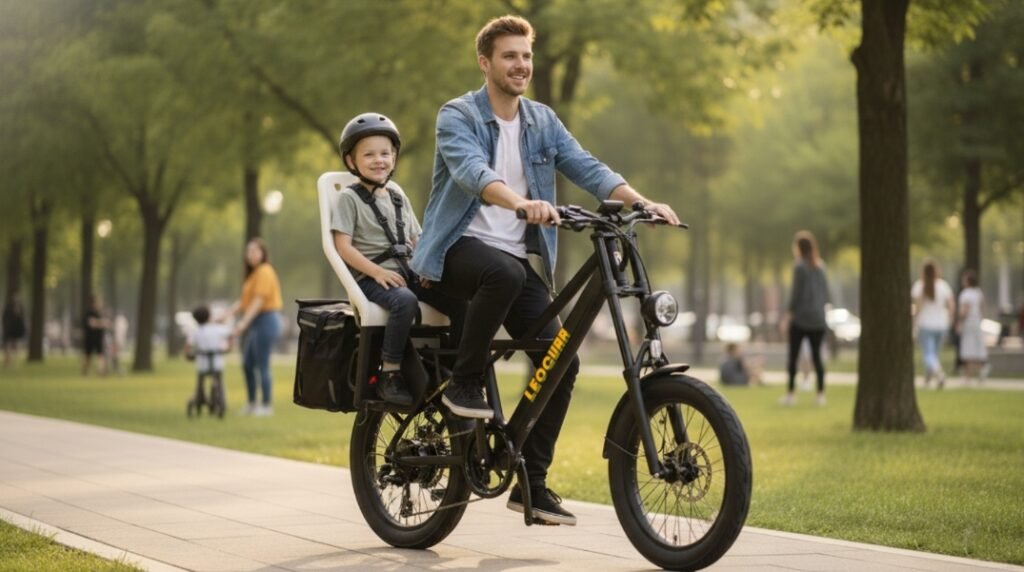
If your commute is over paved roads, some local streets, a bit of park paths and a dash of light gravel then the Leoguar Sprint fat tire utility electric bike is definitely worth a look.
Its 20 x 3.0 inch tyres and 75mm front suspension go a long way to mellow out the bumps that you’ll encounter on the uneven surfaces of the city. The 614Wh removable battery gives an advertised range of up to 55 miles and there are five levels of pedal assist to allow the rider to tailor the amount of motor support to the route.
Sprint also has a half twist throttle, Shimano 7 speed gearing and an integrated rear mount which is compatible with a range of selected cargo and passenger accessories. It can be a useful bike for carrying your day to day kit as long as you’re mindful of the bike’s load limits and the requirements of the accessory manufacturer.
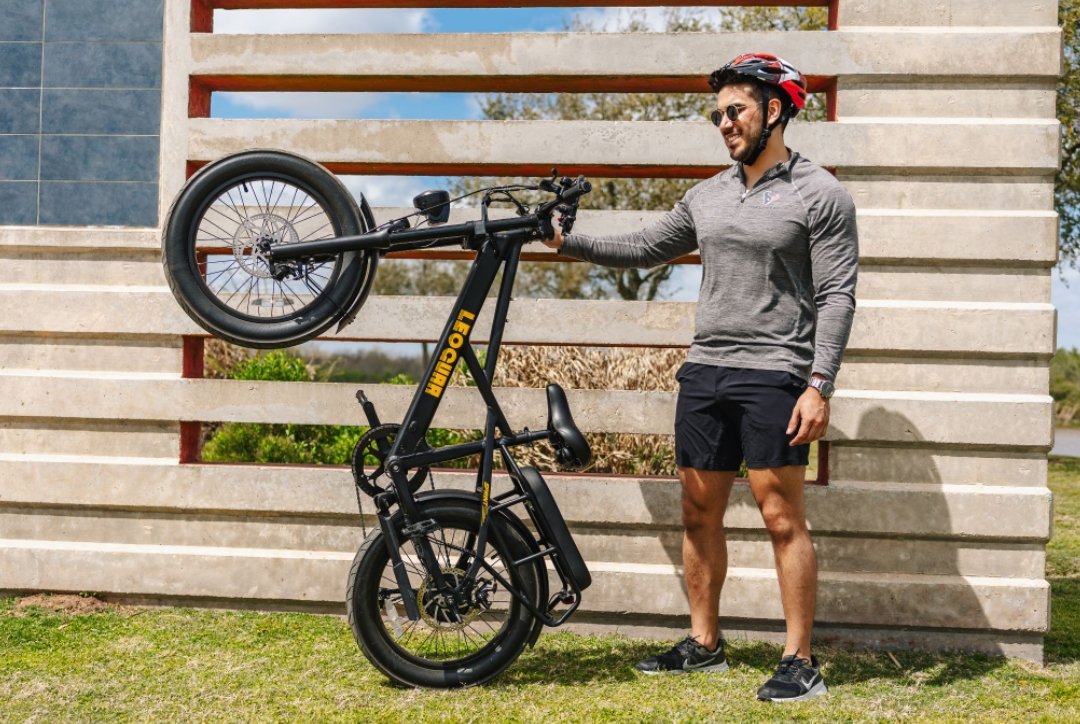
The bike has a stated total payload of 275lb (rider and cargo) and is recommended for riders between 5’3″ and 6’5″. Its weight of around 55lb is also something to bear in mind if you’re going to be carrying it up stairs or lifting it onto a vehicle rack.
Leoguar lists a two-year limited warranty covering electrical components. Review the current warranty terms, return conditions, and product specifications before ordering.
For commuters who plan to ride several days a week, owning a utility-oriented electric bike can provide a consistent transportation option without repeated rental charges.
When Is Renting Still the Better Choice?
Buying isn’t automatically the right decision for everyone. Renting can be a sensible option in several situations:
- You ride occasionally. A few outings per month may not justify ownership costs.
- You’re visiting another city. Renting avoids transporting your bike.
- You’re testing an electric bike commute. A short trial can reveal whether the route, weather, and travel time work for you.
- You lack secure storage. Avoiding theft and storage concerns may outweigh potential savings.
- Your transportation needs change frequently. Renting lets you choose a different type of bike for different trips.
You can also rent before buying. Trying a few models can help you identify the right frame size, riding position, motor response, and battery range before making a long-term commitment.
How to Decide: A Simple Buying Checklist
Before choosing between rental and ownership, answer these five questions:
- How many days each month will you ride?
- What does a typical rental cost in your area, including fees?
- Can you safely store and charge a bike at home?
- What will maintenance, accessories, and replacement parts cost?
- Will you continue using the bike for at least a year?
If you expect to ride regularly and can store the bike safely, buying often makes better financial sense. If you’re unsure whether cycling fits your routine, start with a rental and use the experience to inform your purchase.
Final Thoughts: Buy for Your Routine, Rent for Occasional Use
Electric bike rental is convenient, but frequent rental fees can quickly exceed the cost of owning a bike. For a consistent commute, buying often provides better long-term value, more predictable availability, and the freedom to choose a model that suits your route.
Before deciding, compare actual local rental prices with the purchase price, maintenance, electricity, and storage costs. If you plan to ride several days each week, a practical model such as the Leoguar Sprint may be a more economical option over time. If you ride only occasionally, renting may remain the better fit.
Frequently Asked Questions
1. Is it cheaper to rent or buy an electric bike for commuting?
Buying is often cheaper for frequent commuters because rental fees accumulate with every trip. However, the break-even point depends on local rental rates, purchase price, maintenance, and how often you ride. Compare the full first-year ownership cost with your expected annual rental spending.
2. How many days do I need to ride before buying an electric bike makes sense?
There’s no such thing as a universal figure. If the bike is $1,200 (including the basics) and the rental is $50 a day then your purchase budget will run out after 24 rental days when you factor in maintenance and electricity. Work out your actual rental price and your actual ownership costs to establish your own break even point.
3. What are the ongoing costs of owning an e-bike?
Typical ownership costs are electricity to run it, routine maintenance, replacement tyres and brake pads, security accessories and some minor repairs. A battery replacement will probably be required as the battery ages but that’s not an annual cost. The cost will vary with mileage, conditions and the kit on the bike.
4. Is an electric bike worth buying if I only commute twice a week?
It can be, particularly if your commute is consistent and rental prices are high. But if you ride only a few days each month, renting may cost less once ownership expenses are included. Compare the number of actual riding days rather than assuming that every week will be the same.
5. Can I rent an electric bike before deciding which one to buy?
Yes. Renting is a useful way to test commute distance, riding comfort, motor assistance, and battery needs before committing to a purchase. Try a model similar to the type you’re considering, and check whether the rental provider allows enough time to complete your normal route.