
Patricia Beech? The Bride at the Center of Tony Bennett’s Most Dramatic Fan Moment

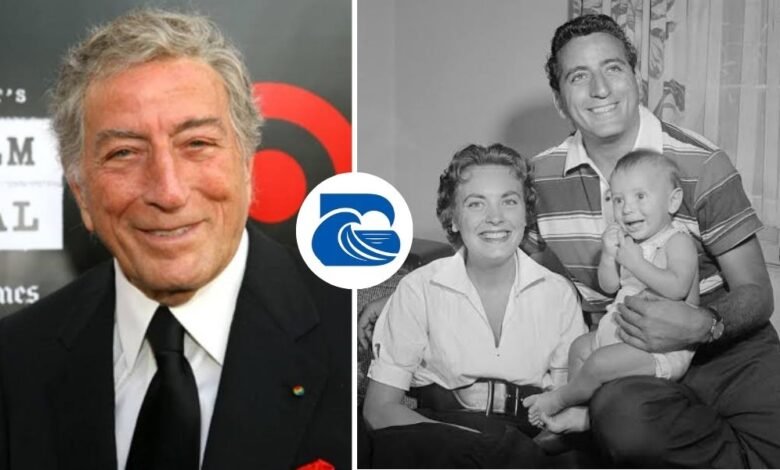
Patricia Beech is often remembered as Tony Bennett’s first wife. But her story is much more than a short line in a famous singer’s life. She became part of one of the most unusual wedding scenes in old music history. In 1952, Patricia Beech married Tony Bennett at St. Patrick’s Cathedral in New York City. Outside the church, many young female fans gathered in black clothes. They acted as if they were mourning because their favorite singer was getting married. This moment made Patricia Beech part of a public story she did not ask for.
Tony Bennett later became one of the most loved singers in America, but Patricia entered his life before that full legend was complete. Bennett was already rising fast, and his young fan base was strong. The wedding showed how fame could turn a private life event into a public show. It also showed how hard it could be for a young woman to marry a star whose image belonged to fans, managers, and the music business.
Who Was Patricia Beech?
Patricia Beech was not a singer trying to become famous. She was a young woman from Ohio with an interest in art and jazz. Tony Bennett later wrote that he met her in July 1951 at Moe’s Main Street in Cleveland, Ohio. She had come to the club with a date, and Bennett noticed her from the stage. At the time, Bennett was twenty-four, and Patricia Beech was eighteen. He said she loved jazz and had listened to radio jazz shows as a teenager.
She also hoped to study art in Cleveland. These details matter because they show that Patricia Beech had her own life before the Bennett name became part of her identity. She was young, private, and artistic. She was not looking for a press story. She was not trying to build a public brand. She met Tony Bennett at a time when his career was moving quickly, but she still saw him as a real person, not only as a famous face on stage.
A Love Story That Started Before the Legend Grew
The first meeting between Patricia Beech and Tony Bennett had the feeling of an old show business story. Bennett was singing in Cleveland when he saw her sitting near the stage. After the show, her date invited Bennett to their table. That gave Bennett a chance to speak with her. Soon after, he called her and asked her out. Their first date was simple but personal. Bennett wrote that they spent the day choosing neckties for him to wear on stage.
It was not a big Hollywood scene. It was a normal moment between two young people. But the world around them was not normal. Bennett was becoming a major name. His records were doing well, and crowds were growing. Patricia Beech stepped into that fast world before she had much time to understand it. Their bond started with talks about music, art, and life. Yet it soon had to face travel, fans, pressure, and the strong hand of the entertainment business.
Tony Bennett Was Rising Fast
To understand Patricia Beech’s story, it helps to understand where Tony Bennett was in 1951 and 1952. Bennett had his first major hit, “Because of You,” in 1951. His career then grew quickly. His name started to mean something to young fans, club owners, and record companies. Biography.com notes that Bennett later became best known for standards and for his signature song, “I Left My Heart in San Francisco,” released in 1962.
But before that later success, he was already a young singer with a strong public image. His early fan base was not quiet. It was emotional and very active. At that time, pop stars were often sold as dream figures. Fans did not always see them as regular people with private needs. A marriage could feel like a loss to fans who had built a fantasy around the singer. That is why Patricia Beech’s wedding became more than a family event. It became a test of how the music world handled a star’s private life.
When Fans Almost Blocked Patricia Beech from Tony’s World
Patricia Beech got an early look at Bennett’s fame when she visited him in New York. Bennett wrote that when Patricia came to the Paramount Theater, she saw thousands of young fans outside. Police were holding the crowd back. Patricia almost could not get backstage because the police thought she was just another teenage fan. This small moment tells a lot. Patricia Beech was important to Bennett, but to the outside world she could be mistaken for one face in a crowd. Fame had already built a wall around him.
Even people close to him had to prove they belonged near him. This must have been strange for Patricia. She had known him in a more personal way in Ohio. In New York, she saw the bigger machine around him. Fans screamed. Police guarded doors. Managers watched every move. For a young woman still learning how show business worked, this was likely a sharp lesson. Loving a star meant living close to a crowd that never fully went away.
The Proposal Was Public Too
Tony Bennett did not only sing in public. He also made one of his biggest life choices in public. He wrote that he announced his plan to marry Patricia Beech during a show at the Paramount around New Year’s Eve. He had not asked her in private first. He later said he was lucky that she wanted to marry him too. This detail shows how quickly their private relationship became part of his public story. For many fans, the proposal may have felt exciting. For Patricia Beech, it was also a life-changing moment made in front of other people.
It is easy to romanticize this today. A singer on stage. A young woman he loves. A big announcement. But there is another side. It also shows how little space Patricia had to stay private. Even the proposal entered the public record. In a normal relationship, two people can talk quietly and choose their next step. In this case, the stage came first. The crowd learned the news almost at the same time Patricia did.
The Wedding That Turned Into a Scene
The most famous Patricia Beech story is the wedding. Patricia Beech and Tony Bennett married on February 12, 1952, at St. Patrick’s Cathedral in Manhattan. Bennett later wrote that the wedding date was moved to February 12, which was Lincoln’s Birthday. Because many young fans were out of school, they could come to the church. Bennett claimed that his manager, Ray Muscarella, helped create the crowd scene and even supplied black mourning veils.
He said many screaming girls gathered outside the church and that Patricia had trouble getting up the steps. This is the part of the story that still feels shocking. A wedding should be a joyful, calm moment. Patricia Beech instead had to walk into a church while fans acted as if her marriage was a tragedy. The scene may sound funny from far away, but it also shows the hard side of fame. A young bride became the target of fan grief, not because she had done anything wrong, but because she had married a beloved singer.
Why the Black Dresses Mattered
The black clothing outside the church was not a small detail. Black is often linked with mourning. The fans were acting as if Tony Bennett’s marriage meant the death of their dream. In modern language, this was fan culture before social media. Today, fans may post online, argue in comment sections, or react to celebrity news within minutes. In 1952, fans showed up in person. They stood outside a church. They wore black. They turned a wedding into a public message.
This matters because it shows how the music industry created emotional ties between stars and fans. Young women were invited to adore singers. They bought records. They followed news. They filled theaters. But when a singer married, that dream image was broken. Patricia Beech stood in the middle of that break. She was not just a bride that day. She became a symbol of reality entering a fantasy world. That made her wedding both romantic and uncomfortable. It was happy for the couple, but painful for the fan image around Bennett.
The Industry Controversy Behind the Fan Scene
The most interesting part of this story is not only the fans. It is also the claim that the scene may have been shaped by publicity needs. Bennett wrote that his manager did not like the idea of him marrying because he believed marriage could hurt Bennett’s appeal to young female fans. If true, this reveals a major problem in old entertainment culture. A singer’s personal life could be treated like a business asset. His bachelor image could be seen as something to protect. Patricia Beech was not just marrying a man.
She was entering a system that had money tied to his romantic image. That is why this angle is stronger than a normal biography. It asks a bigger question. Who owned Tony Bennett’s image? Was it Tony? Was it his fans? Was it the manager? Was it the record business? Patricia Beech’s wedding shows how a woman close to a star could become part of industry planning, even when the moment was deeply personal.
Patricia Beech and the Pressure of Being the Star’s Wife
After the wedding, Patricia Beech did travel with Tony Bennett for a time. Bennett wrote that they were often on the road in the first years of marriage. They also had an apartment in New York. At first, this may have helped them stay close. But touring life is hard. A singer works at night, travels often, meets many people, and lives by a schedule set by bookings and business needs. A spouse can feel pulled along by the career.
Later, Patricia and Tony had two sons, D’Andrea “Danny” Bennett and Daegal “Dae” Bennett. Biography.com notes that the couple had two sons before separating in the 1960s, with the divorce finalized in 1971. People also reports that Danny was born in 1954 and Dae in 1955. Once children arrived, the shape of the marriage changed. Patricia Beech was no longer only a young wife near the stage. She was also a mother trying to build a home while her husband’s work kept moving.
A Private Woman in a Very Public Story
One reason Patricia Beech remains interesting is that she did not keep chasing fame. Many celebrity spouses use fame to build a public life. Patricia Beech did not become a major public figure in that way. This makes her story harder to tell, but also more respectful. Not every person linked to a star wants to be famous. Patricia Beech seems to have lived much of her later life away from public attention.
That privacy should not be treated as a missing fact or a weak point. It may have been her way to keep control. Her name still appears in Tony Bennett’s life story because she was his first wife and the mother of his first two children. But she did not turn that link into constant public exposure. In a culture that often rewards oversharing, Patricia Beech’s quiet life feels different. It reminds readers that people can be close to fame and still choose distance from it.
The Sons Who Stayed Close to Music
Patricia Beech’s story also connects to Tony Bennett’s later career through their sons. Danny Bennett became important in his father’s professional comeback. Biography.com reports that Danny became Tony Bennett’s manager in the 1980s and helped revive his career. People reports that Danny managed Bennett for many years, while Dae worked closely with his father on music production and recordings. This adds another layer to Patricia Beech’s place in the Bennett story.
Her marriage to Tony did not last, but the family link remained part of his music legacy. Danny and Dae were not only children of a famous singer. They became workers in the music world. Danny helped guide the business side of Bennett’s later image. Dae helped with sound and production. So Patricia Beech’s family story did not end with divorce. It continued through the sons she shared with Bennett. In that way, her private life still touched public music history.
What Patricia Beech’s Story Teaches About Fame
The story of Patricia Beech teaches a simple lesson. Fame can make private life harder. It can turn love into news. It can turn a wedding into a crowd scene. It can make fans feel they have a claim on a person they do not truly know. Patricia Beech was young when she entered Tony Bennett’s life. She met a talented singer, fell in love, and married him. But she also had to face the world around him.
That world included screaming fans, public interest, career pressure, and a business that cared about image. Her story helps readers see celebrity marriage in a more human way. Behind every famous name, there are people who pay part of the price for that fame. Patricia Beech did not release famous records. She did not become the star on stage. But she lived through a moment that showed how intense Tony Bennett’s early fame had become.
Final Thoughts
Patricia Beech should not be remembered only as Tony Bennett’s first wife. She should also be remembered as a young woman who stood inside one of the strangest fan moments of the 1950s music world. Her wedding day became a public event because Tony Bennett’s fans saw his marriage as the end of a dream. That moment says a lot about old celebrity culture. It shows how singers were sold as romantic ideals. It shows how managers could worry that marriage might weaken a star’s appeal.
It also shows how women linked to famous men could become public figures without asking for attention. Patricia Beech’s life after that day stayed mostly private, and that privacy deserves respect. Her story is not loud, but it is meaningful. It gives readers a closer look at the cost of fame, the pressure around young stars, and the quiet strength of a woman who became part of music history without trying to own the spotlight.