key Takeaways
- Regular checks of brakes, tires, lights, and steering help identify problems before riding.
- A properly fitted helmet, secure footwear, and visible clothing provide important protection.
- Controlled speeds and distraction-free riding give riders more time to react.
- Uneven pavement, wet surfaces, tracks, and turning vehicles require extra caution.
- Younger riders benefit from practice and supervision, while crashes warrant attention to safety, injuries, and documentation.
Why E-Scooter Safety Matters
E-scooters have small wheels, limited rider protection, and enough speed to make rough pavement or a sudden stop dangerous. Traffic, parked vehicles, pedestrians, weather, and poor visibility can all narrow the margin for error. Recent research on e-scooter injuries also highlights the importance of prevention, particularly for younger riders. Treat every ride as a shared-road activity that requires attention and judgment.What to Check Before You Ride
A quick inspection can take less than a minute and may reveal a problem before you are moving through traffic. Do not ride a scooter that feels unstable, makes unfamiliar noises, or has damaged parts.- Squeeze both brake levers and confirm they feel firm and responsive.
- Check tires for low pressure, cuts, excessive wear, or visible damage.
- Make sure the handlebars, stem, and folding mechanism are straight and secure.
- Test the headlight, taillight, and reflectors, especially if you may ride near dusk.
- Look for loose bolts, cracks, or parts that rattle.
- Confirm that the battery has enough charge for the trip and that the display has no warning message.
Protective Gear That Makes Sense
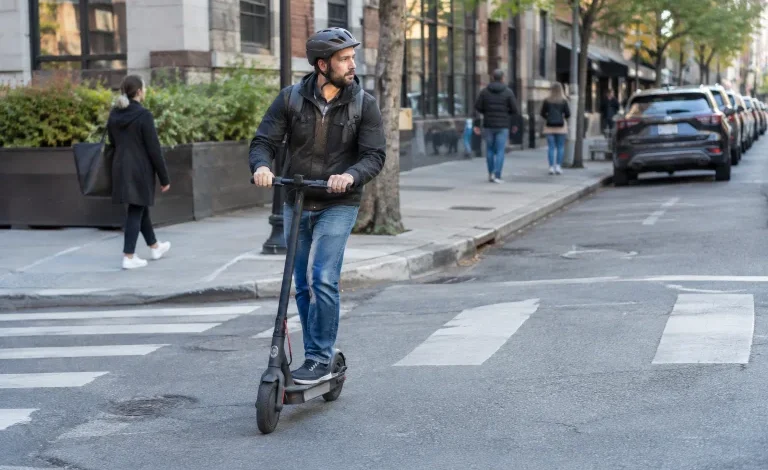
A properly fitted helmet should be the starting point for every ride. Choose a certified bicycle or multi-sport helmet that sits level on your head, fits snugly, and has a securely fastened strap. A helmet cannot prevent every injury, but it adds important protection in a fall.- Consider wrist guards, knee pads, and elbow pads while learning or riding on unfamiliar routes.
- Wear closed-toe shoes with soles that grip the deck and ground securely.
- Choose bright clothing in daylight and reflective details or lights in low-light conditions.
- Avoid loose garments, bags, or cords that could interfere with the wheels or handlebars.
Safer Riding Habits for City Streets
Predictable riding helps drivers, cyclists, and pedestrians understand what you are about to do. Keep both hands on the handlebars whenever possible, look well ahead rather than only at the front wheel, and slow down before a turn instead of braking sharply during it.Make yourself easier to see
- Signal early when changing direction, if you can do so without losing control.
- Look for drivers turning across your path, especially near intersections and driveways.
- Stay alert around buses, delivery vehicles, and parked cars with people inside.
- Leave room around pedestrians and expect that someone may step into your path.
- Put away your phone and avoid headphones or other distractions while moving.
Common E-Scooter Hazards
Small wheels can react sharply to hazards that a larger vehicle may roll over more easily. Watch closely for potholes, cracked pavement, uneven sidewalk panels, gravel, sand, wet leaves, slick paint markings, and standing water. Low light, strong wind, and rain can make those conditions harder to spot and manage. Railroad tracks, streetcar tracks, and deep pavement grooves need particular care. Reduce speed before reaching them, check that the path is clear, and cross at a controlled angle that is as close to perpendicular as practical. Do not make a sudden steering correction while the front wheel is already crossing the track. Also watch for opening vehicle doors, blind corners, and sudden stops from people or vehicles ahead.Extra Safety Tips for Children and Teens
Younger riders may need more practice with balance, braking, turning, and traffic awareness. Parents and caregivers should review local age rules and manufacturer guidance, and then ensure the scooter’s size and speed are appropriate for the rider.- Begin in a quiet, open area away from cars and pedestrian traffic.
- Teach controlled starts, stops, turns, and scanning before any street riding.
- Require a helmet for every ride and use wrist, knee, and elbow protection during practice.
- Set clear boundaries against passengers, racing, stunts, and riding while distracted.
- Supervise until the rider demonstrates consistent control and sound judgment.
What to Do After a Scooter Crash
Health and immediate safety come first after a fall or collision. Move out of traffic only if it is safe to do so. Check for heavy bleeding, trouble breathing, severe pain, weakness, confusion, or loss of consciousness, and call emergency services when urgent symptoms are present.- Seek medical evaluation if symptoms persist, worsen, or follow a hard impact.
- Take photos of the scene, road surface, scooter damage, visible injuries, and nearby signs when you can do so safely.
- Exchange contact and insurance information with others involved, and gather witness details.
- Save trip records, medical paperwork, repair estimates, receipts, and other relevant documentation.
- Avoid guessing about fault or posting detailed statements about the crash online.