Tearing down a structure might look simple from the outside — a wrecking ball, some dust, a pile of rubble. In reality, demolition is one of the most technical and safety-sensitive trades in construction. One wrong calculation, one overlooked utility line, and a routine teardown turns into a costly disaster. That’s precisely why property owners, contractors, and developers across the region trust Demo Boyzz to handle their most complex demolition projects from start to finish.
Whether you’re clearing a single-family home to make way for new construction or dismantling an aging commercial building, the process demands precision, proper equipment, and a crew that understands both the physics of structural collapse and the paperwork that comes with it. This post breaks down what makes professional demolition services so valuable, what to expect during a project, and why choosing the right team matters more than most people realize.
Why Professional Demolition Matters More Than You Think
Demolition isn’t just about knocking things down. It involves careful planning around utility disconnections, environmental hazards like asbestos or lead paint, debris disposal regulations, and the structural behavior of the building itself. A two-story brick building, for instance, doesn’t come down the same way a wood-frame garage does. Load-bearing walls, shared foundations with neighboring structures, and underground infrastructure all factor into how a job gets planned.
Skipping proper planning can lead to serious consequences: damaged neighboring properties, injury to workers or bystanders, fines from local building authorities, and significant delays. A professional crew surveys the site, pulls the right permits, and maps out a sequence that keeps everyone safe while minimizing disruption to the surrounding area.
What Does a Typical Demolition Project Involve?
Most demolition jobs follow a similar rhythm, even though every site has its own quirks:
- Site assessment: A walkthrough to identify structural risks, hazardous materials, and utility connections.
- Permitting: Securing the necessary approvals from local municipalities before any work begins.
- Utility disconnection: Safely shutting off gas, water, electricity, and sewer lines.
- Hazard abatement: Removing asbestos, lead, or other hazardous substances if present.
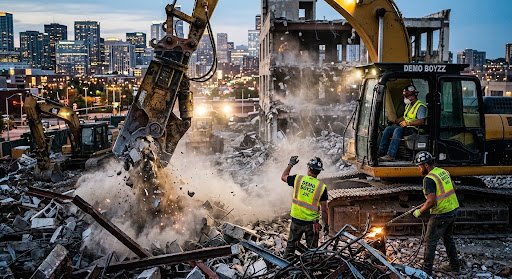
- The actual demolition: Using excavators, wrecking equipment, or in some cases controlled implosion, depending on the structure’s size and location.
- Debris removal and site cleanup: Hauling away materials and leaving the lot graded and ready for its next chapter.
Each of these steps requires coordination, and missing even one can set a project back by weeks.
Residential vs. Commercial Demolition: What’s the Difference?
Homeowners and developers often assume demolition is a one-size-fits-all service, but residential and commercial projects differ significantly in scope and complexity.
Residential demolition typically involves smaller structures — single homes, garages, sheds, or interior gut renovations. These jobs are often faster to complete but still require careful attention to shared property lines, utility shutoffs, and local noise ordinances.
Commercial demolition, on the other hand, deals with larger buildings, more complex structural systems, and stricter regulatory oversight. Think old warehouses, strip malls, or multi-story office buildings. These projects often require heavier machinery, longer timelines, and closer coordination with city inspectors and environmental agencies.
Choose a residential-focused approach if you’re renovating a single property and want minimal disruption to a quiet neighborhood. Choose a commercial-grade process if the project involves a larger footprint, multiple stakeholders, or stricter compliance requirements. Either way, the right team adjusts its methods to match the scale of the job rather than applying a generic playbook to every site.
How Long Does Demolition Usually Take?
Timelines vary based on the size of the structure, the presence of hazardous materials, and how quickly permits get approved. A small residential teardown might take a few days from start to finish, while a large commercial building could take several weeks. Weather, site access, and the amount of debris to haul away also play a role. A good rule of thumb: the more detailed the pre-demolition planning, the smoother and faster the actual teardown tends to go.
The Hidden Costs of Choosing the Wrong Demolition Team
Price often drives the decision when hiring a demolition contractor, but the cheapest quote isn’t always the smartest choice. Inexperienced crews may skip proper permitting, mishandle hazardous materials, or leave debris improperly disposed of — all of which can come back to bite the property owner in the form of fines, legal liability, or costly rework.
Insurance coverage matters just as much as pricing. A fully insured demolition company protects property owners from liability if something goes wrong during the project, whether that’s damage to a neighboring structure or an on-site injury. Before signing a contract, it’s worth asking about licensing, insurance, and references from past clients. A reputable company will have no problem sharing this information upfront.
Choose Experience That Puts Safety and Results First
A team that combines decades of hands-on experience with a genuine commitment to safety can turn even the most daunting teardown into a straightforward, stress-free process, and that’s exactly the standard Demo Boyzz holds itself to on every job site. From the initial site walkthrough to the final debris haul-away, the crew focuses on clear communication, proper permitting, and methods tailored to the specific structure at hand — not a generic, one-size-fits-all approach.
Property owners and contractors who work with Demo Boyzz consistently point to the same things: transparent pricing, a crew that shows up on time, and a finished site that’s actually ready for what comes next. Those details might seem small individually, but together they’re what separate a frustrating demolition experience from a genuinely smooth one.
If you’ve got a structure that needs to come down — whether it’s a single garage or a full commercial building — the team is ready to walk you through the process, answer your questions, and give you a clear, honest timeline for the project. Reach out today to schedule a site assessment and see why so many property owners keep coming back for their next teardown.