Many people assume allergy season ends when they close the front door. In reality, the home is often where symptoms are hardest to escape. Pollen drifts in on clothes and through open windows in spring and summer, while dust mites live in mattresses, sofas and carpets all year round. If you react to both, there is barely a month without sneezing, itchy eyes or a blocked nose. The good news is that indoor allergens respond well to a few consistent habits. This guide explains how hay fever and dust mite allergy differ, and how to keep both under control at home.
Hay Fever vs Dust Mite Allergy: What Is the Difference?
Hay fever is an allergic reaction to pollen from trees, grasses and weeds. It is seasonal: tree pollen usually arrives first in early spring, followed by grass pollen in late spring and summer. Pollen comes from outdoors, so most of what you breathe at home has been carried in.
Dust mite allergy is a reaction to proteins found mainly in the droppings of tiny mites that feed on skin flakes. Dust mites thrive in warm, humid places with plenty of fabric, which makes beds, upholstered furniture and carpets their favourite habitat. Because they live indoors, symptoms can appear in any season and are often worst in the morning, after a night spent close to bedding.
The symptoms overlap: sneezing, a runny or blocked nose, itchy eyes and disturbed sleep. Many people are sensitive to both, which is why a plan that only addresses pollen often feels incomplete.
Why Indoor Allergens Build Up
Modern homes are comfortable for people and for allergens alike. In colder months, windows stay closed and heating keeps rooms warm, while showering, cooking and drying laundry indoors add moisture. Soft furnishings collect dust, skin flakes and pollen, and every time you sit down, make the bed or walk across a rug, part of that material is stirred back into the air. Controlling indoor allergens therefore means two things: limiting what enters or grows in the home, and removing what is already there.
Keep Pollen Out of Your Home
During hay fever season, small changes at the front door have a large effect:
- Take off shoes at the entrance and change out of outdoor clothes after spending time outside.
- Shower and wash your hair before bed so pollen does not end up on your pillow.
- Check the local pollen forecast and ventilate in short bursts when counts are lower, for example after rain.
- Dry laundry indoors on high-pollen days, because sheets and towels on a washing line collect pollen.
- Wipe or brush pets after walks, since fur carries pollen into the house.
Make Your Home Less Comfortable for Dust Mites
Dust mites cannot be removed completely, but their numbers can be reduced considerably.
- Lower the humidity. Dust mites prefer humid air. Aim to keep indoor humidity below about 50 percent and ventilate the bedroom every morning.
- Wash bedding hot. Wash sheets and pillowcases weekly at 60 °C, a temperature that kills dust mites.
- Use allergen-proof covers. Zipped encasings for mattresses, duvets and pillows create a barrier between you and the mites inside.
- Reduce fabric. Fewer cushions, throws and heavy curtains mean fewer places for mites to live. Hard floors are easier to keep clean than wall-to-wall carpet.
- Treat soft toys. Wash them hot, or place them in a sealed bag in the freezer overnight before washing.

Fresh bedding washed at 60 °C helps keep dust mite numbers down
Clean Without Stirring Allergens Back Up
Cleaning can make symptoms worse for a while if it simply moves dust from one place to another. Use a vacuum cleaner with a HEPA filter, which holds on to fine particles instead of blowing them back out. Dust with a damp microfibre cloth, mop hard floors rather than only sweeping, and wash curtains and sofa covers regularly. If possible, the person with allergies should leave the room during cleaning and for a short while afterwards, while airborne dust settles.
Where an Air Purifier Helps, and Where It Does Not
Pollen and pet dander can stay airborne for a long time, which makes them a good match for a portable air purifier with a true HEPA filter. Running a purifier in the bedroom during hay fever season lowers the amount of pollen you breathe while you sleep, especially with the windows closed.
Dust mite allergens behave differently. The particles are relatively heavy and settle within minutes after being disturbed, so most of them sit in bedding and upholstery rather than in the air. A purifier helps mainly after you make the bed or vacuum. For dust mites, bedding, humidity and cleaning matter more than filtration.
When choosing a purifier for allergies, look for a true HEPA filter, a clean air delivery rate (CADR) that suits the room size, a quiet sleep mode and no ionizer or ozone function. In the Netherlands, for example, a coway luchtreiniger from the Airmega range combines a washable pre-filter with HEPA filtration in compact housings suited to bedrooms. The brand groups its allergy-focused models under Luchtreinigers voor Allergieën, which makes it easier to compare room coverage before buying.
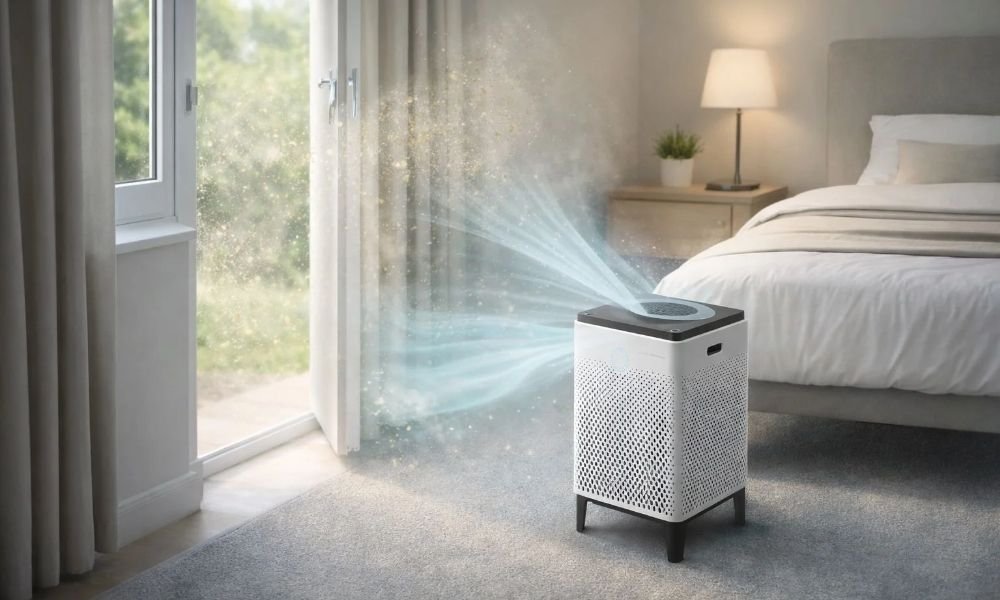
A HEPA air purifier in the bedroom reduces airborne pollen at night
A Room-by-Room Plan
| Room | Main allergens | Most effective measures |
|---|---|---|
| Bedroom | Dust mites, pollen | Weekly hot wash, allergen-proof covers, closed windows on high-pollen nights, air purifier |
| Living room | Dust mites, pet dander, pollen | HEPA vacuum twice a week, washable sofa covers, fewer cushions |
| Hallway | Pollen from outside | Shoes off, coats stored away from living areas |
| Bathroom and kitchen | Mould spores | Extractor fan, short bursts of ventilation, dry surfaces after use |
Adjust Your Routine to the Season
From spring to late summer, pollen is the main concern: focus on the front door, laundry and closed bedroom windows. In autumn and winter, the balance shifts indoors. Closed windows, heating and drying clothes inside raise humidity, which favours dust mites and mould. That is the time to monitor humidity with a hygrometer, ventilate briefly but often, and keep up with hot washes.
Frequently Asked Questions
Can you have hay fever and a dust mite allergy at the same time? Yes. Many people are sensitive to both, which is why symptoms can continue after pollen season ends.
Does washing at 60 °C really kill dust mites? Yes, washing at 60 °C kills dust mites. Lower temperatures remove some allergen but leave many mites alive.
Do air purifiers help against dust mites? Only partly. Dust mite allergens settle quickly, so a purifier mainly captures what is stirred up during bed-making or cleaning. Bedding and humidity control have a bigger effect.
What humidity discourages dust mites? Keeping indoor humidity below about 50 percent makes conditions less favourable for dust mites.
Hay fever and dust mites have different sources, but both can be controlled with the same approach: keep allergens out, make the home less inviting for them, and remove what remains. Start with the bedroom, since that is where you spend the most hours, then work through the rest of the home one habit at a time. If symptoms remain severe despite these measures, talk to a doctor or allergist about testing and treatment options.