
I wish women were blessed with sufficient pockets in their outfits to carry day-to-day items. But unfortunately, a bag hanging on the shoulder or a purse in hand becomes a necessity when heading for a long day.
But I found the best escape to bulky bags with leather bags for women. The leather range is primarily designed for women who do not wish for different bags for different outfits. Some standard bags are designed to fit beyond just one occasion. I have listed down some such handpicked options to work for everywhere from college to work to wedding.
Tote Bags – The Most Spacious Option
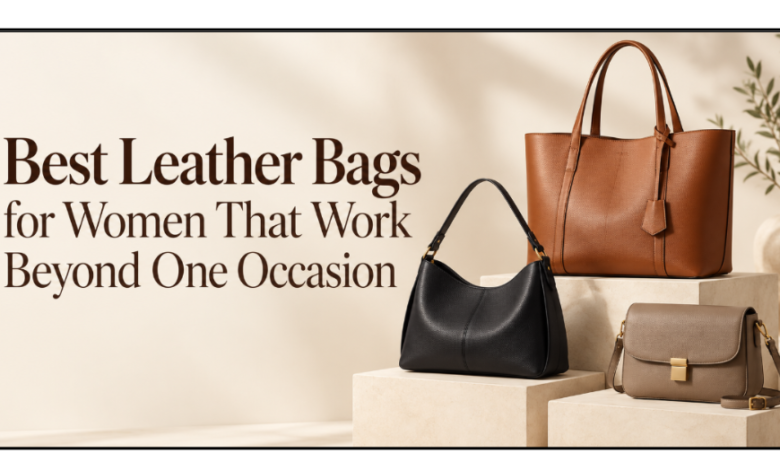
Leather tote bags are among the most practical and fashionable bags for women because of the sufficient storage capacity and the classic appearance. They are especially useful for workdays when you need the basics of a wallet, notebook, makeup pouch, tablet, charger, and other essentials for your every day. At the same time, offering luxurious textures and color options, leather tote can easily transition into shopping trips, casual lunches, short journeys, or weekend plans.
Women also demand sturdy handles, a wide opening, secure closures, and an interior that feels organized rather than oversized. It feels like the kind of tote that women would love to carry comfortably beside formal officewear during the week and still work with denim, dresses, or relaxed outfits on the weekend.
Sling Bags – Purposed For Casual and Social Outings
There are many occasions when carrying a large handbag feels unnecessary. This is where sling bags become particularly useful. Their compact size and tall sling makes them a convenient option for brunches, coffee dates, shopping trips, sightseeing, casual evenings, and days when you only need to carry the basics.
One of the most likable features about sling bags is the freedom they offer. A longer strap keeps your hands free, while the smaller size prevents you from carrying more than you really need. A good sling bag should still have enough room for a phone, wallet, keys, sunglasses, and a few personal items without feeling cramped.
I would personally look for an adjustable strap, secure fastening, and at least one useful interior compartment that will help with the storage while remaining compact. They do not become too difficult to organise.
Handbags – Comfortable from Day to Evening
Handbags are a good middle ground for women who want something more structured than a sling bag but not something as big as a large tote. They are designed to work equally well for office hours, business lunches, dinners, meetings, shopping, and social plans, which makes them particularly useful for days that do not follow a fixed schedule.
However, the shape and finish make a big difference here. Clean silhouettes tend to feel more versatile because they are easier to pair with different outfits. For a classic look, bags are designed with smooth leather, while embossed or textured finishes build more character without necessarily making the bag feel too formal.
For people who are ready to invest on its worth, the bags include genuine leather designs with organized interiors and a variety of finishes. What appealed to me was the focus on bags that seem suitable for regular use rather than styles that feel limited to special occasions.
Crossbody Bags – Practical for Busy Days and Travel
Crossbody bags are one of the easiest choices when it comes to convenience. They keep both hands free while positioning the bag closely across the body. The crossbody style makes them especially useful for travelling, sightseeing, shopping, commuting, festivals, errands, and other busy days.
I also find crossbody bags easier to manage in crowded places because there is no need to constantly hold or adjust them. For this category, I would look for an adjustable strap, secure fastening, useful compartments, and enough space for essentials without making the bag feel bulky.
There are even more substantial designs than a small crossbody purse, providing bigger bag like spaces. This makes it a practical option for someone who wants additional storage without moving up to a full-sized tote or handbag.
Backpacks – Functional And Not Too Casual
Leather backpacks are worth considering if you want the practicality of a traditional backpack without the overly casual appearance often associated with colorful and vibrant options. They can work especially well for office commutes, airport days, short trips, weekend travel, or any routine that involves carrying a laptop, documents, chargers, and multiple everyday essentials.
One of the biggest benefits of a backpack is the unmatchable comfort. The weight is spread across both shoulders evenly instead of being concentrated on one side. This feature can make a noticeable difference during long commutes or travel days.
What I Would Look for Before Buying a Leather Bag
Apart from the looks, there are so many important factors to consider when buying a leather bag.
- Look for a good leather quality and finish, natural texture, and material suited to regular use.
- Handles and straps should feel comfortable, especially if you carry the bag for long periods.
- Useful compartments and smart storage can keep everyday essentials organized without making the interior feel complicated.
- Choose a size based on what you usually carry, whether that is a laptop and documents or just a phone, wallet, and keys.
- Strong zippers, buckles, stitching, and strap attachments can make a noticeable difference over time.
- Neutral colors and forever classic silhouettes are easier to pair with different outfits and occasions.
In the end, the best leather bag is one that works naturally with your lifestyle rather than simply looking good on display.
Bottom Line
The best leather bags for women are those that work across different parts of everyday life. Totes suit busy workdays, sling and crossbody bags offer hands-free convenience, handbags transition easily between professional and social settings, and backpacks are ideal for commuting or travel.
I found some of the best designs for these Luxury Handcrafted leather bag styles at Luxury Handicraft. They give a wide variety of styles available for different needs. Rather than choosing a bag for just one occasion, it makes more sense to pick one that can comfortably adapt to several.