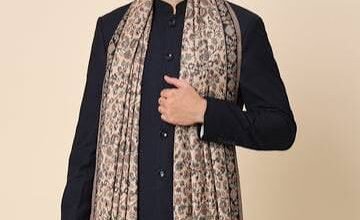
There’s a certain kind of fashion label that doesn’t ask for your approval, and Comme des Garcons has built its entire identity around that attitude. While half the industry chases trend cycles and the other half chases nostalgia, this Japanese house has spent decades doing something stranger and, honestly, more interesting: it keeps asking what clothing is even supposed to look like in the first place.
Rei Kawakubo founded the brand back in 1969, and if you know anything about her early collections, you know she wasn’t interested in flattering silhouettes or polite tailoring. Her 1981 Paris debut left critics stunned, some called it “Hiroshima chic,” which sounds harsh now but tells you how far removed her vision was from anything the West had seen. Lace that looked torn on purpose. Black that wasn’t mourning, it was armor. Shapes that hid the body instead of celebrating it. That was the seed, and everything the label has done since, from its runway shows to its streetwear offshoots, still carries that same refusal to play by the rules.
Fast forward to today and Comme des Garcons (https://commedesgaarcons.com/) sits in this weird, fascinating spot where high fashion editors and sneakerheads both claim it as theirs. That’s rare. Most brands pick a lane. This one built several lanes and then knocked the walls down between them.
Play, and Why It Changed Everything
If you ask a teenager on the street what Comme des Garcons is, chances are they’ll point at their chest and say “the heart guy.” That’s comme des garçons play, the line Kawakubo launched in 2002 with artist Filip Pagowski’s now-iconic googly-eyed heart logo stitched onto everything from tees to cardigans. It was meant to be an accessible entry point, something priced for a wider audience than her avant-garde mainline. What actually happened is that Play became one of the most recognizable logos of the 2000s and 2010s, sitting next to Supreme boxes and Palace triangles as proof that streetwear and high concept fashion had merged into one messy, beautiful thing.
The genius of Play wasn’t subtlety. It was the opposite. A cartoon heart with eyes is about as far from Kawakubo’s deconstructed 80s work as you can get, yet it carries the same DNA: take something expected, twist it slightly, and let people argue about whether it’s genius or a joke. Spoiler, it’s usually both.
Layering Culture and the CDG Hoodie
Streetwear runs on layering, and few pieces do the heavy lifting quite like a CDG hoodie. Whether it’s the heart logo front and center or a more obscure print from a lesser known Comme des Garcons sub-label, the hoodie has become a wardrobe staple for people who want a recognizable flex without shouting about it. Pair it under a jacket, throw it over joggers, wear it oversized with nothing but sneakers, it works because the design itself does most of the talking. There’s a reason resale prices on certain hoodie drops climb fast. Scarcity plus a logo that people actually want to be seen in equals demand that doesn’t cool off.
What’s interesting is how the hoodie bridges two very different customer bases. Someone who’s followed Kawakubo since the Dover Street Market days and someone who found the brand through a rapper’s Instagram post can both own the same piece and wear it for completely different reasons. That’s the trick. The garment doesn’t demand you understand the philosophy behind it, but if you want to dig deeper, that depth is right there waiting.
The Shirt That Started Conversations
A Comme des Garcons Shirt sounds like a simple thing until you actually see one in person. The brand’s shirting has ranged from clean, almost severe button-ups under the CDG Shirt line to wild patchwork and asymmetric cuts under the mainline. There’s something almost rebellious about how a shirt, arguably the most conservative garment in anyone’s closet, becomes a canvas for experimentation in Kawakubo’s hands. Sleeves that don’t match. Collars placed off-center. Prints that clash on purpose.
CDG Shirt specifically has carved out its own cult following, separate enough from the mainline that some collectors treat it as its own universe. Collaborations with brands like Comme des Garçons Homme Plus or outside partners have kept the shirt line feeling fresh instead of repetitive, which is no small feat when you’re decades deep into a brand’s lifecycle.
Sneakers Get the Same Treatment
Nobody expected Converse and Comme des Garcons to become such a natural pairing, but CDG Converse sneakers have quietly turned into one of the smartest collaborations in modern footwear. Taking the classic Chuck Taylor, a shoe that’s basically unchanged since the 1900s, and slapping that Play heart on the side shouldn’t work as well as it does. But it does. It takes something nostalgic and universally recognized and gives it a fresh identity without ruining what made the original great.
There’s a lesson in there about how good collaborations function. You don’t need to reinvent the wheel, you just need to know exactly where to place your signature so it feels additive rather than forced. CDG Converse drops still generate lines outside sneaker stores, which says a lot considering how saturated the collab market has become over the last decade.
Knitwear With an Edge
Not every Comme des Garcons piece is about logos and loud statements. The CDG Cardigan line proves the brand can do quieter, more considered pieces too. These cardigans lean into texture, unexpected color blocking, and silhouettes that feel a bit off from standard knitwear, without abandoning wearability entirely.
They’re the kind of piece that works in an office, at a gallery opening, or thrown over a tee on a cold evening, and they remind you that Kawakubo’s world isn’t only about shock value. Sometimes it’s about subtle discomfort, a garment that looks almost normal until you notice the sleeve is a touch too long or the buttons sit in a spot you didn’t expect.
Why the Hype Never Really Faded
Trends come and go fast now, arguably faster than ever thanks to how quickly things spread online. Yet Comme des Garcons has managed to stay relevant across four decades without chasing every wave. Part of that comes down to Kawakubo’s refusal to explain herself. She rarely gives interviews, rarely breaks down the meaning behind a collection, and that mystery keeps people curious in a way that oversharing never could.
Part of it also comes down to how the brand structures itself. Rather than one label trying to be everything to everyone, Comme des Garcons operates as a constellation of sub-brands, mainline, Play, Shirt, Homme Plus, Junya Watanabe under the same umbrella, and dozens of collaborations layered on top. Each piece of that constellation appeals to a slightly different customer, but they all orbit the same core philosophy of questioning convention.
That structure is why you can walk into a resale marketplace today and see a beat up mainline jacket from the 90s selling for thousands right next to a fresh CDG hoodie dropping at a fraction of that price, both under the same name, both carrying weight in completely different corners of fashion culture.
The Bigger Picture
At the end of the day, what makes this brand endure isn’t a single hit product. It’s the fact that Kawakubo built a world where contradiction is the point. Comfort and discomfort, luxury and streetwear, silence and spectacle, they all coexist under one roof, and somehow it never feels forced. Whether someone’s introduction is a Comme des Garcons shirt bought secondhand, a Play tee gifted by a friend, or a pair of Comme des Garcons Converse spotted on someone’s feet at a party, the door into that world stays wide open, and once people step through it, they tend to stick around.
Fashion loves to talk about disruption, but most of what gets labeled that way is just a slightly different cut of the same idea. Comme des Garcons actually earned the word, and forty plus years later, it still hasn’t settled into being predictable. That’s rare. That’s why the hype hasn’t gone anywhere.