Missed service appointments, lockout errors and reports that lack necessary information or context are the causes of the majority of program failures, not drinking. Identifying the areas of friction and alleviating them prior to the violation is very valuable to the client, program administrators and those who advise the clients as well as those that negotiate with and manage the providers.
Installation sets the terms of everything that follows
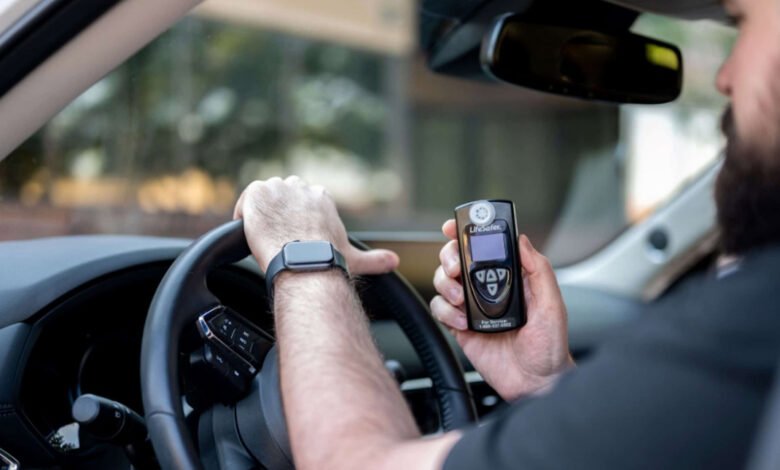
The install of an interlock is an administrative process as much as a technical process. A certified technician will connect a handset to the vehicle’s ignition circuit. He will then set the interlock to the state’s pre-set breath alcohol concentration (BAC) level. He will then enter the Vehicle Identification Number (VIN) of the vehicle against the driver whose account the interlock is to be linked to.
On-site servicing typically takes 1-2 hours to perform, including time to service a push button start system or hybrid setup to account for various engine cycling scenarios. In addition to servicing the interlock, customers are required to bring a copy of the court or DMV order, proof of insurance, and vehicle registration to the appointment. Written consent of the vehicle owner is also required to perform installation on a vehicle that the customer does not own.
Training is the part people skip
Before you leave the shop, have your driver make sure he understands how to make a good breath sample for the install. You will be surprised how many people do not know how to make a good sample for the install. These failed samples will usually be reported as failed test(s) in the driver’s first week of use. These failed test(s) will look like tamper attempts in the raw data until someone sits down and reviews the sequence of events for the failed test(s).
Monitoring runs continuously, not just at startup
In addition to recording the results of initial breath tests, the device also logs data for subsequent ‘rolling retests’ taken while the driver is operating the vehicle. The time of every engine start and stop, power failures or circumvention of the interlock circuitry as well as sensor failures are recorded with a timestamp for each event. Many interlock devices today are also equipped with cameras that take a photograph each time a breath test sample is provided by the driver.
One of the biggest misconceptions regarding interlock devices is that if a driver fails to take a roll call breathing test while driving, the engine will automatically shut off. However, this is not the case. While the device will sound an alarm and log the event, the vehicle will continue to run. However, the event will be reported to the court, probation or other monitoring agency most of the time.
What counts as a violation varies by jurisdiction
Note also that the thresholds for getting reported as a failed test differ wildly from state to state. For example, some states may log all tests above.02 (or similar) but only report 2nd, 3rd, etc. Subsequent tests above the same threshold within a given service period. Others may report single instances of a high reading but only allow extension of the same lockout beyond the initial time period set.
Calibration and service visits anchor the compliance calendar
Like regular maintenance for your interlock, it needs to be serviced periodically to be calibrated using a known alcohol standard. This is typically done and a data download, tamper log check and a reset of the service countdown undertaken during the same visit. Missing this window is the most common avoidable failure. Drivers enrolled in a VASAP interlock Roanoke Virginia program are usually best served by booking the next calibration before leaving the shop, since the slot is already on the technician’s calendar.
The most common avoidable failure is that of a missed window. The length of time that a window is open and then missed is typically short.
| Service element | Typical interval | Consequence of missing it |
| Calibration and data download | 30 to 60 days | Permanent lockout, tow required, violation logged |
| Early recall for suspected tamper | Within 5 days of notice | Treated as non-compliance by monitoring authority |
| Camera or sensor fault service | As flagged | Gap in evidentiary record, may extend program |
| Removal inspection | End of term | Program clock continues to run |
Reporting creates the record the authority acts on
These logs are then transmitted by the provider to the court, probation office or licensing agency on a frequency predetermined by the state. Typically this is on a monthly basis or with each calibration. Most interlock compliance programs enable the driver to view their log in simple terms, with any discrepancies being discovered and explained before they become a problem with the monitoring authority weeks later.
Build a habit of contemporaneous notes
- Record the date, time, and circumstances of any lockout or alarm event the same day it occurs.
- Keep receipts from every service visit, including the technician’s printed confirmation of calibration.
- Note any use of mouthwash, fuel additives, or sanitizer before a flagged reading.
- Request a copy of the transmitted report after each download.
Delay in offering an explanation after weeks is less valuable than documentation and explanation simultaneous to the corresponding timestamp.
Responsibilities that sit with the driver alone
- Maintain the vehicle battery. Repeated power loss reads as a bypass attempt.
- Never allow another person to provide a sample, including to move a vehicle in a parking lot.
- Report vehicle sale, repair work affecting the ignition, or a change of address promptly.
- Pay monthly fees on time, since suspension of service does not pause the program term.
- Complete the full term before scheduling removal, even if the underlying license restriction ends earlier.
In the end it is evidence, not time, that brings a close to an interlock program. The driver who completes his program in a timely fashion is one who treats his log as if he were co-authoring it.