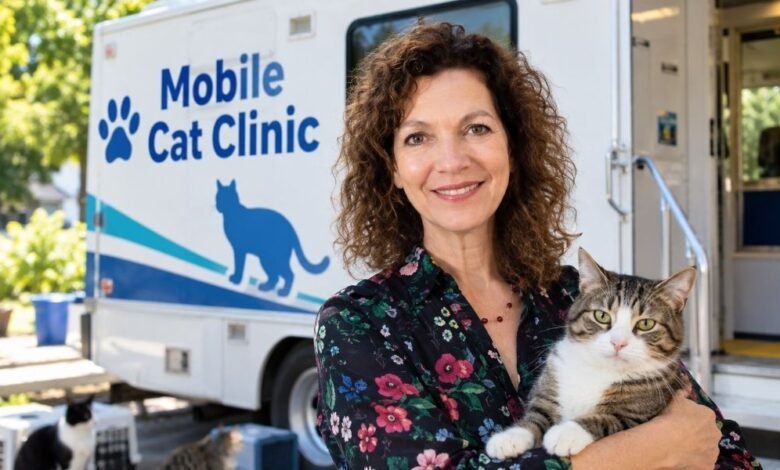
Donna Sicuranza is connected to a simple but powerful idea. A cat clinic does not always need to stay in one building. It can move. It can go town to town. It can reach people who may not have an easy way to take their cats far from home. That is the story behind the TEAM Mobile Feline Spay/Neuter Clinic in Connecticut. The clinic brings cat care closer to the people who need it. This makes Donna Sicuranza’s work important, even if she is not a celebrity or a person who seeks fame. Her story is about service, cats, families, and a kind of help that works on the road.
Many people love their cats but still find vet care hard. Some have little money. Some have no car. Some care for outdoor cats or feral cats. Some wait too long because they do not know where to go. A mobile clinic helps solve part of that problem. TEAM says its mobile feline clinic has been on the road in Connecticut for more than 25 years. It says the clinic brings affordable spay, neuter, and vaccination services to residents statewide. Since the clinic began in 1997, more than 225,000 cats have been spayed or neutered and vaccinated on board.
Who Is Donna Sicuranza?
Donna Sicuranza is publicly listed by TEAM as Donna Sicuranza Marconi, the group’s Executive Director. TEAM’s own “Meet The Team” page lists her under administrative staff. That is an important detail because many online searches can mix names or add guesses. The safe way to write about Donna Sicuranza is to focus on what public sources show. Public sources show her as a leader tied to TEAM and its mobile cat clinic work in Connecticut.
Her role matters because a mobile clinic is not just a van with supplies. It needs a plan. It needs staff. It needs appointments. It needs clear rules. It needs donors. It needs a phone number people can call. It needs care for owned cats and feral cats. It also needs trust. When people hand over a pet, they want to know the team is serious, trained, and caring. A leader behind this kind of program helps keep the work moving day after day.
Donna Sicuranza’s public story is not built on red carpets, gossip, or fame. It is built on animal care. That can make the story more useful for readers. It shows how a person can be known for work that helps a community. It also shows that some important lives are not loud online. Some people become known because they help fix a real problem.
The Problem the Clinic Helps Solve
Cats can have many kittens if they are not spayed or neutered. This can lead to more homeless cats. It can also create stress for shelters, rescue groups, and families. A person may start with one outdoor cat. Then kittens arrive. Soon there are many cats, and the cost of care grows fast. This is one reason spay and neuter work matters.
The TEAM clinic gives people a way to act before the problem grows. The group says any Connecticut cat, domestic or feral, is welcome on the mobile clinic. That one detail is important. It means the service is not only for house cats. It can also help people who care for feral cats through trap-neuter-return work. These cats may not live indoors, but they still affect a neighborhood. Helping them can reduce suffering and slow the growth of large cat colonies.
For many readers, this may sound like a small service. But it is not small when seen over many years. TEAM says its veterinarians have sterilized and vaccinated more than 225,000 cats since 1997. That number shows steady work, not a one-day campaign. It shows a mission that has lasted for decades.
Why a Mobile Clinic Matters
A mobile cat clinic has a special value. It can travel to many cities and towns. It can meet people closer to home. It can lower one big barrier: access. A normal vet clinic may be too far away. A full-service vet visit may also cost more than some families can pay. A mobile clinic cannot solve every pet care problem, but it can make key care easier to reach.
TEAM says its spay and neuter package includes a brief exam, vaccines, nail trim, and ear mite treatment if needed. It also offers a kitten package, booster vaccines, and parasite prevention and treatment. These services are basic, but basic care can change a cat’s life. A vaccine can help protect health. A spay or neuter surgery can prevent unwanted litters. Parasite care can help a cat feel better and live better.
This is where Donna Sicuranza’s work becomes more than a job title. An executive director in this type of group helps support the system that makes care happen. The public may see the clinic day. They may see the staff, the cats, and the schedule. But behind that day is planning. Someone has to help keep the mission clear. Someone has to help make sure the service stays active.
A Mission Built on Practical Care
Animal welfare can sound like a big phrase. But in real life, it often means simple acts. It means showing up. It means answering calls. It means helping a family get a cat fixed. It means making sure a feral cat can be returned after care. It means keeping prices within reach. It means treating each cat as a life that matters.
That is why the TEAM model feels strong. It does not only talk about care. It brings care to the road. Its name, Tait’s Every Animal Matters, also points to a clear idea. Every animal matters. Not only perfect pets. Not only young kittens. Not only cats with owners who can pay high fees. Domestic and feral cats are both part of the mission.
This kind of work may not get the same attention as big animal rescue stories. There may be no dramatic TV rescue. There may be no viral clip. But spay, neuter, and vaccine work is one of the most practical parts of animal welfare. It helps before a crisis gets worse. It supports people who are trying to do the right thing. It also helps cats who may never have a voice of their own.
The Human Side of Donna Sicuranza’s Work
A good article about Donna Sicuranza should not invent private details. It should not guess her thoughts, her home life, or her personal history. That would not be fair. Instead, the human side can be shown through the work itself. Her public role shows a person tied to a mission that takes patience and care.
Think about the kind of person who calls a mobile cat clinic. It may be a parent with a family cat. It may be an older person who feeds cats outside. It may be a rescue volunteer. It may be a person who found kittens near a shed or under a porch. These people may feel worried. They may not know what step to take. A clinic like TEAM gives them a place to start.
In that way, Donna Sicuranza’s story is also the story of many cat owners and caretakers. It is about people who need help but may not need judgment. They need clear care. They need a schedule. They need a phone number. They need a team that understands cats. That is why the mobile clinic idea feels so useful and kind.
The Work Started Years Before Today
TEAM’s clinic began in 1997. That means the program has lived through many changes. Costs have changed. Pet care has changed. Rescue work has changed. Online booking and digital searches have changed. But the main problem remains simple. Cats still need spay, neuter, and vaccine care.
A public obituary for Dr. John A. Caltabiano gives more background about the early mission. It says that in 1997, as president of Tait’s Every Animal Matters, he launched the nonprofit TEAM Mobile Feline Unit. It also says the unit was Connecticut’s first and only mobile spay/neuter and vaccination clinic for cats at that time. The same source says Donna Sicuranza was his longtime partner.
This background matters because it shows that TEAM was built as a serious animal care project. It was not a quick trend. It had roots in veterinary work and a clear mission. Today, Donna Sicuranza’s public role as executive director connects her to that long path of service.
Why Readers Should Care
Some readers may ask why they should care about Donna Sicuranza or a mobile cat clinic in Connecticut. The answer is simple. This kind of work shows how local service can create a large result. One cat at a time can become thousands of cats over many years.
A single spay or neuter surgery may feel small. But when many surgeries happen year after year, the effect grows. Fewer unwanted litters can mean fewer homeless kittens. More vaccines can mean healthier cats. More low-cost access can mean fewer people give up because care feels out of reach.
This is also a good lesson for anyone who writes about public service. Not every important story is about fame. Some stories are about systems that work. Some are about people who keep useful programs alive. Donna Sicuranza’s public role gives readers a chance to see animal welfare from that angle.
The Online Name Problem
There is also a reason writers should be careful with this topic. The name Donna Sicuranza can appear in more than one public record. For example, there is an obituary for a different woman named Donna Marie Sicuranza, who was born in 1942 and died in 2017. That person should not be mixed up with Donna Sicuranza Marconi of TEAM.
This matters for SEO writers and bloggers. When a name is not very common, it is easy to think every result is about the same person. That can lead to wrong facts. It can also be unfair to families and to the person being written about. A strong article should clearly say which Donna Sicuranza it means. In this case, the article is about Donna Sicuranza Marconi, the Executive Director listed by TEAM.
This also gives the article a fresh angle. It is not only about a person. It is also about how to write responsibly. Good content does not copy every fact from search results. Good content checks the source. It separates people with the same or similar names. It avoids claims that are not public or proven.
A Better Way to Tell Her Story
A weak article would only say, “Donna Sicuranza is the executive director of TEAM.” That is true, but it is too thin. A better article explains why that role matters. It shows the problem the clinic solves. It explains why mobile care is useful. It talks about the cats, the caretakers, and the long-term work behind the program.
This article angle also avoids gossip. It does not need to ask about age, net worth, marriage, or private life. Those details are not needed. The better story is public service. Donna Sicuranza is connected to a program that has helped many cats in Connecticut. That is enough for a useful and respectful article.
Readers often want stories that feel real. A mobile clinic is real. Cat overpopulation is real. Vet care costs are real. Feral cat care is real. A person trying to get help for a cat is real. When the article starts there, it becomes easy to read and easy to trust.
What Makes TEAM Different
TEAM stands out because it is focused. It is not trying to be every kind of animal service. Its public pages focus on feline spay, neuter, vaccination, and related care. That narrow focus can be a strength. It helps the group build a clear service model.
The clinic welcomes domestic and feral cats. It travels to many communities in Connecticut. It has a small veterinary staff. TEAM also says many staff members have been with the program from the start. That kind of long-term commitment can help build trust with the public.
This is another reason Donna Sicuranza’s role matters. A group with a long history needs leadership that respects the mission. It needs people who understand both care and operations. It needs to stay useful, affordable, and clear for the people it serves.
Lessons From Donna Sicuranza’s Public Work
Donna Sicuranza’s public work offers a few simple lessons. First, help does not always need to be grand. It can be mobile, local, and focused. Second, animal welfare works best when people can reach it. Third, long-term service can create a large impact even when the daily work looks simple.
The story also shows the value of behind-the-scenes leadership. The public often sees doctors, technicians, and rescue workers first. They are very important. But a program also needs people who help organize, lead, and protect the mission. Without that structure, even a good idea can fade.
For readers who care about animals, this story can be inspiring. It shows that a clear mission can last for decades. For writers, it is also a reminder to avoid filler and false claims. A simple, true story is stronger than a long article filled with guesses.
Final Thoughts
Donna Sicuranza’s story is best told through the work of TEAM and its mobile cat clinic. She is publicly listed as Donna Sicuranza Marconi, Executive Director of TEAM. The clinic she is connected to has helped Connecticut cats since 1997. It has spayed or neutered and vaccinated more than 225,000 cats. It travels to many communities and welcomes both domestic and feral cats.
That is why the title “Donna Sicuranza: The Woman Behind Connecticut’s Mobile Cat Clinic” works well. It is personal, but it stays respectful. It is clear, but it is not boring. It shows a woman connected to a mission that helps cats and the people who care for them. In a world full of loud online stories, this one stands out because it is useful, kind, and real.