

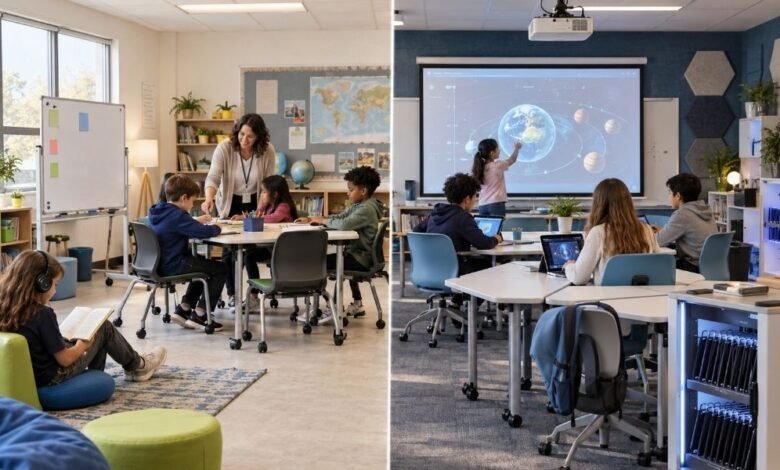
A small school may hear about Classroom 15X and feel both excited and worried. The idea sounds useful. It can mean flexible seating, digital tools, faster feedback, student zones, and better classroom movement. But the first question is simple. Can a small school pay for it? A school with a tight budget cannot buy every projector, charging cart, smart board, or augmented reality tool at once.
It must choose carefully. This is where the real Classroom 15X story begins. It is not only about modern design. It is also about fairness. A rich school may build a full modern room. A low-budget school may need to start with wheels, boards, headphones, and better teaching routines.
What Classroom 15X Means
Classroom 15X is described as a modern learning-space model that brings together digital infrastructure, purposeful teaching methods, and adaptable physical design. The source page says it can include learning software, devices, analytics, project activities, personalized tasks, portable desks, group areas, and quiet zones.
It also says the goal is not just a flashy room, but a classroom that can respond faster to student needs. That point matters for small schools. Classroom 15X should not be judged only by the price of the equipment. A school must ask what problem it wants to solve. Is the room too rigid? Are students hard to support? Is feedback too slow? The answer decides the budget.
The First Price Shock
The budget gap becomes clear when a school compares the lowest upgrade with the biggest one. The source page gives three rough levels. A standard refresh may cost about $750 to $1,500 and include furniture wheels, portable boards, and headphones. A moderate upgrade may cost about $3,000 to $8,000 and include a projector, mobile tables, and device charging.
A complete build may cost $12,000 or more with sound treatment, modular setup, and AR equipment. These numbers can feel large for a small school. A principal may look at the list and think the future is only for schools with donors or large budgets. But the smarter question is not “Can we buy everything?” It is “What can improve learning first?”
Low Cost First
A low-budget Classroom 15X plan can start with movement. Fixed rows make one kind of teaching easy, but they can make group work, quiet work, and teacher support harder. A small school can add wheels to desks, use portable whiteboards, create a reading corner, and set a simple teacher station. These changes do not require expensive software. They require planning.
The source page also says mobility, zones, check-ins, structured choices, accessibility, and results-based upgrades are key design ideas. That means a school can begin with the classroom layout before buying advanced tools. Students can move between teamwork, practice, and quiet thinking. The room starts to support learning, even without a full technology build.
What Money Cannot Fix
Buying technology does not always solve the teaching problem. The Education Endowment Foundation says schools use technology for many aims, but its guidance focuses on technology that improves learning directly. It points to uses such as better assessment accuracy and more pupil practice. This is important for Classroom 15X. A new projector may look good, but it does not help if lessons stay confusing.
A charging station may be useful, but it does not teach students by itself. A small school should not feel behind just because it cannot buy the most expensive tools. Strong routines, clear tasks, quick feedback, and good teacher movement can be more valuable than equipment that is rarely used well.
The Fairness Question
The biggest Classroom 15X debate is fairness. Some schools can buy modern furniture and digital systems fast. Others must repair old chairs and share devices. OECD notes that digital divide issues include not only access, but also digital skills, use, and motivation. It also says students cannot be assumed to use technology well just because they have seen it from a young age.
This matters because a modern classroom is not equal when only some students get useful support. If a wealthy school has trained teachers and working devices, its students may gain more. If a small school gets cheap devices with no plan, the gap may remain. Classroom 15X must be designed for equal use.
The Hidden Costs
Many schools think first about the price of boards, tables, projectors, and devices. But the hidden costs can be just as serious. Someone must repair the equipment. Teachers need training. Internet access must be stable. Devices must be stored, charged, cleaned, and updated.
UNESCO’s 2023 Global Education Monitoring Report says technology’s education value depends on conditions such as equitable access, proper governance, and enough teacher capacity. A small school can make a mistake if it spends its full budget on visible items and forgets support. A Classroom 15X plan should include time, training, and maintenance. A broken projector or unused app is not a learning upgrade. It is wasted money.
Better Planning Wins
A smart small school can build Classroom 15X in phases. The first phase can improve the room. The second phase can improve feedback. The third phase can add selected devices. The fourth phase can review results. This step-by-step plan protects the budget. It also stops leaders from buying tools because they look modern.
OECD’s PISA 2025 findings say access alone is not enough and that policies need to help schools use digital tools in meaningful ways. This supports a careful approach. A school should not copy another school’s room. It should study its own students first. Then it can decide which upgrade gives the clearest learning benefit.
The Teacher’s Role
The teacher is the center of Classroom 15X. Even the best room needs a teacher who knows how to use it. A small school may start by training teachers to use short check-ins, group stations, peer support, and simple progress tracking. This can cost less than buying advanced hardware. UNESCO reports that many teachers still need stronger confidence and preparation for using technology in teaching and assessment.
That means teacher support must come before expensive tools. If teachers feel unsure, a modern room can become stressful. If teachers feel ready, even a simple room can become active and organized. Classroom 15X should make teaching easier, not heavier.
Students Need Choice
Classroom 15X can help students when it gives them useful choices. Some students learn better in groups. Some need quiet space. Some need visual help. Some need headphones to focus. A small school can support these needs without building a luxury room. It can mark clear zones, create simple rules, and let students choose between approved learning tasks.
The source page mentions built-in accessibility, such as readable contrast, captions, and offline capability. That is a strong point for low-budget schools. Inclusion does not always start with expensive tools. It starts with noticing barriers. A student who cannot focus in a noisy room may benefit from a quiet corner before any advanced device is added.
Beware of Distraction
Technology can help learning, but it can also distract students. OECD’s PISA 2025 results say moderate digital-device use for learning at school is linked with higher science performance than no use or very high use, on average across OECD countries. The same report says leisure use for more than one hour at school is linked with lower science performance.
It also says 28% of students reported classmates being distracted by digital devices in most or every science lesson. This is a warning for Classroom 15X. More screens do not always mean better learning. A low-budget school may actually have one advantage. It can build strong use rules before adding many devices.
A Practical Budget Path
A fair Classroom 15X budget should start with needs, not trends. The school can list its biggest problems first. Maybe students cannot work in groups. Maybe teachers cannot see progress fast enough. Maybe noise makes learning hard. Then the school can choose upgrades that match those problems. Portable boards may solve group-work issues.
Headphones may help focus. Charging points may support shared devices. A projector may help whole-class modeling. Sound treatment may come later if noise remains a major barrier. This path makes each dollar work harder. It also gives the school proof before moving to the next step. Classroom 15X should grow through evidence, not pressure.
Can Every School Afford It?
Every school may not afford the full Classroom 15X build. But many schools can afford the first version of the idea. That version is not about buying every modern tool. It is about making the classroom more flexible, more accessible, and more responsive. The full upgrade may include projectors, modular furniture, charging stations, sound treatment, and AR tools.
But the basic spirit can begin with low-cost changes and stronger teaching habits. The fairness issue remains real. Poorer schools should not be left with weak rooms while richer schools get the future first. Still, small schools can act wisely. The best Classroom 15X plan is not the most expensive one. It is the one students can actually use.
Final Thoughts
Classroom 15X raises an honest question for education. Does modern learning need expensive technology, or does it need better planning? The answer is both, but not in equal order. Good planning must come first. Technology should support the plan, not replace it. A small school can begin with movement, zones, portable tools, teacher check-ins, and clear rules for device use.
Then it can add bigger upgrades only when results show a real need. This makes Classroom 15X more fair. It stops the idea from becoming another symbol of school inequality. The future classroom should not belong only to wealthy schools. It should belong to every student who needs a better place to learn.