

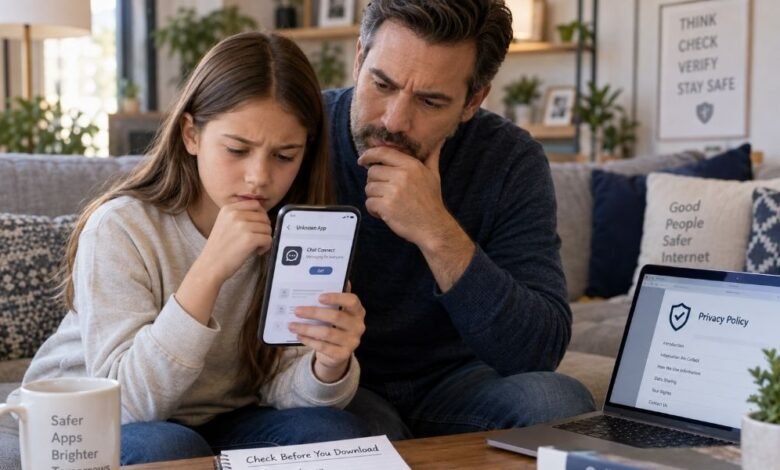
The story started in a normal home on a quiet evening. A young family member was using his phone after school. He wanted a messaging app that looked new and exciting. While searching online, he found the name Wachappe. The name felt familiar because it looked close to WhatsApp. That small spelling difference did not worry him at first. He thought it might be a fresh app or a new tool for chatting with friends.
He clicked more links and saw articles talking about messages, calls, group chats, and file sharing. The app sounded useful. But before he downloaded anything, an older family member stopped him and said, “Let us check it first.” That one sentence changed the whole moment. It turned a quick download into a safety lesson about unknown apps, online trust, and personal data.
The Name Looked Too Familiar
The first problem was the name itself. Wachappe sounded close to a famous messaging app, and that made it easy to trust too quickly. Many people do this without thinking. They see a name that feels known, and their brain fills in the blanks. But similar names can be risky. They can confuse people who are moving fast, tired, or not strong with technology.
The family member opened a search page and looked for clear proof. Who made Wachappe? Was there an official company? Was there a trusted app store page? The answers were not easy to find. A source about Wachappe says there is very little clear information about it, and there is no widely recognized official source confirming exactly what it is.
The First Safety Question
The family did not ask, “Does this app look cool?” They asked, “Who is behind it?” That is the first safety question for any unknown app. A real app should make its identity easy to check. It should have a clear developer name, a support page, terms of service, a privacy policy, and a trusted download source. These things do not make an app perfect, but they give users something to judge.
Wachappe had a problem here. The available information did not clearly show a verified developer or official security page. The source page also says that many claimed features, such as messaging, calls, video calls, group chats, and file sharing, are not confirmed by verified documentation from an official developer or company.
The Privacy Policy Check
Next, the family looked for a privacy policy. This step matters because messaging apps can touch very personal parts of life. A chat app may ask for contacts, photos, camera access, microphone access, files, notifications, and sometimes location. A privacy policy should explain what data is collected, how it is used, how long it is kept, and whether it is shared. Without that information, a user is almost blind.
The family member explained it in simple words: “If an app wants to read your contacts, it must tell you why.” This is where Wachappe again raised concern. The source page says there is no confirmed privacy policy or official documentation, so users cannot verify how personal information is collected, stored, or used.
The App Store Test
The next step was checking trusted app stores. This is not only about convenience. It is also about basic protection. App stores are not perfect, but they usually offer more checks than random download links. The family searched carefully for Wachappe as an official app. They did not want a copy, a fake page, or a file from an unknown website. The older family member explained that some unsafe apps are spread through web browsers, messaging links, and file downloads.
Google says Play Protect can warn users about unsafe apps and may stop unverified apps that use sensitive device permissions often targeted by scammers for financial fraud. That warning made the younger person pause. The issue was no longer about trying something new. It was about protecting the phone and the people connected to it.
The Permission Problem
Then came the most important part: permissions. Many users tap “Allow” without reading. They want the app to work fast, so they approve everything. But permissions are doors into a phone. Some doors are harmless for the right app. Others can be dangerous in the wrong hands. A messaging app may need microphone access for calls or camera access for video.
But it should not ask for sensitive access without a clear reason. Google has warned that certain permissions are often abused by fraudsters, including SMS, notification access, and accessibility access, especially when apps come from internet sideloading sources. The family member explained that a risky app does not always look scary. Sometimes it looks simple, friendly, and useful. The danger can be hidden behind one careless tap.
A Lesson From Fake Apps
The family then talked about fake and unofficial apps. This helped make the Wachappe concern easier to understand. WhatsApp itself warns users about unofficial apps. It says it does not support these apps because they put privacy, security, and safety at risk. It also tells users to remove unofficial apps and use the official WhatsApp app or WhatsApp Business app instead.
This point mattered because Wachappe sounded close to WhatsApp, even though there is no confirmed evidence that it is connected to WhatsApp. The family did not accuse Wachappe of being harmful. That would be unfair without proof. But they also did not treat it as safe without proof. That was the key lesson: when identity is unclear, caution is not fear. It is common sense.
The Younger User’s Mistake
The younger family member admitted something honest. He said he had trusted the name because it looked popular online. He had seen more than one article mention Wachappe, so he thought it must be real and safe. This is a common mistake. Search results can make weak information look strong. When many websites repeat the same claims, readers may think the claims have been checked.
But repetition is not proof. A blog post is not the same as an official developer page. A feature list is not the same as a security report. The source page about Wachappe also warns that some descriptions online are based on claims, not verified technical documentation. This helped the family understand how online confusion grows. Sometimes the internet does not answer a question. It repeats it.
What They Checked Before Downloading
Before making a final choice, the family made a simple checklist. They checked the developer name. They checked for an official website. They looked for a privacy policy. They searched for a trusted app store listing. They looked at the permissions the app might request. They also searched for warnings, user complaints, and support pages. This was not complicated work.
It took only a short time, but it stopped a risky habit. The family decided that no one should download Wachappe unless its identity becomes clear through reliable sources. This checklist also became useful for other apps. Any unknown messaging app should pass the same test before it enters a phone. A phone is not just a device. It holds contacts, photos, bank alerts, family messages, and private memories.
Why Personal Data Matters
The older family member then explained why personal data should not be shared with unverified platforms. Many people think privacy only means hiding secrets. That is not true. Privacy also means control. Your contact list can reveal your family, friends, workplace, school, and daily life. Your photos can show faces, places, documents, and habits. Your messages can include passwords, addresses, plans, and private feelings.
Even notification access can expose one-time codes and account alerts. This is why unknown apps deserve careful review. The family did not want a strange app reading contacts or asking for access without a trusted reason. Wachappe may only be a confusing internet term, but the lesson around it is real. If users cannot verify who controls an app, they should not give it their data.
The Safer Choice
In the end, the younger family member did not download Wachappe. He chose to use a known messaging app that had an official website, a clear app store page, visible support information, and public safety details. This choice was not boring. It was smart. New tools can be useful, but safety should come before curiosity. The family also agreed on a rule:
no one in the house would install an unknown communication app from a random link. They would check first, then decide. Google Play Protect scans apps and helps protect users from harmful apps, including apps installed from outside Google Play. That protection helps, but it does not replace good judgment. Users still need to slow down, read, and question what they are installing.
What Wachappe Teaches Users
Wachappe teaches a bigger lesson about the modern internet. Not every name in search results is a trusted product. Not every app-like word is a real app. Not every article is proof. The internet can turn a strange name into a topic before anyone confirms what it really is. That is why readers need a simple safety habit.
Before trusting an app, ask who made it, where it is officially listed, what data it collects, and how it protects users. If those answers are missing, wait. There is no shame in being careful. In fact, careful users are harder to trick. The source page says Wachappe should be treated as unverified until reliable information becomes available, and users should avoid sharing personal details or sensitive files with any service they cannot confirm.
Final Thoughts
The Wachappe safety story is not about panic. It is about patience. A family saw a name that looked familiar, but they did not rush. They checked the developer, privacy policy, app store listing, and permissions. They also compared the situation with real warnings from Google and WhatsApp about unknown, sideloaded, and unofficial apps. That small check helped them avoid a possible privacy mistake.
For readers, the message is simple. Treat Wachappe with caution because its official identity and security details are not clearly verified. Do not share personal data with any unknown app just because it appears online. A safe download starts before the install button. It starts with one careful question: can I prove this app is real, official, and trustworthy?