

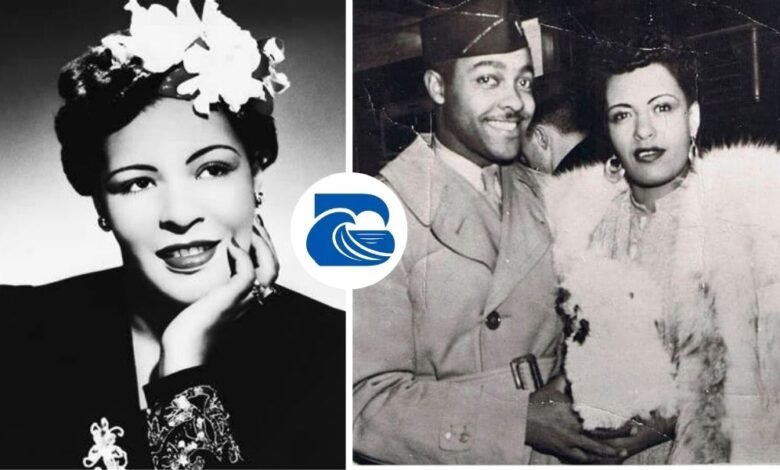
Jimmy Monroe is usually remembered through one small door in music history. That door is his marriage to Billie Holiday. Many short biographies name him as her first husband, then move on fast. Some call him a trombonist. Some describe the marriage as painful. Some connect him to the emotional background of “Don’t Explain,” one of Holiday’s most haunting songs.
But this narrow picture raises a fair question: was Jimmy Monroe more than just Billie Holiday’s troubled husband? The answer is not simple. The public record around him is thin, uneven, and often shaped by Holiday’s fame. That makes him hard to understand as a full person. It also makes him a useful example of how history remembers people who stand close to a legend.
The Problem With Remembering Jimmy Monroe Only One Way
Jimmy Monroe is not remembered like Billie Holiday. She became one of the most important jazz singers of the 20th century. Her voice changed how people heard pain, love, racism, and survival. Monroe, by contrast, is mostly remembered because he was part of her private life. Johns Hopkins University’s Billie Holiday collection identifies him as a trombonist and lists Holiday’s marriage to him from 1941 to 1947.
That is a small fact, but it matters. It shows that Monroe was not only a name in gossip. He had some link to music and to the same cultural world that shaped Holiday’s career. Still, most readers meet him only as a difficult husband. That may be partly fair, based on the stories that survive. But it is also incomplete.
A Man Seen Through Billie Holiday’s Shadow
Fame can flatten everyone around it. When a person is close to a famous artist, their own life often becomes a supporting scene. Jimmy Monroe suffers from that problem. Billie Holiday’s story is so powerful that almost every person around her is judged by how they affected her. That includes husbands, lovers, managers, police officers, club owners, and record executives.
Monroe’s place in that story is often negative. He appears during a hard period. He is linked to betrayal, emotional strain, and a marriage that did not give Holiday peace. But when we only ask, “What did he do to Billie Holiday?” we may miss another question: “What does the way we remember him say about fame, gender, and historical memory?”
What We Actually Know About the Marriage
The basic facts are clearer than the deeper meaning. Billie Holiday married James Monroe in 1941. Biography.com states that Holiday married James Monroe that year, while other reference sources give his fuller name as James Norman Monroe Jr. Some sources say the marriage began on August 25, 1941, in Elkton, Maryland. The relationship did not become a stable love story.
Encyclopedia.com says the marriage slowly deteriorated and notes that Holiday later claimed in 1945 that she had divorced Monroe and married trumpeter Joe Guy, though the source adds that evidence for that claim is unclear and that Monroe was still saying in 1947 that Holiday was his wife.
This messy timeline is important. It shows that even the formal record around Monroe and Holiday can be confusing. Their relationship was not just unhappy. It was also legally and personally tangled.
Why “Troubled Husband” Became the Easy Label
The label “troubled husband” sticks because it is short and dramatic. Readers understand it fast. It also fits the sad shape of many Billie Holiday biographies. Holiday’s life is often told as a chain of pain: childhood hardship, racism, abusive systems, addiction, bad relationships, and early death. In that kind of story, Jimmy Monroe becomes one more figure in a long line of damage. But simple labels can hide hard truths.
A troubled marriage can involve betrayal, addiction, money problems, emotional harm, and social pressure at the same time. A person can be harmful in one story and still not be fully knowable from that story alone. That does not excuse bad behavior. It only means history should be careful before turning a person into one word.
The “Don’t Explain” Story and Its Power
The best-known story about Jimmy Monroe is tied to “Don’t Explain.” The official Billie Holiday website says the song, written with Arthur Herzog Jr., is said to have been inspired by real heartbreak after Holiday’s husband came home with lipstick marks on his collar. Biography.com tells a similar version, saying the phrase “Don’t Explain” came from Holiday’s response to Monroe after that incident.
This story is powerful because it feels like a private wound turned into art. It does not need a long plot. A collar, a mark, a failed excuse, and one cold sentence become enough. In that moment, Monroe becomes more than a husband. He becomes part of the emotional fuel behind a classic song.
Pain Became Music, But That Does Not Make Pain Beautiful
There is a danger in romanticizing pain. Because “Don’t Explain” is beautiful, people may treat the hurt behind it as useful or even necessary. That is unfair to Holiday. No artist should have to suffer betrayal to make great work. Still, Holiday had a rare gift for turning pain into sound.
In her hands, a private insult could become a song about restraint, pride, sadness, and emotional exhaustion. Jimmy Monroe’s role in that story is not heroic. But it is historically important. He stands at the point where private life and public art meet. That is one reason people still search for him. They want to know the real person behind the song’s wound.
Was Monroe a Villain, or Is That Too Simple?
Calling Jimmy Monroe a villain may satisfy readers, but it may not give them the whole truth. Some accounts describe him harshly. A New York Review of Books review of John Szwed’s work describes Monroe as a stylish but troubling figure in Holiday’s life and says Holiday later regretted breaking with her mother over him. That kind of portrait matters, but it is still a portrait made through other people’s memories and writings.
Monroe did not leave behind the same public archive that Holiday did. We do not have a large body of his own words. We do not have his full defense, his private fears, or his version of events. This does not make him innocent. It means the record is uneven. A fair article can say he seems to have caused harm while also admitting that history gives us only a partial view.
The Missing Voice in the Story
One of the most striking things about Jimmy Monroe is how quiet he is in the record. Holiday’s voice is everywhere. Her recordings remain alive. Her interviews, memoir, and biographies keep shaping public memory. Monroe’s voice is much harder to find. That silence matters. In celebrity history, the person who leaves the most material often controls the story. Holiday deserved to tell her truth.
But readers should also understand that Monroe’s identity became attached to her truth. He is remembered less as James Norman Monroe Jr., a musician and man with his own path, and more as “the husband who hurt Billie Holiday.” That may be the strongest fact about his legacy: he is not remembered in full, but in relation.
The Role of Holiday’s Memoir and Dramatized Memory
Another reason to be careful is that some famous Billie Holiday stories come through memoir and biography. The official Billie Holiday site describes Lady Sings the Blues as a “no-holds-barred” autobiography but also says it is “somewhat dramatized.” That does not mean the stories are false. It means readers should treat them as personal memory, not court records. Memory can carry emotional truth even when details shift.
In Holiday’s case, the emotional truth is often clear: she lived through deep pain, and some of her relationships were not safe or peaceful. But when writing about Jimmy Monroe, the best approach is to separate what is documented, what is widely repeated, and what is interpretation.
Why the Marriage Still Matters
Jimmy Monroe matters because his marriage to Billie Holiday sits at an important turn in her life. It was not just a private romance. It was part of her adult world during years when her career, public image, and personal struggles were changing. Some biographies connect this period with worsening substance use and emotional instability. Biography.com says Holiday, already known to drink, picked up her husband’s habit of smoking opium after marrying him.
This is a serious claim, so it should be written with care. It should not be used to blame Monroe for everything that followed. Addiction is complex. It grows from trauma, access, pressure, and many personal and social forces. Still, the marriage appears in accounts of a darker period, and that is part of why Monroe’s name carries weight.
The Bigger Issue: Men Around Billie Holiday
Monroe’s story also opens a wider industry question. Many women artists, especially Black women artists in the early and mid-20th century, had to survive in worlds controlled by men. Men ran clubs. Men controlled many bookings. Men led bands. Men worked in record labels. Men also often controlled money and movement. Billie Holiday faced racism, sexism, police harassment, and public judgment.
In that setting, personal relationships could become tied to safety, income, access, and control. Jimmy Monroe should not be blamed for every structure around Holiday. But his story can help readers think about how love and power often mixed in the entertainment world. A husband was not always just a husband. He could also become part of the pressure around a star.
Fair Judgment Without Fake Balance
A nuanced article should not create fake balance. It should not say, “Maybe Jimmy Monroe was misunderstood,” as if that erases the pain linked to him. The better point is this: fair judgment needs both honesty and limits. If sources say the marriage was unhappy, say that. If the “Don’t Explain” story links him to betrayal, say that too.
If some accounts connect the marriage to harmful habits, include the claim carefully. But do not invent details. Do not make him a monster for dramatic effect. Do not fill gaps with gossip. Jimmy Monroe can be discussed as a flawed and possibly damaging figure without pretending we know every corner of his life.
How History Reduces People Near Famous Women
There is another reason this topic feels modern. Today, readers are more aware of how famous women’s private lives are used for public entertainment. Billie Holiday was often judged for her pain. Her relationships became part of her legend, sometimes in ways that made suffering look like her natural state. People around her were also reduced.
Jimmy Monroe became the bad husband. Joe Guy became another troubled partner. Louis McKay became part of the final chapter. This pattern can make biography feel neat, but real life is rarely neat. Monroe’s reputation may be deserved in part, but it is also shaped by the needs of storytelling. A life story needs scenes, symbols, and causes. Monroe became one of those symbols.
Jimmy Monroe as a Mirror, Not the Main Character
Jimmy Monroe should not replace Billie Holiday at the center of her own story. That would be wrong. Holiday’s art, courage, and pain belong to her. But Monroe can work as a mirror. Through him, readers can see how a person becomes trapped inside another person’s fame. They can see how private harm becomes public myth.
They can see how a song can preserve a wound longer than any newspaper item. They can also see why careful writing matters. When the archive is thin, writers have a duty to slow down. They should not turn uncertain history into loud certainty.
A Better Way to Write About Jimmy Monroe
A strong article about Jimmy Monroe should begin with what is known. He was Billie Holiday’s first husband. He was connected to music as a trombonist. Their marriage began in 1941 and is widely described as difficult. The relationship is tied to the story behind “Don’t Explain.” From there, the article should move into what is less clear.
What did Monroe want from the marriage? How much did he shape Holiday’s later choices? How much of his reputation comes from documented harm, and how much comes from being remembered through Holiday’s pain? These questions make the article richer. They also protect it from becoming another flat celebrity recap.
Final Thoughts
So, was Jimmy Monroe more than just Billie Holiday’s troubled husband? Yes, but not because the troubling parts should be ignored. He was more than that because no person should be reduced to one role in someone else’s tragedy. At the same time, his main public legacy is tied to a marriage that appears to have caused Billie Holiday real pain. The fairest view sits between excuse and exaggeration.
Jimmy Monroe was a musician, a husband, a difficult figure in Holiday’s life, and a man whose full story remains partly hidden. His importance today is not only in what he did. It is also in what his reputation teaches us about fame, memory, and the way history turns private heartbreak into public legend.





2 Comments