When Water Strikes: How Larchmont Restoration Protects What Matters Most

Water has a way of finding the cracks you never knew existed. A pipe bursts behind a wall. A storm pushes rain through a compromised roofline. A washing machine hose gives out while you’re at work. Within minutes, water spreads across floors, climbs up drywall, and settles into places you can’t see. By the time most homeowners notice, the damage has already started compounding.
That’s the uncomfortable truth about water intrusion: it doesn’t wait for a convenient time, and it doesn’t stay contained. Left untreated, even a small leak can warp hardwood floors, breed mold colonies, and compromise the structural integrity of a home within 24 to 48 hours. The response time matters just as much as the response itself.
This is where Larchmont Restoration steps in. For homeowners and business owners across the region, Larchmont Restoration has built a reputation on fast, thorough, and transparent recovery services that turn a crisis into a manageable process. This post walks through what actually happens when water damage hits, why professional intervention changes the outcome, and how Larchmont Restoration approaches every job with precision and care.
Why Water Damage Escalates So Quickly
Water doesn’t stay where it lands. It wicks into porous materials, travels along structural gaps, and settles in spaces with poor airflow- think behind baseboards, under subflooring, inside insulation. Within the first few hours, furniture and drywall begin absorbing moisture. By day two, mold spores, which are present in nearly every indoor environment, start finding the damp conditions they need to multiply.
The financial stakes rise just as fast. A leak caught in its first hour might mean a repair bill. The same leak left for three days might mean replacing flooring, repainting walls, and treating for mold, an exponential jump in both cost and disruption. That’s why timing isn’t a minor detail in water damage restoration; it’s the single biggest factor separating a quick fix from a full renovation.
What Makes Professional Restoration Different From DIY Fixes
It’s tempting to grab a wet vac, run a few fans, and call it handled. For minor spills, that might work. But structural water damage involves variables most homeowners simply can’t assess on their own: moisture trapped inside wall cavities, humidity levels that encourage mold growth, and water that has seeped into subfloors or insulation where it’s invisible to the eye.
Professional restoration teams use moisture meters, infrared cameras, and industrial-grade dehumidifiers to locate and remove water that a surface-level cleanup would miss. They also understand the difference between water categories: clean water from a supply line, gray water from appliances, and contaminated black water from sewage backups or flooding, each of which requires a different safety protocol and treatment approach.
This distinction matters because treating contaminated water like a simple spill can expose a household to bacteria, mold toxins, and other health hazards. A trained team doesn’t just dry a space; they assess the full scope of contamination and structural risk before determining the right course of action.
The Larchmont Restoration Process, Step by Step
Larchmont Restoration built its process around one principle: speed without sacrificing thoroughness. Here’s how a typical response unfolds.
Rapid Assessment and Containment
The moment a call comes in, the team prioritizes arrival time. Technicians inspect the affected areas, identify the water source, and contain it to prevent further spread. This first step alone often determines how much of the property can be saved.
Water Extraction and Drying
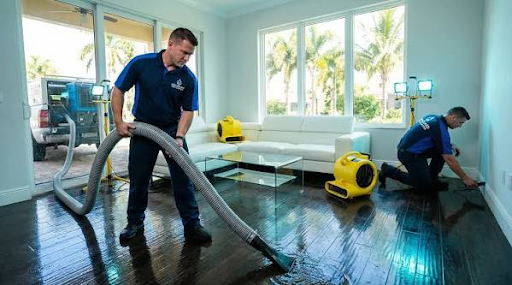
Using commercial-grade pumps and extraction equipment, the team removes standing water quickly. From there, industrial air movers and dehumidifiers go to work, pulling moisture out of walls, flooring, and furniture before it has a chance to cause secondary damage.
Moisture Monitoring
Visible dryness doesn’t always mean a space is actually dry. Larchmont Restoration uses moisture detection tools to track humidity levels throughout the restoration process, adjusting equipment placement until readings confirm the area meets safe, stable conditions.
Cleaning and Sanitizing
Depending on the water category involved, affected surfaces are cleaned, disinfected, and treated to prevent mold growth. This step protects both the structure and the health of everyone who lives or works in the space.
Repair and Restoration
Once the property is fully dry and sanitized, the final phase focuses on repairs, whether that means replacing drywall, refinishing floors, or restoring damaged belongings. The goal is to return the space to its pre-damage condition, not just a functional one.
Why Fast Response Times Save Homeowners Money
Insurance adjusters, contractors, and restoration professionals generally agree on one point: the first 24 to 48 hours after water exposure are the most critical. Mold can begin forming within this window, and structural materials like drywall and wood flooring start to warp and weaken the longer they stay saturated.
A delayed response doesn’t just mean more visible damage. It often means more invasive repairs, higher costs, and longer displacement from the property. Choosing a restoration company that prioritizes rapid dispatch isn’t a luxury; it’s a direct way to limit the scope and cost of recovery.
Protecting Your Property Starts With Choosing the Right Partner
Comprehensive water damage restoration that protects your home from the moment disaster strikes is exactly what Larchmont Restoration delivers, combining rapid response, advanced equipment, and a team trained to handle everything from minor leaks to major flooding events. Choosing a restoration partner isn’t just about who shows up fastest; it’s about who has the expertise to assess hidden damage, the right equipment to dry a property completely, and the judgment to know when a space is truly safe again.
Larchmont Restoration has built its process around those priorities. Every job starts with a thorough assessment, moves through industry-standard extraction and drying protocols, and ends with repairs that restore a property to its original condition, not just a passable one. For property owners facing the stress of water damage, that kind of reliability makes all the difference.
Don’t Wait for Water Damage to Get Worse
Water damage rarely announces itself with warning signs you can plan around. What it does offer is a narrow window where fast action makes the difference between a manageable repair and a costly overhaul. Knowing what to expect from a professional restoration process, and who to call when the unexpected happens, puts property owners in a far stronger position.
If your home or business has experienced water intrusion, don’t wait to see how it develops. Reach out to Larchmont Restoration for a rapid assessment and let a team of experienced professionals handle the recovery process from start to finish.