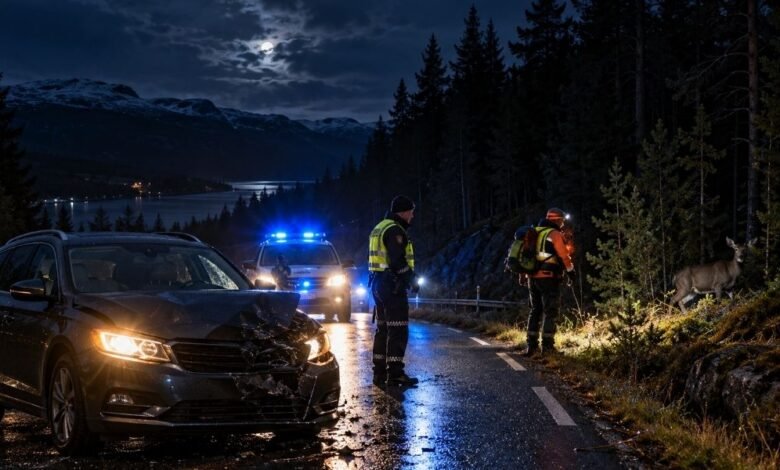
The road is dark. The car lights cut through the night. A driver is going home after work. The air is cold. The road is quiet, but the forest beside it is not. Then, in one fast second, a deer steps out from the trees. The driver sees its eyes too late. The brakes scream. The car shakes. There is a loud hit. Then there is silence. The driver sits still, breathing hard. This is the kind of moment when Viltnemnda becomes more than a word on a local web page. It becomes part of an emergency chain.
In Norway, wildlife crashes with deer, moose, and other wild animals are not treated as small events. They can hurt people. They can also leave an animal in deep pain. That is why the right response matters. The driver must stop, stay safe, call the police, and help make it possible for trained local wildlife people to find the animal. Norway’s road authority says a driver should call the police after hitting an animal, and the police can alert Viltnemnda and other needed groups.
The First Minutes Matter
After the crash, the driver may feel afraid or guilty. That is normal. But the first job is safety. The driver should stop the car in a safe place. They should turn on hazard lights. They should check if people are hurt. Then they should report the accident. One key thing is not to run after the animal. A hurt deer or moose can move into the forest, even with a bad injury. Following it can be risky for the driver.
It can also make the search harder for trained dogs and trackers. The road authority warns that following the animal can be dangerous and can make work harder for search dogs. So the best help is simple. Stay safe. Call the police. Mark the place where the animal left the road if it is safe to do so. Give clear details. The time, road name, direction, and nearest sign can help the fallvilt team start fast.
What Viltnemnda Means in Real Life
Many people search for Viltnemnda because they want one simple answer. But the word can feel confusing. In many places, it points to the local wildlife board, wildlife service, or people who help the municipality handle injured and dead wild animals. Some municipalities still use the name Viltnemnda. Some may use words like fallviltgruppe, viltberedskap, viltforvaltning, or ettersøkskorps. The name can change from place to place, but the main idea is close.
It is local wildlife work. It deals with sick, hurt, or dead wildlife. In one municipality, Skien explains that the old political Viltnemnda has been closed, but practical work is still done by an ettersøkskorps, or search team. This shows why the word can confuse readers. A person may search “Viltnemnda” but really need the local emergency process for injured wildlife. The heart of the work is not a title. It is action.
When the Police Make the Call
The driver calls the police. The police ask calm questions. Where are you? What animal did you hit? Did it die on the road? Did it run away? Are people hurt? Is the road blocked? Then the police can contact the local wildlife service. Mattilsynet, the Norwegian Food Safety Authority, explains that the police can involve the municipality’s wildlife management, often called Viltnemnda, when needed.
This matters because the driver is not expected to solve everything alone. The system is built so trained people can take over. The police do not only think about the car. They also think about public safety and animal welfare. If a moose is hurt and moving near traffic, it can cause another crash. If a deer is badly hurt and hidden in the woods, it may suffer for a long time. The local wildlife team helps close that gap.
The Fallvilt Team Steps In
The next part is often done by a fallvilt team or search team. “Fallvilt” means wildlife that is dead, hurt, sick, or found in a condition that needs action. Hjorteviltportalen explains that the municipality’s role is first to arrange a search for hurt wildlife and to take care of the animal as a resource. It also says traffic accidents with deer species should be registered for good evaluation.
This work can happen at night, in snow, in rain, or beside a busy road. It is not easy work. The team may bring a trained dog. They may check tracks, hair, blood, broken branches, and the path the animal took. They may need to walk into thick forest. If the animal is found alive and badly hurt, they may have to end its suffering. This is hard, but it is also part of animal welfare.
Why the Driver’s Details Can Save Time
A small detail from the driver can change the whole search. The exact spot matters. The side of the road matters. The direction the animal ran matters. The type of animal matters too. A deer and a moose do not always move the same way after being hit. A weak detail like “somewhere near the forest road” can waste time.
A clear detail like “200 meters after the bridge, on the right side toward the village” can help a lot. Some municipalities ask people to note important facts after a wildlife crash, such as place, time, direction, and signs of injury. This is why the driver is part of the emergency chain. The driver may not track the animal. The driver may not touch it. But the driver can give the first map. In a dark and stressful moment, that map can reduce suffering.
The Search Is About Mercy, Not Blame
It is easy to think the search is about blame. But the main goal is not to shame the driver. Wildlife can cross fast. Many crashes happen because animals move between feeding areas, forests, fields, and water. Drivers may not have time to react. The real goal is to find the animal and stop pain. If the animal is dead, the team can remove it and register it.
If it is hurt, the team can search and make a decision. If it is not found, the case can still be recorded. Hjorteviltregisteret uses categories such as hit by motor vehicle, hit by train, sickness and injury, killed after search, found dead after search, and search ended with animal not found. These records may sound cold, but they help. They turn one hard night into data. That data can help people understand road danger, animal movement, and local patterns.
Viltnemnda and Public Safety
Viltnemnda is often seen as only a wildlife topic. But it is also a public safety topic. A wounded moose near a road is a danger. A dead deer in the driving lane is a danger. A driver who stops badly on a dark road can also be in danger. So the response must balance people and animals. Statens vegvesen says most wildlife collisions happen in the morning and in the afternoon or evening.
It also lists safety measures like wildlife fences, crossings, signs, warnings, road grates, and clearing sight lines. Local fallvilt records can support this kind of thinking. If many crashes happen on the same road, that road may need more attention. This is one surprising benefit of Viltnemnda work. It is not only about one animal. It can help a whole area learn where the risk is highest.
The Hidden Work After the Animal Is Found
When the animal is found, the work is still not always over. The team may need to handle the body. They may need to report the case. They may need to take samples in some cases. Hjorteviltportalen notes that municipalities may also take samples for mapping chronic wasting disease, known as skrantesyke in Norwegian. This shows that Viltnemnda work can connect to health, science, and long-term wildlife management.
A dead animal is not only waste. It may be a data point. It may tell the municipality where animals are moving. It may show disease risk. It may show where drivers need better warnings. The public often sees only the crash. The local team sees the wider pattern. That is why each report matters, even when the animal seems to have run away.
The Hard Side: Money, Time, and Local Pressure
This work has a cost. Someone must answer the phone. Someone must drive out. Someone must bring a dog. Someone must spend hours searching in hard land. Someone must register the case. This can put pressure on local systems. A government proposal from Norway has noted debate about costs, including concerns from municipalities and others about how to fund searches and handling of injured wildlife and fallvilt.
This is one of the quiet controversies behind Viltnemnda. Many people agree injured animals should not be left to suffer. But there can still be debate about who pays for the work. Should it come from local wildlife funds? Should road systems pay more when traffic causes many injuries? Should the state help more? These questions matter because a good emergency response needs people, tools, time, training, and money.
Why Some People Misunderstand Viltnemnda
Many readers may think Viltnemnda is only for hunters. That is too narrow. Hunting can be one part of local wildlife management, but road crashes and injured animals are also a major part of the picture. Some people may also think Viltnemnda is one national office. That is not right either. The practical service is usually local. It works through the municipality and local response people.
Landbruksdirektoratet explains that when deer species are hit, the municipality has responsibility for public reporting and possible search work, and that municipal search staff can report events through the Fallviltapp to Hjorteviltregisteret. So a better way to explain Viltnemnda is this: it is the local link between people, police, wildlife, roads, and animal welfare. It is where a crash becomes a managed case instead of a forgotten animal in the forest.
What Drivers Should Do After Hitting Wildlife
A clear guide helps readers more than fear. If a driver hits a deer, moose, or other wild animal in Norway, the steps should be simple:
-
Stop as safely as possible.
-
Turn on hazard lights.
-
Check people first.
-
Call the police.
-
Do not chase the animal.
-
Mark the place where the animal left the road if it is safe.
-
Share clear details about location, animal type, and direction.
-
Wait for advice if the police asks you to stay.
-
Do not try to kill or move a large hurt animal yourself.
These steps protect the driver and help Viltnemnda or the fallvilt team. They also protect the search dog. If too many people walk around the crash site, the scent trail may become harder to follow. The road authority says calling the police is important because they can alert Viltnemnda and other actors, and it warns against following the animal because it can be dangerous and can make search work harder. Simple action can be the best action.
A Small Crash Can Teach a Big Lesson
By morning, the road may look normal again. Cars pass. The forest is still. The driver may only see a broken light, a dented hood, and a memory that will not leave. But behind that moment, Viltnemnda may have done hours of work. The police may have made calls. The fallvilt team may have searched tracks. A dog may have followed a weak trail through wet grass.
A local worker may have registered the case. The animal may have been found and put out of pain. Or the search may have ended without finding it, which is also part of real field work. The point is that the crash is not just a private accident. It is part of a public system. That system tries to protect people, reduce animal suffering, and learn from each event.
Final Thoughts
Viltnemnda matters because wildlife and people share the same roads, fields, and forest edges. When a driver hits a deer or moose, the story does not end at the sound of impact. It begins a chain of care. The driver reports. The police respond. The municipality helps arrange the search. The fallvilt or ettersøk team follows the trail. The case may be added to a wider record that helps future safety work.
This is not a perfect system. It has money problems, hard choices, and local differences. But it gives structure to a painful moment. Without it, many hurt animals would be left unseen, and many dangerous road spots would stay hidden. After the crash, Viltnemnda becomes an emergency lifeline. It is quiet work, but it can make the difference between confusion and care.