Your old speakers may still have good sound left in them. Before you buy a new pair, try a quad equalizer. A few small changes may help you hear voices, soften sharp notes, or calm heavy bass.
This is a test you can do at home. It does not promise to make cheap speakers sound costly. It helps you find out whether poor sound comes from the settings, the room, or the speakers.
Start With One Clear Question
Ask yourself what sounds wrong. Are words hard to hear? Does bass fill the room with a dull boom? Do high notes feel too sharp?
A quad equalizer works best when you have a clear goal. “Make it better” is hard to judge. “Help me hear the singer” gives you something real to test.
Choose one problem first. If you change everything at once, you may lose track of what helped. A slow test can teach you more than a big change.
What Does the Tool Do?
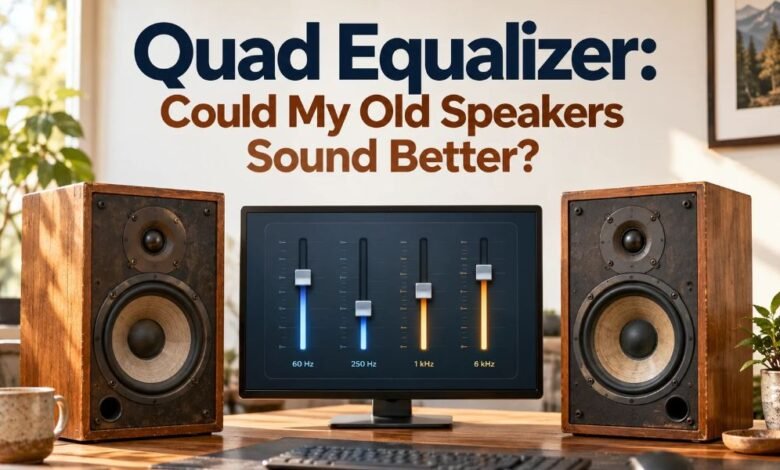
For this article, quad equalizer means a sound tool with four bands. Each band controls a range of sounds. Some products use the same name for four channels, so check your guide.
Think of the bands as four small groups:
-
Bass adds low notes and weight.
-
Low mids add body to voices and music.
-
High mids help shape clear words and sharp attacks.
-
Treble adds bright sounds, such as cymbals.
A quad equalizer raises or lowers parts of the sound already there. It cannot fix a broken speaker or add deep bass that a tiny speaker cannot play.
Meet the Speakers You Already Own
Picture an old pair on a desk. They still work, but songs seem thick and dull. It would be easy to blame their age and start shopping.
This is a sample scene, not a test result. Your own speakers may have a different problem. The point is to check before you spend.
Before using a quad equalizer, look at the setup. Is a book blocking one speaker? Is a loose item buzzing nearby? Are both speakers playing? These checks cost nothing and may reveal a simple cause.
Check the Room Before the Settings
A wall or corner can change how much bass you hear. Your desk and nearby surfaces can also affect the sound. Moving your chair may change it again.
Speaker maker Genelec explains that walls can raise bass levels. It also notes that some room problems cannot be solved well by sound controls alone.
Before opening your quad equalizer, try small moves that fit the speaker guide. Clear space around the speakers. Keep their height and distance from you similar.
Listen after each move. Do not move the speakers and change the settings at the same time. You need to know which step made the difference.
Pick Sounds You Know Well
Choose a song you have heard many times. Add a short voice clip, such as a news report or podcast. Use the same parts for each round.
Your quad equalizer test should use normal sound at a calm level. Avoid using only a huge movie blast or a song filled with deep bass.
Listen for small clues. Can you follow the words? Do drums drown out the singer? Does a bright note stand out too much?
Write down what you hear before making changes. A few plain words, such as “voice sounds buried,” are enough.
Begin With All Four Bands Flat
Set each band to zero. This is often called flat. Turn off extra bass boosts and other sound effects for the test. Save your old settings first.
With the quad equalizer flat, play your chosen clips. This gives you a starting point. You can return to it if a change sounds worse.
Check that quad equalizer affects the speakers you are using. Some apps change only the songs played inside that app. Others may work across more of the device.
If you hear no change when a band moves, check the output and app guide.
Try Less Bass Before More Treble
When music sounds thick, more high notes may seem like the answer. But first, try lowering the bass a little. Then listen to the same words again.
Use your quad equalizer to make a small cut, perhaps one step. If the app shows decibels, try a cut of one or two. These are test values, not rules.
The goal is to stop low notes from taking over. You may hear the singer more clearly without raising the voice range.
If the song loses too much weight, bring some bass back. Keep the change only if it helps.
Work on One Band at a Time
Next, listen to the middle ranges. Too much low mid sound can make music feel boxed in. Too much high mid sound can make voices feel sharp.
Move one quad equalizer control a little. Play the clip again. Ask a simple question: did the problem get smaller, or did something else get worse?
Try a small treble cut if cymbals sound harsh. If the sound is dull, a small lift may help. Stop if hiss or sharp sounds grow too strong.
A quad equalizer does not need a bold curve to work. A slight change may be all you need.
Keep the Sound Level Fair
A louder version can grab your attention. That can make it hard to judge whether the tone is truly better. Keep both versions close in loudness.
Switch the quad equalizer on and off while playing the same short clip. If one version gets louder, adjust the main level before judging it.
Large boosts can also use up the room a digital signal has before it distorts. If your tool has an output or preamp control, lower it when needed.
Do not keep raising every band. If you hear new roughness after a boost, undo the change and lower the level.
Judge the Result in Daily Use
A quad equalizer setting may sound great for one song and poor for another. Try it with speech, soft music, and a track with a full beat.
Use your normal seat and normal volume. You are testing whether the speakers suit your daily life, not whether they can impress you for ten seconds.
Take a short break, then listen again. Ask someone else to switch between the settings without telling you which is which.
If you keep choosing the changed sound, save it. Give it a clear name, such as “Desk Speakers.” Keep the flat setting easy to find.
Know When the Speakers Need Help
A quad equalizer cannot mend torn parts, fix loose wires, or repair a failed unit inside a speaker. Tone changes and physical repairs do different jobs.
Listen for warning signs:
-
One speaker stays silent.
-
A buzz remains at low volume.
-
Sound cuts in and out.
-
A rough noise follows certain notes.
These signs do not prove the speaker is broken. A cable, source, or nearby object may be at fault.
Turn the system off before checking plugs. Try a known working cable or source if you can. Do not open powered gear unless you have the right skills.
Accept the Limits of Small Speakers
A quad equalizer can change balance, but it cannot make a small speaker move like a large one. Deep bass needs parts built to handle it.
If the sound is clean when quiet but turns rough when loud, turn it down. The speaker or its amp may have reached its limit.
More bass boost may make that problem worse. A slight bass cut may help at a useful level, but it will not create more deep bass.
You may need different speakers if you want strong low notes, louder clean sound, or enough sound for a much larger room.
Count the Savings With Care
The value of a quad equalizer depends on what it solves. If a built in tool makes speech clear enough, you may put off buying new speakers.
That is useful, but no fixed saving is promised. Your costs depend on the gear you own, the tools you have, and what you need next.
Do not buy a costly quad equalizer just because your speakers are old. Try free controls already in your device first, if they are available.
If repairs are needed, ask for a price. Compare that cost with a replacement that meets your needs. A good choice starts with a clear problem.
Keep a Short Test Note
Write down your quad equalizer settings and what changed. Note the song, seat, and volume you used. This makes it easier to repeat the test later.
Keep your notes short:
-
What sounded wrong?
-
Which band changed?
-
Did voices become clearer?
-
Did another sound get worse?
-
Was the change worth keeping?
These notes can help even if you buy speakers later. You will know what matters to you.
You can also reset the settings when you move the speakers. A change that suited one room may not suit the next.
Final Thoughts
A quad equalizer may give old speakers a more useful sound. Start flat, fix one problem, and make small moves. Compare at a similar loudness before you decide.
Keep the speakers if they meet your needs after the test. Seek repair or a better fit if noise, damage, or clear limits remain. Either way, you will spend with a clearer reason.