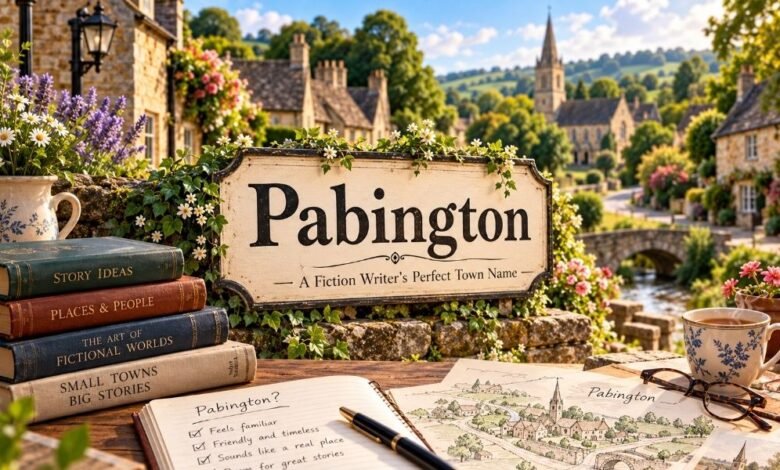
Pabington is not a word with one clear meaning. That may sound like a problem at first. Many people search for a word because they want one simple answer. They want to know if it is a place, a person, a brand, or a real old name. But sometimes, a word does not give one clear answer.
That is where the fun can begin. For a writer, a game maker, or a blogger, an unclear word like Pabington can become a gift. It can turn into a town, a school, a street, a big house, or a whole world. A clear word may feel closed. An unclear word feels open. It lets the writer build something new.
Why Pabington Sounds Like a Real Place
Pabington sounds like it could be a real town name. That is one reason it feels useful for stories. The ending “ington” is common in many English place names. Names like Paddington, Kensington, and Wellington may come to mind. Because of this sound, Pabington feels familiar.
It does not feel too strange. A reader can say it without trouble. A child can read it. An adult can remember it. That is important in writing. A good fictional place name should be easy to read, easy to say, and easy to picture. Pabington has that kind of sound. It feels old, calm, and simple. It also feels like it may have a hidden story behind it.
The Fiction Writer Who Needed a Town Name
Imagine a fiction writer sitting at a desk. The writer has a story idea. There is a young girl, an old library, a lost map, and a secret under a stone bridge. The story is ready in the writer’s mind, but one thing is missing. The town has no name. The writer tries many names. Some sound too real. Some sound too silly. Some sound too hard to read.
Then the writer sees the word Pabington. It feels right. It sounds like a small town where people know each other. It sounds like a place with rain, old houses, small shops, and a road that leads to the woods. The writer does not need Pabington to have a fixed meaning. That is why it works.
An Unclear Word Gives More Freedom
A word with a fixed meaning can limit a writer. For example, if a town name is already famous, readers may bring old ideas with them. They may think of a real place, a film, a book, or a well-known person. But Pabington does not carry one strong public image. That gives the writer more space.
The writer can decide what Pabington means. It can be a happy town, a strange town, a rich town, or a broken town. It can be modern or old. It can be safe or full of danger. It can be placed near the sea, in the hills, beside a river, or deep in the countryside. The word is like an empty room. The writer can fill it with color.
Pabington as a Village in a Mystery Story
Pabington can work very well in a mystery story. The name has a soft and normal sound. That makes it good for hiding secrets. A story could begin with a train stopping at Pabington Station. The main character gets off with one bag and an old letter. At first, the village looks simple.
There is a bakery, a church, a small school, and a post office. People smile, but they do not say much. Then the character notices strange things. A clock stops at the same time each night. A locked door appears in the library. A family name is missing from old records. Pabington becomes more than a name. It becomes a place the reader wants to explore.
Pabington as a School Name
Pabington can also become a school in a story. It could be called Pabington Academy, Pabington School for Young Inventors, or Pabington House. This kind of name sounds formal, but not too heavy. It can fit a children’s story, a fantasy book, or a light mystery.
A school named could have long halls, old classrooms, a garden, and a head teacher who knows more than they say. The name gives a feeling of history. It sounds like a place where rules matter. But it also leaves space for wonder. A writer can use it for a story about friendship, courage, secrets, or growing up.
Pabington as a Game World
Game makers also need strong place names. A game world must feel real, even when it is made up. Players need names they can remember. Pabington can work as a village in a role-playing game, a map area in a life game, or a small town in a puzzle game. It could be the first place a player visits.
It could be the safe home before a bigger journey starts. It could also be a place where strange events begin. Maybe players must talk to villagers, fix a broken bridge, find a lost key, or solve a town problem. The name Pabington is simple enough for game menus, maps, and quest lines. It does not distract the player. It helps the world feel grounded.
Why Simple Names Help Readers
Simple names are powerful. Readers do not want to stop every few lines to understand a hard word. A name should not slow the story down. Pabington is easy to read. It has a clear sound. It feels like a name that belongs in a book. This matters for young readers too.
A Grade 2 or Grade 5 reader can say without much help. That makes it friendly. A simple name also helps memory. When readers remember the place, they feel more connected to the story. If the name is too hard, they may skip it. If the name feels too plain, they may forget it. Pabington sits in the middle. It is simple, but it still has mystery.
A Name Can Build Mood
A town name does more than label a place. It sets a mood. Pabington has a calm and old-fashioned sound. It can make readers think of stone paths, green fields, red roofs, and warm lights in windows. But the same name can also feel strange if the story changes.
In a scary story, Pabington could be the kind of town where everyone closes the curtains before sunset. In a funny story, it could be a place full of odd rules and silly events. In a fantasy story, it could be a hidden town that appears only during rain. The name is flexible. That is one of its best traits.
How Bloggers Can Use Pabington in Creative Content
Bloggers can also use Pabington as part of a creative project. A blogger who writes stories, writing tips, or world-building guides can use as an example. They can show readers how a made-up place can grow from one simple word.
They can create sample maps, town histories, character ideas, or short story prompts. Pabington can become a teaching tool. It can help new writers learn how to name places. It can also help them see that not every story idea needs to come from a real map. Sometimes, a name begins as a sound. Then the writer gives it life.
The Risk of Pretending Pabington Has a Proven Meaning
There is one important thing to remember. Writers should not pretend that Pabington has a proven meaning if they cannot show proof. That can mislead readers. It is better to be honest. A writer can say, “Pabington is used here as a fictional name.” That is clear and safe.
It builds trust. Online content often becomes confusing when writers make strong claims without facts. They may say a word means something old, rare, or cultural, even when they have no clear source. That is not good writing. The better path is simple. If Pabington is being used for fiction, say so. Let the reader enjoy the creative use without false claims.
Turning Pabington Into a Full Story Setting
A writer can build a whole story world from Pabington. First, they can decide where it is. Is it near the sea? Is it in the hills? Is it beside a dark forest? Next, they can decide who lives there. Are the people kind, proud, afraid, or secretive? Then they can add key places.
A town needs a main street, a school, a shop, a park, and a place where something important happens. After that, the writer can add history. Maybe was founded by a family that vanished. Maybe the town has a festival every spring. Maybe no one is allowed to enter the old bell tower. These small details make the place feel alive.
Character Ideas for a Pabington Story
Pabington can hold many kinds of characters. There could be a new student who moves there and feels alone. There could be an old shop owner who keeps a secret box under the counter. There could be a mayor who smiles in public but hides the truth.
There could be two friends who find a map inside a wall. There could be a dog that keeps running to the same empty house. These characters do not need big words or complex plots to be interesting. They need clear goals, small problems, and strong feelings. Pabington gives them a stage. The writer gives them a reason to act.
Pabington in a Children’s Story
For a children’s story, Pabington can feel warm and safe. It could be the home of a child who wants to solve a small mystery. Maybe the school bell rings by itself. Maybe a garden grows flowers in winter. Maybe a lost cat keeps showing up in different places.
The story can stay simple but still feel exciting. Young readers like places they can picture. Pabington can be drawn on a map with simple parts: a school, a pond, a bakery, a bridge, and a big tree. The name is friendly enough for kids, yet interesting enough to make them ask questions.
Pabington in a Fantasy Story
In fantasy, Pabington can become even bigger. It could be a town hidden from normal people. It could be the last safe place before a wild land. It could be protected by old magic. The people of Pabington may not know that their town is special.
Or maybe they all know and keep it secret from outsiders. A fantasy writer can use the name because it does not sound too strange. It feels like a real place first. Then the magic can slowly appear. This helps the reader believe the world. The story starts with something normal. Then it opens a door to something amazing.
Pabington in a Modern Story
Pabington does not need to be old or magical. It can also work in a modern story. It could be a small town with a bus stop, a grocery store, a phone repair shop, and a local news page. A teen might leave to follow a dream. A family might move there for a new start.
A blogger might visit to write about small-town life. A game could use it as a modern map with homes, roads, parks, and shops. Because the name is not tied to one clear meaning, it can fit many time periods. That makes it useful for many types of writing.
How to Use Pabington Without Confusing Readers
The best way to use Pabington is to make its role clear. If it is a fictional town, show that early. If it is a school name, use it in a clear line. If it is a game location, place it on a map or in a mission. Readers do not need a long explanation. They just need context.
For example, a story could say, “Pabington was a small town at the edge of the forest.” That one line tells the reader what Pabington is in the story. From there, the writer can build more detail. Clear context stops confusion. It also makes the story stronger.
Why Pabington Can Help New Writers
New writers often wait for a perfect idea. They may think every name must have a deep meaning. But writing can begin with a simple word. Pabington shows this well. A writer can take the name and ask easy questions. Who lives there? What happened there?
What does the town look like? What secret does it hide? What does the main character want? These questions can lead to a full story. The word does not need to be famous. It just needs to open the mind. Pabington can do that because it feels real enough to use and open enough to shape.
Final Thoughts
Pabington is a strong example of how an unclear word can become useful in creative writing. It may not have one fixed meaning, but that is not always bad. For a fiction writer, blogger, or game maker, that open space is valuable. Pabington can become a town, a school, an estate, a village, or a full story world.
It sounds familiar, but it does not force one idea on the reader. That gives creators freedom. The key is honesty. Do not claim false facts. Use as a creative name and make its purpose clear. With the right story, this simple word can become a place readers remember.