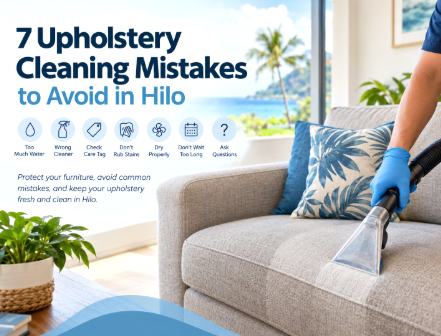
Humidity, frequent rain, and salt air make couch and upholstery cleaning a regular need for homes, rentals, and businesses in Hilo. The seven most common mistakes are using too much water, choosing the wrong cleaner, ignoring the fabric care tag, rubbing stains, skipping proper drying, waiting too long between cleanings, and hiring upholstery cleaning services without asking questions. Avoiding them protects your furniture and helps prevent lingering odors.
This guide explains each mistake, what to do instead, and when to call professional upholstery cleaners.
Why Couch and Upholstery Cleaning Needs Extra Attention in Hilo
Upholstered furniture absorbs moisture, body oils, sunscreen, and dust over time. In Hilo’s wet climate, fabric stays damp longer and holds onto odors, so small cleaning errors cause bigger problems than they would in a dry climate.
Frequent rain also keeps windows closed, which means less air moves around furniture. That slows drying and gives musty smells a chance to settle in.
Shared furniture adds another layer. Sofas in rentals, chairs in waiting rooms, and office seating all see steady use from many people. A few simple habits go a long way, and the mistakes below are the ones that cause the most trouble.
7 Upholstery Cleaning Mistakes to Avoid
Mistake 1: Using Too Much Water
Soaking a sofa is the quickest way to cause trouble. Water sinks into the padding, where it dries slowly in humid air and leaves a musty smell. It can also cause water rings or make some fabrics shrink.
Use a lightly damp cloth, work in small sections, and stop once the spot looks clean. Less water is almost always safer.
Mistake 2: Using the Wrong Cleaner
Household sprays and strong stain removers can fade dye or leave a stiff residue. Bleach based products are risky on most fabrics.
Test any product on a hidden spot, such as the underside of a cushion, and let it dry before treating the visible area. If the color changes or the fabric feels rough, stop.
Mistake 3: Ignoring the Care Tag
Most upholstered furniture has a tag with a cleaning code. Codes such as W, S, WS, and X tell you whether to use water based cleaners, solvents, either one, or vacuuming only.
Check the tag before you buy a product. If the tag is missing, or the fabric is delicate, such as velvet or silk, a professional can test it first.
Mistake 4: Rubbing Stains
Rubbing pushes a stain deeper and can fray the fabric. Blot from the outside edge toward the center with a clean white cloth, and keep switching to a clean section.
Act quickly on sunscreen, oil, and food, which are common on furniture in Hawaii. Avoid heat, which can set some stains.
Mistake 5: Skipping Proper Drying
Drying is where humid climates cause the most problems. Damp upholstery that stays wet can develop a sour smell, even when the surface looked clean.
Use fans, run a dehumidifier, and open windows when it is not raining. Stand cushions on their sides so air moves around them, and keep the furniture out of use until it is fully dry.
Mistake 6: Waiting Too Long Between Cleanings
Dust, body oils, and sunscreen build up gradually, and the fabric slowly darkens and holds odors. Vacuum cushions weekly, including the seams and under the cushions.
Many households do well with a professional clean about once a year, and sooner with pets, children, or heavy use. Rental properties with frequent guests often need a shorter schedule.
Mistake 7: Hiring Without Asking Questions
Searching for an upholstery cleaning service near me brings up plenty of options, but not every provider works the same way. Some methods leave too much moisture, which is a real problem in Hilo’s climate.
When comparing options for upholstery cleaning Hilo property owners can book, read recent reviews, look at photos of finished work, and confirm that the company serves your area. Businesses should also ask whether the crew can work outside opening hours.
What to Look for in Upholstery Cleaning Services
A short list of questions makes quotes easier to compare:
- How will you identify and test my fabric before cleaning?
- What method and products will you use?
- How long will the furniture take to dry?
- Are you licensed and insured?
- What does the quote include, and what could change the price?
The drying question matters most in a humid climate. Good upholstery cleaners inspect the piece, explain the plan in plain terms, and mention drying time without being asked. Be cautious of vague quotes or promises to remove every stain.
Furniture Care in Offices, Rentals, and Shared Spaces
Businesses and rentals put more wear on furniture than a single household does. Waiting room chairs, office seating, and guest sofas collect dirt and body oils faster. Many owners treat furniture as an afterthought, but clean upholstery can improve how customers see your business and help the furniture last longer.
A hotel lobby, a medical office, and a vacation rental each use different fabrics and see different traffic, so tell your provider how the furniture is used. Plan cleaning around business hours or guest turnover so everything is dry before it is used again.
Keeping Upholstery in Good Shape in Hilo’s Climate
Good furniture care comes down to a few habits: go easy on water and products, check the care tag, blot instead of rubbing, and make sure everything dries fully. Regular vacuuming between professional visits keeps dirt from settling deep into the fabric.
When stains or odors stay despite regular care, it is worth getting advice before trying stronger products. Ed’s Cleaning is a team on Hawaii’s Big Island that works with upholstery, carpet, and rug cleaning for homes and businesses. If you want a second opinion on a piece of furniture, you can contact their team with the fabric type and a description of the problem.