Concrete garage floors are everywhere, but they’re far from perfect. Cracks form, dust accumulates, and oil stains seem to appear overnight no matter how careful you are. If you’ve ever parked your car on a cold Boston morning only to track salt and grime straight into your garage, you already know the frustration.
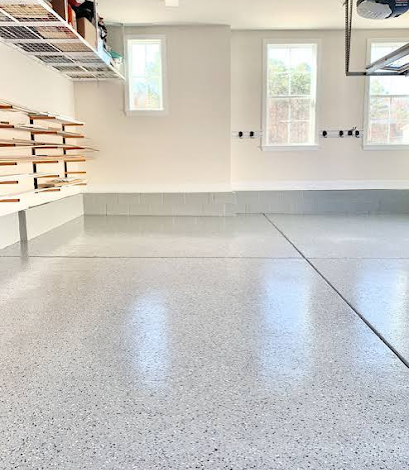
That’s why more homeowners across the Boston area are turning to epoxy flooring. It’s not a trend — it’s a practical upgrade that solves real problems. A properly installed epoxy floor resists the wear and tear that concrete simply can’t handle, and it does so while looking far more polished than bare gray slab.
At Garage Floor Coating of Boston, we’ve seen firsthand how this transformation changes the way people use their garages. What used to be a dusty storage space becomes a workshop, a gym, or even an extension of the home. Let’s break down why epoxy is winning over New England garages, one floor at a time.
What Makes Epoxy Flooring Different From Paint or Sealant?
A lot of homeowners assume epoxy is just a fancier version of garage floor paint. It’s not. Standard paint sits on top of concrete and wears away within a year or two of regular foot and tire traffic. Epoxy, on the other hand, chemically bonds with the concrete surface, creating a hard, seamless layer that’s built to last.
This bonding process is what gives epoxy its strength. Once cured, it forms a surface that resists chipping, peeling, and staining far better than any paint product on the market. For a region like Boston, where garages deal with road salt, moisture, and temperature swings throughout the year, that durability makes a real difference.
How Does Epoxy Coating Hold Up Against New England Winters?
Boston winters are brutal on garage floors. Salt, sand, and melting snow create a slushy mix that eats away at untreated concrete over time. Epoxy coatings create a moisture-resistant barrier that keeps that damage from penetrating the surface.
Here’s why that matters for local homeowners:
- Salt resistance: Epoxy prevents road salt from soaking into concrete and causing long-term deterioration.
- Temperature stability: Quality epoxy systems are formulated to handle freeze-thaw cycles without cracking.
- Easy cleanup: Melting snow and slush wipe away easily from a sealed epoxy surface, rather than staining or pooling into cracks.
Homeowners who’ve dealt with crumbling concrete after just a few winters often find that epoxy pays for itself by eliminating the need for repeated patch jobs.
What Are the Everyday Benefits of an Epoxy Garage Floor?
Beyond weather resistance, epoxy flooring makes daily life easier in ways that are easy to overlook until you experience them.
A Surface That’s Actually Easy to Clean
Dust, oil drips, and tire marks are a fact of life in any garage. With epoxy, a quick sweep or mop is usually all it takes to keep the floor looking like new. The smooth, non-porous surface doesn’t trap grime the way concrete does, which means less scrubbing and more time doing things you actually enjoy.
Brighter, More Functional Space
Epoxy coatings come in a range of finishes, including options that reflect light and make a garage feel noticeably brighter. For anyone who uses their garage as a workspace, that extra visibility can make a real difference, especially during darker winter months.
Increased Durability for Heavy Use
Whether it’s a work truck, power tools, or a home gym setup, epoxy floors are built to handle the weight and movement of daily garage life without showing premature wear. That resilience is part of why so many homeowners consider it a long-term investment rather than a cosmetic fix.
Why Should You Choose a Professional Installation Over a DIY Kit?
Plenty of hardware stores sell DIY epoxy kits, and we understand the appeal of saving money upfront. But there’s a reason professional installations consistently outperform DIY attempts: surface preparation.
Before epoxy can properly bond, concrete needs to be mechanically ground and profiled to remove old coatings, oil residue, and surface imperfections. Skipping or rushing this step is the number one reason DIY epoxy jobs peel or bubble within months. Professional installers also apply primer coats, moisture barriers, and topcoats in a precise sequence that most retail kits don’t account for.
Choose professional installation if you want a floor that holds up for years, not just months. Choose a DIY kit only if you’re comfortable redoing the project sooner rather than later.
Why Local Homeowners Trust Our Garage Epoxy Coating for a Floor That Finally Keeps Up With New England Weather
Garage Epoxy Coating services from our team are built around one goal: giving Boston homeowners a floor that can handle everything the region throws at it, without sacrificing style. We start with thorough surface preparation, use industrial-grade materials suited to New England’s climate, and finish with a topcoat designed to resist the salt, moisture, and temperature shifts that wear down lesser coatings.
Every project is handled by a team that understands the specific challenges of coating floors in this climate. We don’t apply a one-size-fits-all approach. Instead, we assess each garage individually, from humidity levels to existing concrete condition, so the final result holds up for years rather than seasons.
Homeowners who’ve made the switch often tell us the same thing: they wish they’d done it sooner. A garage that was once an afterthought becomes a space they’re proud to show off.
Ready to Upgrade Your Garage Floor?
A durable, good-looking garage floor isn’t a luxury reserved for showroom-style homes. It’s an achievable upgrade that pays off in time saved, reduced maintenance, and a space that works harder for you.
If you’re tired of patching cracks, scrubbing stains, or watching your concrete deteriorate another winter, it might be time to consider a change. Reach out to our team to schedule a consultation and see what a professionally installed epoxy floor could do for your home.