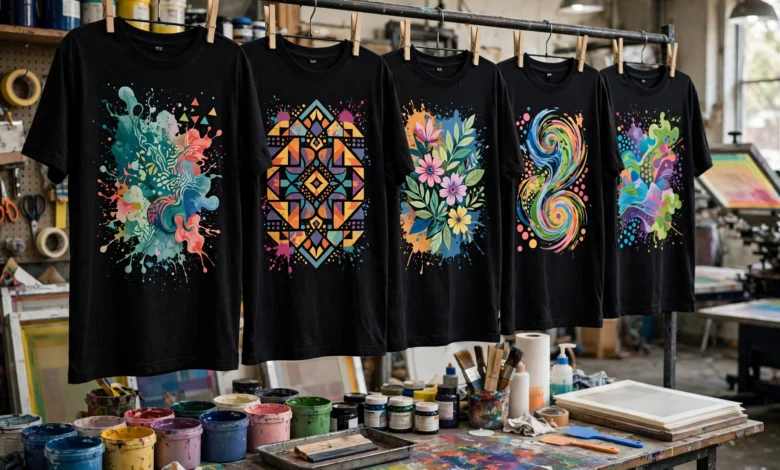
You've found the perfect black T-shirt for your custom design. But there's one concern: will the colors look as good on black fabric as they do on white? It's a fair question, especially if your artwork includes bright colors, fine details, or small lettering. The good news is that DTF printing on dark-colored fabrics is not only possible but also an excellent option for creating colorful, detailed designs. Direct-to-film (DTF) printing works on a wide range of materials and shades, giving you plenty of freedom when choosing your garments. Whether you're customizing black hoodies, navy uniforms, or dark-colored promotional shirts, understanding how DTF works can help you get the results you're looking for.
Can DTF Printing Work on Black and Other Dark Fabrics?
Yes! DTF printing works well on black, navy, charcoal, burgundy, and many other dark fabric colors. One of its biggest advantages is its ability to produce vibrant designs without requiring a light-colored background. The secret lies in the printing process. DTF uses a special transfer film, onto which the design is printed using colored inks and a white ink layer. This white layer acts as a base, helping the colors remain visible when the design is transferred onto dark fabric. Without that base, some colors could appear dull or blend into the garment. With DTF, even bright yellows, reds, and blues can stand out against a black T-shirt. If you're planning a custom apparel project, search for DTF near me to find local printing services that work with dark-colored garments. A professional printing provider can help you prepare your artwork, choose suitable materials, and get the most out of your design.
Why Is DTF Printing a Good Choice for Dark-Colored Apparel?
Dark garments can make certain printing techniques more challenging, especially when the design includes multiple colors or intricate details. DTF offers several advantages that make the process more flexible. For businesses preparing several designs, DTF gang sheets are another useful option. They allow multiple graphics to be arranged on a single transfer film, making efficient use of the printing space. This can be particularly convenient when producing different logos, artwork sizes, or designs for custom apparel. Beyond that, DTF offers several benefits worth considering.
Bright Colors That Stand Out
One of the main reasons people choose DTF for dark clothing is its ability to reproduce colorful artwork. The white ink underbase helps maintain color visibility, allowing logos, illustrations, and detailed graphics to stand out. A colorful company logo, for instance, can remain clearly visible on a black or navy T-shirt without having to change the entire design to suit the background.
Works With Different Fabric Types
DTF isn't limited to one fabric type. It can be applied to many cotton, polyester, and blended garments, provided the material can tolerate the required heat and pressure. This flexibility makes it useful for customizing T-shirts, hoodies, sweatshirts, tote bags, and other fabric products. However, heat-sensitive materials may require special handling, so it's worth confirming compatibility before production.
Suitable for Detailed and Multicolored Designs
If your artwork includes gradients, fine lettering, or several colors, DTF can reproduce many of these details without requiring separate screens for each color. This is especially helpful for custom merchandise, promotional apparel, and small clothing collections where design flexibility matters.
Flexible for Different Order Sizes
You don't necessarily need to order hundreds of garments to use DTF printing. The process works for smaller batches, personalized pieces, and larger production runs. Whether you're preparing a few custom shirts or merchandise for an upcoming event, DTF gives you flexibility without requiring traditional screen preparation.
What Should You Consider Before Printing DTF on Dark Fabrics?
Although DTF is well suited to dark garments, a few details can influence the finished result.
Choose a Design That Complements the Fabric
Just because DTF can reproduce bright colors doesn't mean every design will look equally appealing on every background. A dark blue logo, for example, may not create the contrast you're looking for on a navy shirt. While the white ink layer helps preserve the printed colors, choosing a design with good visual contrast can make it easier to notice and read. Review your artwork against the actual garment color rather than relying on a white digital background.
Pay Attention to Print Size and Placement
A design can look impressive on your computer screen but feel oversized or awkward once transferred onto a garment. Think about where the artwork will sit. A small chest logo may work well for uniforms, while a larger back design might be more suitable for event merchandise or casual apparel. Ask your printing provider for a mockup showing the approximate dimensions and placement before production begins.
Make Sure the Artwork Is Print-Ready
Low-quality artwork can affect the appearance of any custom print, regardless of the printing method. Blurry logos, poorly defined edges, and extremely small lettering may not transfer as clearly as expected. For better results, use high-resolution artwork or suitable vector files and confirm the printer's file requirements.
Follow the Right Care Instructions
DTF prints can withstand regular wear and washing when properly produced and cared for, but they aren't completely maintenance-free. Repeated exposure to excessive heat, harsh washing conditions, or improper drying can affect the transfer over time. Turning garments inside out, following the garment's washing instructions, and avoiding direct ironing over the printed area can help maintain their appearance.
Is DTF Printing Better for Dark or Light Fabrics?
The great thing about DTF is that you don't have to choose between dark and light garments based on printing compatibility alone. The process works on both, allowing you to use the same artwork across different garment colors. A design printed on a white shirt can also be transferred onto a black shirt, although the visual effect may vary depending on the background. For brands offering multiple color options, this flexibility can make it easier to maintain consistent artwork across a clothing collection. Ultimately, the best garment color comes down to your design, intended audience, and personal preference rather than a major limitation of the DTF process.
Final Thoughts
So, can you use DTF printing on dark-colored fabrics? Absolutely. From black T-shirts and navy uniforms to charcoal hoodies, DTF offers a flexible way to create colorful, detailed designs on darker garments. Its white ink underbase, compatibility with various fabrics, and ability to handle intricate artwork make it a practical choice for personal and business apparel projects. With suitable fabric, well-prepared artwork, and the right printing conditions, you can create dark-colored custom apparel that looks professional and brings your design to life.