Water doesn’t wait. A burst pipe, an overflowing appliance, or a sudden storm can turn a dry, comfortable home into a soggy mess within minutes. And the longer that water sits, the more damage it does — to your walls, your flooring, and potentially your health.
If you’ve ever dealt with a flooded basement or a leaking roof, you know the panic that sets in. What do you do first? Who do you call? How much is this going to cost you? These questions matter, and the answers can make the difference between a quick fix and a long, expensive nightmare.
That’s where ARG Restoration and Construction comes in. With years of hands-on experience helping homeowners recover from water emergencies, ARG Restoration and Construction has built a reputation for fast response, thorough cleanup, and honest communication every step of the way. This post explains what happens when water invades your home, why speed matters, and how the right team can turn a stressful situation into a manageable one.
Why Does Water Damage Spread So Quickly?
Water is relentless. It seeps into drywall, soaks into subflooring, and creeps behind baseboards before you even notice. Within the first 24 to 48 hours, mold can begin to grow in damp, dark corners. Wood starts to warp. Metal begins to rust. The longer water sits untreated, the more it compromises the structural integrity of your home.
This is why timing is everything. A small leak today can become a major structural issue next week if left unaddressed. Homeowners often underestimate how quickly a minor spill can escalate into a full-blown restoration project.
What Are the Most Common Causes of Water Damage?
Water damage doesn’t always come from dramatic events like floods or hurricanes. Often, it’s the everyday culprits that catch homeowners off guard:
- Burst or leaking pipes, especially in older homes with aging plumbing
- Appliance malfunctions, like a washing machine hose that gives out or a water heater that fails
- Roof leaks, particularly after heavy rain or snow
- Sump pump failures, which can lead to basement flooding during storms
- Clogged gutters, which cause water to pool and seep into foundations
Each of these situations requires a different approach to cleanup and repair, which is why having an experienced team assess the damage matters so much. A one-size-fits-all solution simply doesn’t work when every water damage scenario is unique.
How Does Professional Restoration Make a Difference?
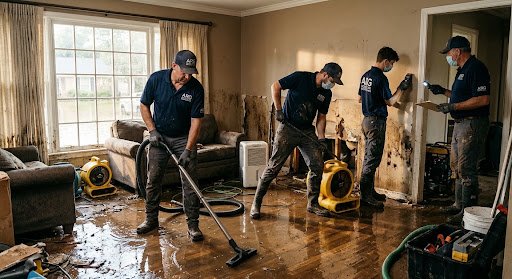
Not all water damage looks the same, and not all cleanup jobs are created equal. A professional restoration team doesn’t just mop up the water and call it a day. The process typically involves several critical steps:
Inspection and Assessment
Before any work begins, a thorough inspection identifies the source of the water and the extent of the damage. This includes checking for hidden moisture behind walls, under flooring, and in crawl spaces that aren’t immediately visible.
Water Extraction
Industrial-grade equipment removes standing water quickly, minimizing the time materials spend saturated. The faster this step happens, the less damage your home sustains overall.
Drying and Dehumidification
Even after visible water is gone, moisture can linger in walls and flooring. High-powered air movers and dehumidifiers work to pull out residual dampness, preventing mold growth and further structural damage.
Cleaning and Sanitizing
Water, especially from sources like sewage backups or storm flooding, can introduce contaminants into your home. Proper cleaning and sanitizing ensure your space is safe to live in again.
Restoration and Repairs
The final step involves repairing or replacing damaged materials, from drywall and flooring to cabinetry and trim, so your home looks and feels like it did before the damage occurred.
Why Should You Act Fast After Water Damage Occurs?
Every hour matters when water invades your home. Mold spores can begin developing within 24 to 48 hours in a damp environment, and once mold takes hold, remediation becomes a more complex and costly process. Structural materials like wood and drywall absorb water quickly, and the longer they stay wet, the more likely they are to warp, crumble, or require full replacement rather than simple repair.
Beyond the physical damage, there’s also the question of health and safety. Standing water can harbor bacteria, and mold growth can trigger respiratory issues for sensitive individuals. Acting quickly isn’t just about protecting your property; it’s about protecting the people who live in it.
How Can ARG Restoration and Construction Help You Recover?
Comprehensive water damage restoration services give homeowners the peace of mind that comes with knowing their property is in capable hands from the very first phone call. ARG Restoration and Construction understands that every minute counts when your home is affected by water, which is why the team prioritizes rapid response times and clear communication throughout the entire process.
From the initial inspection to the final repair, ARG Restoration and Construction works closely with homeowners to explain what’s happening, what to expect, and what steps come next. This transparency removes much of the stress that comes with dealing with unexpected water damage. The team also works directly with insurance providers when needed, helping simplify what can otherwise feel like an overwhelming claims process.
Whether the damage stems from a sudden pipe burst, a slow leak you just discovered, or storm-related flooding, ARG Restoration and Construction has the equipment, training, and experience to restore your home efficiently and thoroughly.
What Should You Do Right Now If You’re Dealing With Water Damage?
If you’re currently facing a water emergency, don’t wait for the problem to get worse. Shut off the water source if possible, move valuables to a dry area, and reach out to a trusted restoration team as soon as you can. The sooner professionals assess the situation, the better your chances of minimizing long-term damage and cost.
ARG Restoration and Construction is ready to help homeowners navigate these stressful moments with confidence. A quick phone call today could save you thousands of dollars in repairs tomorrow, and more importantly, it could save your home.
Frequently Asked Questions
How quickly should I respond to water damage in my home?
You should act within the first 24 to 48 hours to prevent mold growth and minimize structural damage. The faster water is removed and the area is dried, the less likely you are to face costly repairs down the line.
Can I handle water damage cleanup myself?
Minor spills can sometimes be managed on your own, but significant water intrusion often involves hidden moisture that’s difficult to detect without professional equipment. Working with an experienced team helps ensure nothing is overlooked.
Does homeowners insurance typically cover water damage?
Many policies cover sudden and accidental water damage, such as a burst pipe, though coverage varies depending on the cause and your specific policy. It’s worth reviewing your coverage details or asking your restoration team for guidance.
What happens if mold develops after water damage?
Mold can begin growing within 24 to 48 hours in damp conditions. If it develops, remediation becomes more involved and may require specialized treatment to fully remove it and prevent it from returning.