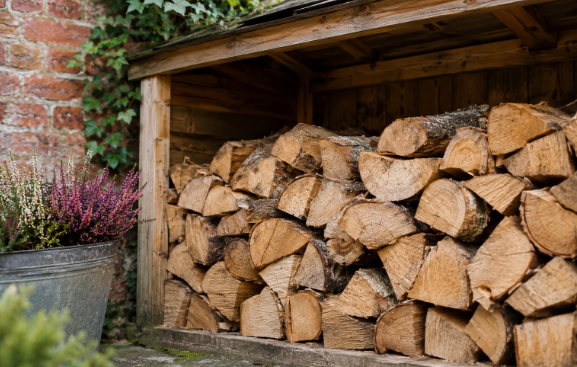
Two loads of firewood can look almost identical but produce very different results in a wood-burning stove. One might light easily and provide steady heat, while the other struggles to catch, produces excessive smoke and needs constant attention. Often, the biggest difference isn’t the type of tree the logs came from, but how much moisture remains in the wood.
When choosing seasoned firewood logs, it’s worth understanding how the wood has been dried, whether it’s suitable for your stove and what to look for before ordering. Getting these details right can make a noticeable difference to how efficiently your fire burns and how much usable heat you get from each load.
Why Moisture Content Matters
Freshly cut timber contains a considerable amount of water, making it unsuitable for immediate use as firewood. When damp logs are burned, much of the heat produced is used to evaporate that moisture rather than warm the room. This can result in a sluggish fire, more smoke and increased deposits building up inside the stove and chimney.
Properly dried firewood should have a moisture content of 20% or less before being burned. Wood can reach this level through natural air drying, commonly known as seasoning, or through kiln drying. Both methods can produce suitable firewood, provided the logs have been dried thoroughly.
It’s also worth remembering that the word ‘seasoned’ doesn’t automatically guarantee that logs are ready to burn. Drying times depend on the type of wood, its size, the weather and how it has been stored. A load that’s been left outside for several months might still contain considerably more moisture than expected.
Hardwood or Softwood: Which Is Better?
Hardwoods such as oak, ash and beech are popular choices for domestic heating because they’re generally denser than softwoods. This means a similar volume of dry hardwood will usually provide more energy and burn for longer, making it particularly useful when you want consistent heat from a stove or open fire.
Softwoods, including pine and spruce, tend to be less dense and burn more quickly. However, that doesn’t make them unsuitable for heating. Properly dried softwood can be an effective fuel, particularly for getting a fire established or providing a shorter burst of heat.
The important thing is not to assume that hardwood is always better, regardless of its condition. Well-dried softwood can perform better than hardwood that’s still carrying too much moisture.
Log size is another consideration. Before ordering, check the dimensions of your stove’s firebox and the approximate length of the logs being supplied. Oversized pieces may need cutting or splitting, while smaller, evenly sized logs are generally easier to arrange and manage.
How to Tell Whether Firewood Is Properly Seasoned
There are several traditional ways to judge whether logs have been dried. Seasoned wood often feels lighter than freshly cut timber of the same species, develops cracks around the ends and may have bark that comes away more easily. Dry logs can also make a more hollow sound when knocked together.
Although these signs are useful, they aren’t completely reliable. A log can feel dry on the outside while retaining moisture at its centre. A moisture meter provides a much better indication of whether the wood is suitable for burning.
For a more accurate reading, split a log and test the newly exposed surface rather than the outside. Checking several logs from different parts of a delivery will give a more representative picture of the moisture level across the load.
When purchasing firewood, it’s reasonable to ask how long it has been dried and whether the supplier has checked its moisture content. These details are generally more useful than relying on descriptions such as ‘premium’ or ‘high quality’ without any explanation of how the logs have been prepared.
Buying and Storing Firewood Without Wasting Money
Buying larger quantities can be economical, particularly for households using a stove regularly throughout winter. However, comparing prices isn’t always straightforward. Firewood may be sold in bags, crates or loose bulk loads, and a loosely filled cubic metre won’t necessarily contain the same amount of wood as a tightly stacked one.
Once delivered, firewood needs somewhere suitable to remain dry. An outdoor log store should keep the stack raised from damp ground, protect it from direct rain and allow air to circulate around the logs. Covering the top while leaving the sides ventilated is generally more effective than wrapping the entire stack in plastic.
In England, the Ready to Burn requirements for domestic firewood mean that wood sold in quantities of less than two cubic metres must be certified as having a moisture content of 20% or less. Larger loads are subject to different requirements, so it’s still sensible to check whether the wood is dry enough for immediate use.
It’s also worth considering delivery arrangements, particularly if you’re buying a substantial quantity. Having a dry storage area prepared before the logs arrive makes unloading easier and prevents them being left exposed to rain. With a suitable supply of dry, correctly sized logs, maintaining a steady fire becomes much easier, without wasting fuel or repeatedly struggling to get damp wood burning.