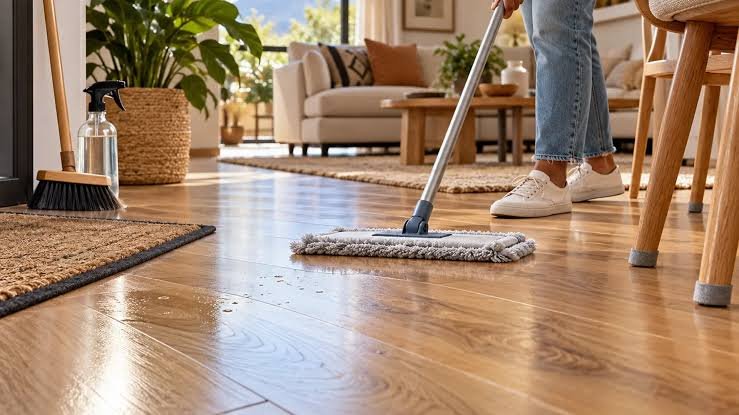
The floor looks wonderful for about ten minutes. While the surface is wet it shines, and then it dries into pale streaks that show every time the afternoon light crosses the room. Sometimes the whole floor turns flat and cloudy instead. You mopped carefully, you used the usual cleaner, and the result is somehow worse than before.
Before blaming the mop, or booking cleaning services durham nc homeowners use for recurring floor care, it helps to know that the haze is usually product, not dirt. The cleaner, the water, or the mop head has left something behind, and each pass adds another thin layer.
Most of the fix comes down to knowing what the floor is made of and what it tolerates. A short note listing the floor type and the approved cleaner is worth giving to CJS Cleaning Solutions, or to anyone else who mops the house, before the first pass.
Where Streaks Actually Come From
The most common cause is too much cleaner. Many people pour a generous capful into the bucket on the theory that more product means more cleaning. On a sealed floor the extra cleaner doesn’t rinse away fully. It dries as a faint film, and the film catches light unevenly, which is exactly what a streak is.
Soap-based and oil-based cleaners can do the same thing more slowly. They leave a residue that attracts dust, so the floor looks dull a day after cleaning and needs mopping again sooner, which adds more residue.
Water matters too. Tap water in many areas carries minerals that dry as a white bloom, particularly on dark floors. Dirty mop water is another cause: a mop dunked repeatedly into the same bucket spreads grey water across the floor and leaves a thin layer of dirt behind every time. A cotton string mop that holds a lot of water also puts down far more moisture than a floor needs.
A mop pad washed with fabric softener can also leave a slick, smeary coating.
Know the Floor Before Choosing the Method
Different floors need very different handling, and the same technique can be correct for one and harmful for another.
Most hardwood floors installed in the last few decades are sealed with a polyurethane or similar finish. The finish is the surface you actually clean, and the wood below is protected only while the finish is intact. These floors need a damp, well-wrung mop and a cleaner made for sealed wood. Standing water finds its way into the seams and can cause the boards to swell or cup.
Oil-finished and waxed floors are different. They are more sensitive to water and to many ordinary cleaners, which can strip the finish and leave pale patches. Manufacturers usually recommend specific products and a minimal amount of moisture. If you aren’t sure which finish you have, check the documentation from the installer or test an out-of-the-way spot.
Laminate is made of a photographic layer over a fibreboard core, and its weakness is water at the seams. The surface can tolerate a damp mop, but liquid that runs into the joints makes the edges swell and lift, and that damage cannot be repaired by cleaning. Laminate also streaks easily because its surface is so smooth. Many manufacturers advise against steam mops on laminate and on sealed hardwood, since steam pushes heat and moisture into joints, so check the care instructions before using one.
Households that rely on CJS Cleaning Solutions for floor care still hold the best evidence of all, since they see the floor every day and know whether it was dull before or after the last mop.
A Mopping Method That Leaves Less Behind
Start dry. Sweep or vacuum with a floor head so that grit isn’t dragged across the finish under a wet pad. Fine grit scratches, and scratches scatter light, which makes a floor look dull even when it’s clean.
Use a microfibre pad rather than a heavy cotton mop. Dampen it until it feels barely wet to the touch, and use only as much cleaner as the label recommends, which is often a fraction of what people pour. Work along the direction of the boards or planks, in small sections, and change the pad when it stops looking clean, a habit that matters equally to cleaning services and households. With a bucket, rinse the mop in clear water and wring it hard each time rather than recycling the same grey bucket.
Let the floor dry on its own for a minute or two, or follow the damp pass with a dry microfibre cloth in the areas that will be walked on soon.
Getting Rid of Residue That Is Already There
If the floor is already cloudy, don’t reach for a stronger cleaner. Start by mopping with plain water and a clean, well-wrung microfibre pad, changing the pad often. Several passes over a few days may lift the film without chemicals.
For a stubborn buildup on sealed floors, a diluted cleaner recommended by the flooring manufacturer is the safe option. Vinegar is popular online, but it is an acid, and frequent use can dull some finishes over time, so use it only if the manufacturer’s guidance allows and keep it well diluted. Never mix vinegar with bleach or any other cleaning product, because some combinations release dangerous fumes.
Avoid wax, polish, and “shine-boosting” products unless the floor was designed for them. They look good briefly and then trap dirt.
Streaks, or Something More Serious?
Not every dull floor is a mopping problem. A floor that looks worn in walking lanes, around the kitchen sink, or near the door may have lost its protective finish in those areas, and that dullness won’t wash away. Scratches from grit, furniture, and pet claws catch light in the same way, and fine scratches can make the whole floor look hazy.
Look at the floor from a low angle in natural light. Streaks that follow your mop strokes are residue. Dull, uniform patches in high-traffic spots are worn. Darkened boards, raised edges, or boards that curve upwards at the sides point to moisture damage, and they need attention from a flooring professional.
When the finish itself has worn through, the choices are a maintenance coat, if the floor is suited to one, or a full refinish. That is a specialist job, and none of the usual household cleaning methods or cleaning services can undo it.
Keeping Floors Clear Between Cleans
Most of the dirt on the floor walks in on shoes, so a good mat at each door and a habit of removing outdoor shoes cuts the workload. Felt pads under furniture legs prevent the scratches that dull a surface. Wipe up spills quickly.
Reduce how often you mop. A sealed floor in a quiet room may need a damp mop only every week or two, whether the household or CJS Cleaning Solutions does it, with dry dusting in between. In the kitchen and entry, more frequent attention makes sense, but the amount of cleaner still stays small.
Less Product, Better Shine
A floor that dries streaky is rarely a sign that you cleaned too little. It is much more often a sign of too much cleaner, too much water, or a dirty mop head, and the remedy is almost always to use less of each. Identify the finish, mop damp rather than wet, and let several rinse-only passes clear the old film. Whether the floors are handled by you or by cleaning services you trust, a light touch and a clean pad will do more for a dull floor than any stronger product.