Quartz countertops in Winnipeg give homeowners a tough, low-maintenance surface that handles prairie life, from winter boots and salt tracks to busy family kitchens. Today’s slabs range from soft marble looks to bold, dramatic veining. This guide explains how quartz is made, which styles fit which homes, what it costs, and how to pick and care for it.
What Are Quartz Countertops and How Are They Made?
Quartz countertops are engineered stone surfaces made from crushed natural quartz bound together with polymer resin. Most slabs contain roughly 90 to 94 percent quartz by weight. The rest is resin and color pigment, which gives manufacturers control over the final look.
Quartz is one of the hardest common minerals on Earth. It rates a 7 on the Mohs hardness scale, which is why quartz slabs resist scratches well in everyday cooking. The process starts in a factory. Workers crush quartz into particles that range from fine powder to small granules. They blend the particles with resin and pigment, pour the mix into a mold, and press it under vacuum and vibration. Heat then cures the slab, and machines polish it to a smooth finish.
This process is the reason quartz looks so consistent. It is also the reason designers can create almost any pattern, from a plain white slab to a deep gray with thick black veins.
Why Do Winnipeg Homeowners Choose Quartz?
Winnipeg homeowners choose quartz because it handles heavy daily use without much upkeep. Our winters are long and cold, so people spend more time cooking and entertaining indoors. A countertop that resists stains from red wine, coffee, and tomato sauce earns its keep fast.
Quartz is also non-porous. Liquids sit on top of the surface instead of soaking in, so bacteria and odors have a hard time settling. Compare that to natural granite and marble. Both are porous stones that need regular sealing. Marble also etches when acidic foods like lemon juice or vinegar touch it. If you love the look of marble but cook a lot, quartz solves a real problem.
What Does a Marble-Look Quartz Countertop Really Look Like?
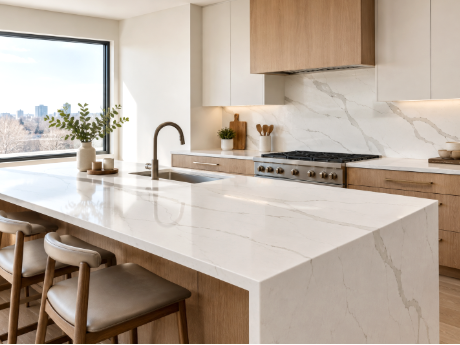
Marble-look quartz mimics Calacatta marble with a white or soft gray base and thin, flowing veins. The pattern is printed through the full thickness of the slab, so the look stays consistent even at the edge.
Manufacturers build these slabs in layers. They swirl pigment through the base mix by hand or by machine, then press the slab. The vein pattern varies across the slab, which is why two pieces from the same batch can look a little different.
Calacatta-style quartz has a brighter white background with thicker, more dramatic veins in gray, gold, or taupe. It costs more because the pattern takes more work to produce and the best slabs are in high demand.
One real-world tip: ask to see the full slab, not just a small sample. A 4-inch sample cannot show how a vein travels across 120 inches of stone. Many homeowners fall for a sample and then get surprised by a heavy vein running right through the sink area.
How Do Bold Veined Quartz Slabs Work in a Kitchen?
Bold veined quartz uses thick, high-contrast veins to turn a countertop into a focal point. These slabs often feature black, charcoal, deep gold, or even blue veins on a white or gray base.
The trend took off over the past several years as homeowners moved away from plain white kitchens. A bold slab works best when you keep the rest of the room simple. If you pick a dramatic island, choose quiet cabinets and a plain backsplash so the stone does the talking.
A common design choice is a waterfall edge on the island. The slab runs down the side of the island to the floor, so the vein pattern flows over the edge. Fabricators call this book-matching when they mirror two slabs side by side. It looks stunning, but it takes careful planning and an experienced installer.
Here is a practical way to think about it. Use a bold slab on the island and a quieter quartz on the perimeter counters. That approach gives you the drama without overwhelming the space, and it often saves money too.
Quartz vs. Granite vs. Marble: How Do They Compare?
Quartz offers the best balance of durability and low maintenance among the three. Granite is a natural stone with unique patterns but needs sealing. Marble is the most beautiful to some people but is the softest and the most likely to stain or etch.
| Feature | Quartz | Granite | Marble |
| Material | Engineered stone | Natural stone | Natural stone |
| Sealing needed | No | Yes, usually once a year | Yes, more often |
| Stain resistance | Very high | High when sealed | Low to medium |
| Scratch resistance | High | High | Low |
| Heat resistance | Moderate (resin can burn) | Very high | Moderate |
| Pattern consistency | Very consistent | Varies a lot | Varies a lot |
| Best for | Busy family kitchens | Cooks who want natural stone | Low-traffic spaces and style lovers |
This table shows why many homeowners pick quartz when they want fewer chores. If you want a fully natural product and don’t mind sealing, granite is a strong choice as well.
Is Quartz Heat Resistant? What Winnipeg Cooks Should Know
Quartz is heat resistant to a point, but it is not heatproof. The resin that holds the slab together can scorch, discolor, or crack when it meets very high heat. Many manufacturers advise against placing anything above roughly 300°F directly on the surface.
This is the number one mistake people make. A pot straight off the stove, a hot roasting pan, or an air fryer running on the counter can leave a permanent mark. Sudden temperature change can also cause thermal shock, which may crack a slab.
The fix is simple. Keep a few trivets near the stove and use a heat pad under slow cookers and air fryers. These small habits protect a surface that can last for decades.
Quartz is also not the best fit for an outdoor kitchen. Long-term sun exposure can fade the color and yellow the resin, and Winnipeg’s wide temperature swings can stress the material. For patios, natural granite or porcelain is a safer choice.
How Do You Clean and Care for Quartz Countertops?
You clean quartz with warm water, mild dish soap, and a soft cloth. This handles daily messes like spills and fingerprints. No sealing or special polish is needed.
For dried-on food, soften it with a damp cloth and scrape gently with a plastic scraper. Avoid harsh chemicals such as oven cleaner, bleach, and paint strippers. These products can dull the finish or damage the resin.
Here are the habits that keep quartz looking new:
- Wipe up spills quickly, even though quartz resists stains.
- Use cutting boards. Quartz is hard, but knives dull quickly on it.
- Use trivets under hot cookware.
- Skip abrasive scrub pads that can leave dull spots.
For more on upkeep, material grades, and common buying mistakes, read our quartz care and buying tips before you visit a showroom.
How Do You Choose the Right Quartz Color and Pattern?
Start with your cabinets, floors, and lighting, then pick a slab that fits all three. A countertop looks different under warm evening bulbs than it does in bright morning sun, so always check samples in your own kitchen.
Winnipeg gets long, gray winters with short daylight hours. Many homeowners pick lighter, brighter quartz to bounce light around the room. If your kitchen faces north and gets little sun, a white or light gray slab can lift the whole space.
Use this simple matching guide:
| Kitchen Style | Best Quartz Pattern |
| Traditional or farmhouse | Soft Carrara-look with light veining |
| Modern or minimalist | Plain white, concrete look, or bold single-vein slabs |
| Dark cabinets | Bright white or light veined quartz for contrast |
| White cabinets | Warm gray, deep veined, or dark quartz for depth |
| Small kitchens | Light, low-contrast slabs that make the room feel larger |
Also think about the edge. A square or eased edge gives a modern look. A rounded edge is safer around small children. A mitered edge makes the counter look thicker and works well on islands.
What Mistakes Should Homeowners Avoid With Quartz?
The most common mistakes are picking a slab from a tiny sample, ignoring seam placement, and skipping the fabricator’s reputation check. All three are easy to avoid with a little planning.
First, look at the full slab. Veined patterns change across the stone, and a sample hides that. Second, ask where the seams will go. A good fabricator hides seams in low-visibility spots and lines up the pattern so the join looks natural. Third, ask for photos of finished jobs and check reviews from local customers. A great slab installed badly still looks bad.
Another mistake is forgetting the sink choice. An undermount sink looks clean, but it needs a precise cutout, and it should be chosen before templating day. Changing sinks after fabrication can mean a new cutout or even a new slab.
Final Thoughts: Your Next Step
Quartz gives you the soft look of marble or the bold drama of heavy veining without the upkeep that natural stone demands. It resists stains, skips the sealing routine, and fits both older Winnipeg homes and newer builds. Just remember to protect it from direct heat, and check the full slab before you commit.
Here is what to do next. Measure your kitchen, set a rough budget, and list the styles you like. Then visit Rockwood Stone Countertops to view full slabs under good lighting and discuss your options. Compare the details, not just the bottom line. When you are ready to start, book a showroom visit, bring your cabinet photos and measurements, and let our team help you pick the right slab and finish.
People Also Ask
Are quartz countertops worth it in Winnipeg?
Yes, for most homeowners. Quartz resists stains, needs no sealing, and handles daily use well. It costs more upfront than laminate but often lasts decades, and it can raise resale appeal. If you cook often and want low upkeep, quartz delivers strong value over time.
How long do quartz countertops last?
Quartz countertops commonly last 25 years or longer with normal care. Many manufacturers back their slabs with long warranties, and some offer lifetime coverage for residential use. Lifespan depends on how you treat the surface, especially around heat and harsh chemicals.
Can you put hot pans on quartz?
No, avoid it. The resin in quartz can burn, discolor, or crack under direct high heat. Many makers recommend keeping items below about 300°F on the surface. Always set hot pots and pans on a trivet or heat pad to protect the slab.
Does quartz stain easily?
Quartz resists stains very well because it is non-porous. Coffee, wine, and oil usually wipe right off. Strong dyes like turmeric or permanent marker can leave marks if they sit for a long time, so clean spills soon after they happen.
Is quartz better than granite?
It depends on what you value. Quartz needs no sealing and offers a consistent pattern, while granite handles high heat better and gives you a one-of-a-kind natural look. Most busy households prefer quartz for the low maintenance.
Can quartz look like real marble?
Yes. Manufacturers produce Carrara and Calacatta patterns that closely copy real marble, including soft gray veins and bold gold streaks. You get the marble look without the etching and staining problems that come with natural marble.